
Every line in the DIY budget priced out, including the ones people leave off, set against what a removal company quote actually covers.

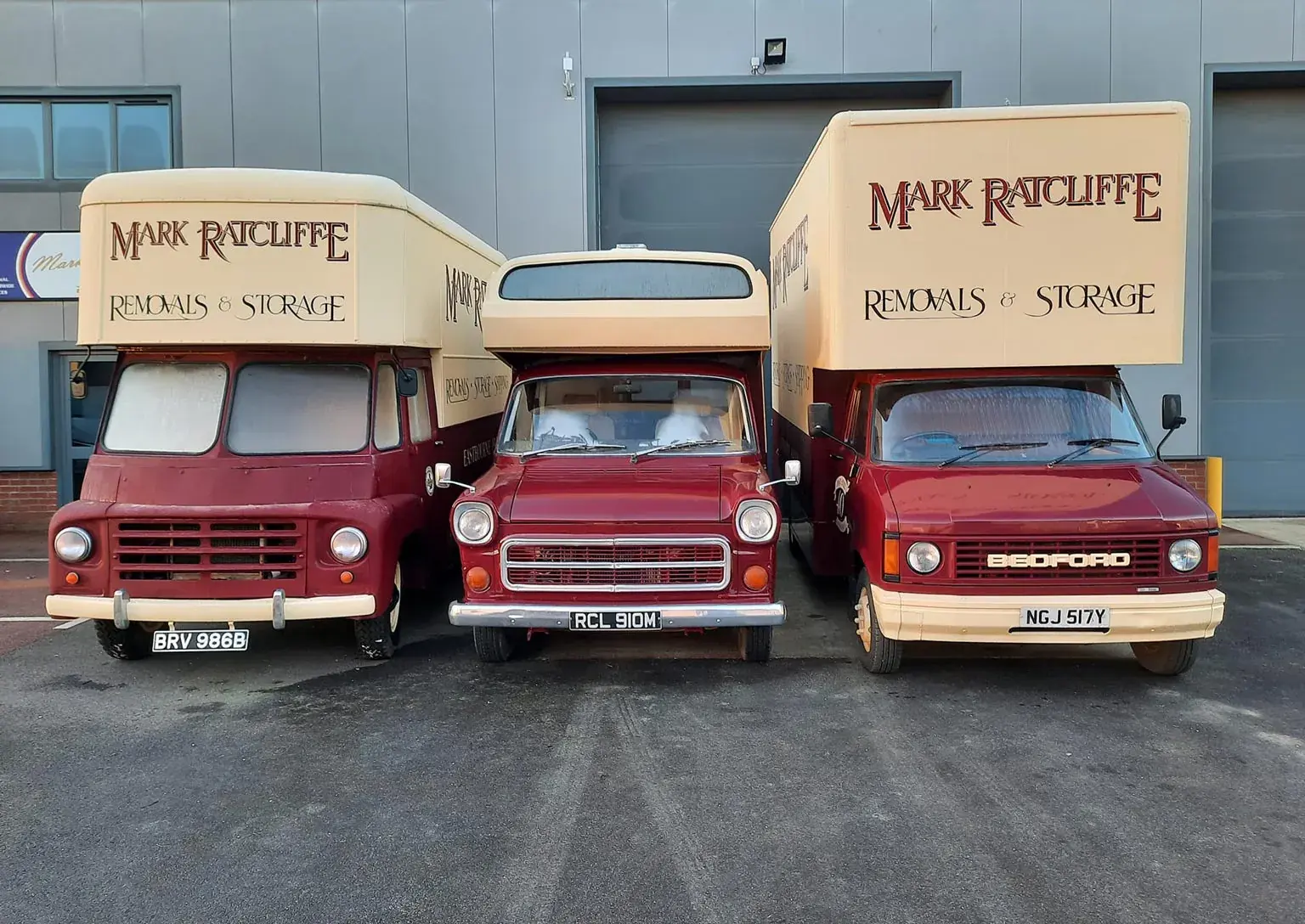
Van hire vs removal company is a comparison people make with two numbers: the day rate on the rental website and the figure at the bottom of the removal quote. Set out like that, it is not close. So is it cheaper to move yourself? Sometimes — but only once you have built the DIY column properly, and most people leave four or five lines off it. This page is that column, built line by line for a three-bedroom Sussex move, with every cost named and priced.
We are a professional Sussex remover, so the bias is obvious and you should read the arithmetic rather than trust the conclusion. Every figure below is a range, because vans, distances and households vary. If what you actually want is guidance on which route suits your circumstances rather than the money, our guide on whether to move yourself or hire professionals answers that question. This one is purely about the numbers.
Van hire for a move runs roughly £80–£200 a day. The spread is wide because it covers everything from a long-wheelbase transit to a 3.5-tonne Luton with a tail lift, and because weekend and end-of-month rates are the worst of the year — which is exactly when completions happen. The first honest adjustment to the DIY column is that a Friday in June is at the top of that range, not the bottom.
Three practical constraints attach to the day rate. Most hire firms want the driver to be over 25 with a clean-ish licence. Anyone who passed their test after 1 January 1997 is restricted to 3.5 tonnes gross without extra entitlement, which caps the size of van available and therefore the number of trips. And the vehicle must go back with the same fuel level, cleaned, within the hours stated, or the extra charges start.
Set against this, the removal company line for a three-bedroom Sussex move typically runs £850–£1,500 — the 2026 cost guide breaks that down. It is a single figure that includes the vehicle, the crew, the fuel, the wrapping and the cover. The comparison only becomes fair when the DIY column is built out to include the same things, which is what the rest of this page does.
One structural point before the lines start. A hire van is priced per day; a removal is priced per job. If a DIY move overruns into a second day — and three-bedroom moves frequently do — the hire line doubles. A removal quote that overruns does not, because the price was agreed for the job rather than the hours.
Fuel on a properly costed three-bedroom DIY move comes out around £60, and that figure surprises people because they price it as though the van does the journey once. It almost never does. A three-bedroom house does not fit into a single 3.5-tonne Luton load, so the realistic plan is two runs, and two runs means load, drive, unload, drive back empty, then repeat. The mileage on the meter is roughly four times the distance between the two houses, not one.
A loaded box van also drinks considerably more than the car you priced the journey in, and it does its worst work in exactly the conditions a move creates: cold starts, town driving, repeated stops. Some hire agreements also cap the included mileage and charge per mile beyond it, which is a line worth reading before you sign rather than at the counter on return.
Then there is the car. Almost every DIY move runs a second vehicle alongside the van for the things nobody wants in the load — the plants, the paperwork, the computer, the children. That is another set of round trips and another tank, and it is never in anybody’s budget.
The removal company version of this line is simply not yours. The vehicle is sized at survey so that the job is one load, the fuel is inside the quoted price whether the run is ten miles or a hundred, and if the surveyor gets the volume wrong that is the firm’s problem to solve on the day, not an extra invoice. When people ask whether it is cheaper to move yourself, the second trip is usually the line that quietly closes half the gap.
This is the line that separates a cheap DIY move from an expensive one, and it turns on a distinction most people miss. The insurance included with a hire van covers the van. It does not cover what is inside the van. Those are two different policies, and only one of them comes with the keys.
On the vehicle side, the included cover carries an excess, and it is usually a substantial one. Reducing it means buying the hire company’s damage waiver at a daily rate, which is a real line in the DIY column and is charged per day, so a two-day overrun doubles it too. Skip the waiver and one clipped wing mirror on a narrow Sussex lane, one scraped panel against a gatepost, or one kerbed alloy can cost more than the entire saving you set out to make.
On the contents side there is usually nothing at all. Home contents insurance generally excludes goods in transit. Standalone goods-in-transit cover for a DIY move can be bought, but between the premium and the excess it frequently costs more than the difference you were chasing. So the practical position on most self-moves is that the household’s entire contents travel uninsured for the day, in a vehicle the driver has never driven before.
The odds are not neutral, either. Self-packed cartons break at roughly six times the rate of professionally packed ones, and the failures are predictable: plates stacked flat instead of on edge, glasses with no internal padding, framed art without corner protection, electronics rattling in oversized boxes, furniture carried unwrapped. Our fragile-items guide shows what a careful self-packer can do about it. On the professional side, professionally packed cartons and pad-wrapped furniture are covered under standard goods-in-transit insurance, which is part of what the quote is buying. Price that difference at whatever your kitchen and your framed pictures would cost to replace, because that is the sum at risk.
Packing materials for a three-bedroom house run £80–£150, and around £120 is a fair working figure. That buys removal-grade cartons in two or three sizes, wardrobe cartons for hanging clothes, tape, bubble, tissue and a marker pen. It is the one DIY line that is genuinely cheaper than the professional equivalent, and if you buy proper cartons rather than reusing supermarket boxes it is money well spent. You can buy exactly the same stock we use from our packaging shop whether or not we do your move.
What that figure does not buy is the kit that protects furniture. Removal blankets, webbing straps, a sack barrow, a piano trolley, corner protectors and floor runners are all separate. Hire firms rarely include blankets in the day rate, and buying a stack of them for one weekend is money spent on equipment you will store in the loft for a decade. Skipping them is what produces the classic DIY outcome: a sideboard with a corner off, a wardrobe with a scraped door, a mattress that spent the journey against a wheel arch.
Straps deserve their own mention because they are the difference between a load that arrives as it left and a load that has been rearranging itself since the first roundabout. Nothing in a hire van holds the stack in place. On our vehicles the load is built in tiers and strapped in sections as it goes, which is only possible because there are blankets underneath and lashing points to strap to.
So the honest way to write this line in the DIY column is £120 for cartons and consumables, plus whatever you spend or improvise on protection. The professional column already contains blankets, straps, trolleys and floor protection, because they are the tools of the job rather than an upsell.
A three-bedroom DIY move takes 30–50 hours of your own labour once you count the run-up week as well as the day: sourcing boxes, packing room by room, dismantling beds, loading, driving, unloading, reassembling, returning the van, and the tip run at the end. The same job handled professionally costs the customer somewhere between zero and five hours — the survey, a few decisions on packing day, and being present at the unload.
Most DIY budgets price those hours at nothing, which is the single largest distortion in the comparison. You do not have to value them at your salary. Value them at whatever you would genuinely accept to spend a bank holiday weekend carrying wardrobes down a staircase for a stranger. Whatever number you write, multiply it by forty and put it in the column, because that is the transaction you are entering into.
There is a cash element too, not just an opportunity cost. A three-bedroom self-pack typically takes two to three days away from work. If that is unpaid leave it is a direct cost; if it is annual leave it is holiday you have bought and spent on furniture. Either way it belongs on the page. Our guide for moving when you are short of time covers how to compress the run-up if the hours simply are not there.
The fatigue is a cost as well, and it lands after the money has been counted. A household that has done 40 hours of physical work arrives at the new house too tired to unpack, and the first week in the new home is spent recovering rather than settling. That does not show up in either column, but everybody who has done it recognises it.
The visible cost of helpers is about £80 for a three-bedroom move — breakfast, lunch, drinks, and something decent at the end of it. That is the easy part of the line. A friend doing ten hours of heavy lifting is not free in any meaningful sense, and the debt does not clear when the plates are washed. You now owe a day, and it will be called in.
The bigger issue is that the helper line is the least reliable one in the whole budget. Two people confirm for the Saturday, one wakes up with a bad back, and a job planned for four pairs of hands is suddenly being done by two, on the one day of the year when it cannot be rescheduled. There is no cover for that in a DIY plan. Every other line can be absorbed; that one stops the move.
There is a liability question too, which nobody enjoys raising with friends. If somebody strains a back on your staircase, drops a sideboard onto their own foot, or puts a wardrobe through the plaster of a house you have just exchanged on, there is no employer, no training record and no policy standing behind it. Professional crews are directly employed, trained, and insured for exactly these events. You can also direct them, which is quietly the biggest practical difference — asking a paid crew to take the piano back out and try the other doorway is a normal instruction; asking a friend on hour nine is not.
Where the job crosses into a long haul or an international removal, the helper line stops working entirely, because the labour is needed at both ends and one of the ends is in another country. For your own situation, the survey takes ten minutes and gives you the figure for the right-hand column of this comparison.
For the comparison to mean anything, the right-hand column needs itemising as carefully as the left. A full removal quote from a family-run Sussex remover like us covers the vehicle and its fuel, a directly employed crew trained at our own staff training centre, pad-wrap on every freestanding piece of furniture, blankets, straps, trolleys and floor protection, the loading and the unloading at both ends, and goods-in-transit cover on what we have packed and wrapped. There is no day rate, no excess, no waiver and no mileage cap.
It also covers the things that have no DIY equivalent at any price. The volume is measured at survey rather than guessed, so the vehicle is the right size first time. The price is fixed for the job, so an overrun is ours to absorb. The 25% deposit is protected by the British Association of Removers’ Advance Payment Guarantee, so the money is safe if anything happens to us between booking and move day. That combination is why the average across 120+ independent reviews sits at 4.9/5.
The comparison is the same shape whether the job is a routine local move across Eastbourne or a house going overseas, but the further the distance the fewer lines the DIY column can honestly carry. Booking a survey takes ten minutes via the online form, and the written quote follows within 48 hours with every line visible so you can set it against the totals below.
Free in-home or video survey, written fixed-price quote, BAR-protected deposit. Sussex’s family-run independent remover.
Adding the cash lines from the DIY column: van hire £150, fuel £60, materials £120, feeding the helpers £80. That is £410 of actual spending. Round it out with the things that vary — a weekend premium on the van, the damage waiver, a second day if it overruns, the tip run — and a properly costed DIY three-bedroom move lands at £400–£700.
The removal company column for the same job is £850–£1,500, inclusive of everything listed in the section above. So the answer to “is it cheaper to move yourself” is yes, on cash, by roughly £450–£800 on typical numbers. That is the real saving, and it is worth having.
What that saving buys is worth stating just as plainly. It costs you 30–50 hours of your own labour, which works out at somewhere between about £9 and £27 an hour for heavy lifting. It carries the hire excess on a vehicle you have never driven. It leaves the contents of your house uninsured in transit, packed by hand at roughly six times the breakage rate. And it depends on two or three people turning up on a morning when nothing can be rescheduled.
For a studio or one-bedroom flat moving a few miles, those trade-offs are usually worth it — the volume is small, the value at risk is low, and the whole thing fits in one load and one day. For a three-bedroom house with a full kitchen, framed pictures and a chain completion, the saving is a smaller number than the exposure. That is the comparison in one paragraph; everything above is the working.
The comparison is not actually binary, and the cheapest sensible answer for a lot of households sits between the two columns. Three part-service options have their own prices, and each one removes a specific line from the DIY budget rather than all of them.
Man and van, with you packing. Two crew and a vehicle for a half or full day, typically £200–£500 on a Sussex job. This deletes the van hire, the fuel, the excess, the blankets and straps and the helper problem in one line, and leaves you the packing. For studio and one-bedroom moves it frequently costs less than a properly costed DIY day once the waiver and the second trip are counted. Our man-and-van service is priced for exactly this.
Full removal with fragile-only packing. We move everything and pack the breakables — kitchen, display cabinet, framed art, mirrors, lamps — and you pack the easy categories: books, clothes, linen, the garage. On a three-bedroom home this runs £220–£340 and saves £200–£400 against a full pack, while taking the six-times breakage rate off the items where breakage actually costs money. The packing-service guide works through where the line is best drawn.
Full removal with materials only. We deliver removal-grade cartons, tape, bubble and tissue, you pack everything yourself, and we do the move. It is the cheapest professional tier and it keeps the self-pack damage risk on your side of the line, which suits low-value contents and people who have the time to pack properly.
Whichever column you end up in, ask for the quote itemised. Ours arrives in writing within 48 hours of the survey, line by line, with a 25% deposit protected under the British Association of Removers’ Advance Payment Guarantee, our own lorry and directly employed crew, and blankets washed between jobs. The office is on 01323 848 008 Monday to Friday 8am to 5:30pm and Saturday 9am to 1pm, and the online quote form starts the same process.
On cash, yes. A properly costed three-bedroom DIY move lands at £400–£700 against £850–£1,500 for a full removal, so the saving is roughly £450–£800. Divided across the 30–50 hours of your own labour it works out at about £9–£27 an hour, with the hire excess and the uninsured contents still sitting on your side.
Roughly £80–£200 a day depending on size and timing. Assume the top of that range, because completions fall on Fridays and month-ends, which is when hire rates peak. Add the fuel separately and the damage waiver separately, and remember the rate is per day, so an overrun into Sunday doubles the line.
No. It covers the vehicle, usually with a sizeable excess you can only reduce by buying the daily damage waiver. Your belongings inside the van are a separate matter, and home contents policies generally exclude goods in transit. Standalone cover exists but the premium plus the excess often exceeds the saving you were chasing.
£80–£150, with around £120 a fair working figure for cartons in a few sizes, wardrobe cartons, tape, bubble, tissue and a marker. Blankets, straps, a sack barrow and floor protection are not in that figure and are rarely included with a hire van.
Almost never. Plan for two runs, which means the mileage on the meter is about four times the distance between the houses once you count the empty return legs. That second trip is the line most DIY budgets leave out entirely, and it moves both the fuel and the hours.
Man and van with self-packing, at roughly £200–£500 for a half or full day. It removes the hire, the fuel, the excess, the protective kit and the helper risk in a single line and leaves you only the packing, which is why it often beats a fully costed DIY day on a one or two-bedroom move.
Around 30–50 hours for a three-bedroom house once the run-up week is counted: sourcing boxes, packing, dismantling beds, loading, driving, unloading, reassembling, returning the van and the tip run. The same job handled professionally costs you between zero and five hours of involvement.