
Buy the same removal-grade packing materials our crews use — collect from our Lower Dicker depot or have a kit dropped off with your move.

All prices include VAT. Delivery available at a nominal charge P.O.A
Unit J12 Swallow Business Park, Diamond Drive, Lower Dicker, BN27 4EL 01323 848 008
What to buy when
One of the most common questions we get at the shop is “how many boxes do I need?” The honest answer depends on how much you own and how thoroughly you pack, but a rough guide for a typical Eastbourne 3-bedroom move is around 60–80 standard boxes, 20–30 small heavy-duty boxes (for books and crockery), 4–6 wardrobe boxes (so your hanging clothes travel without folding), and 2 large rolls of bubble wrap. A 1-bedroom flat typically needs 25–35 standard boxes; a 4-bedroom family home pushes into the 100–120 box range once you include the loft and garage. The storage calculator on our site converts your inventory into a more accurate figure if you’d rather work from first principles.
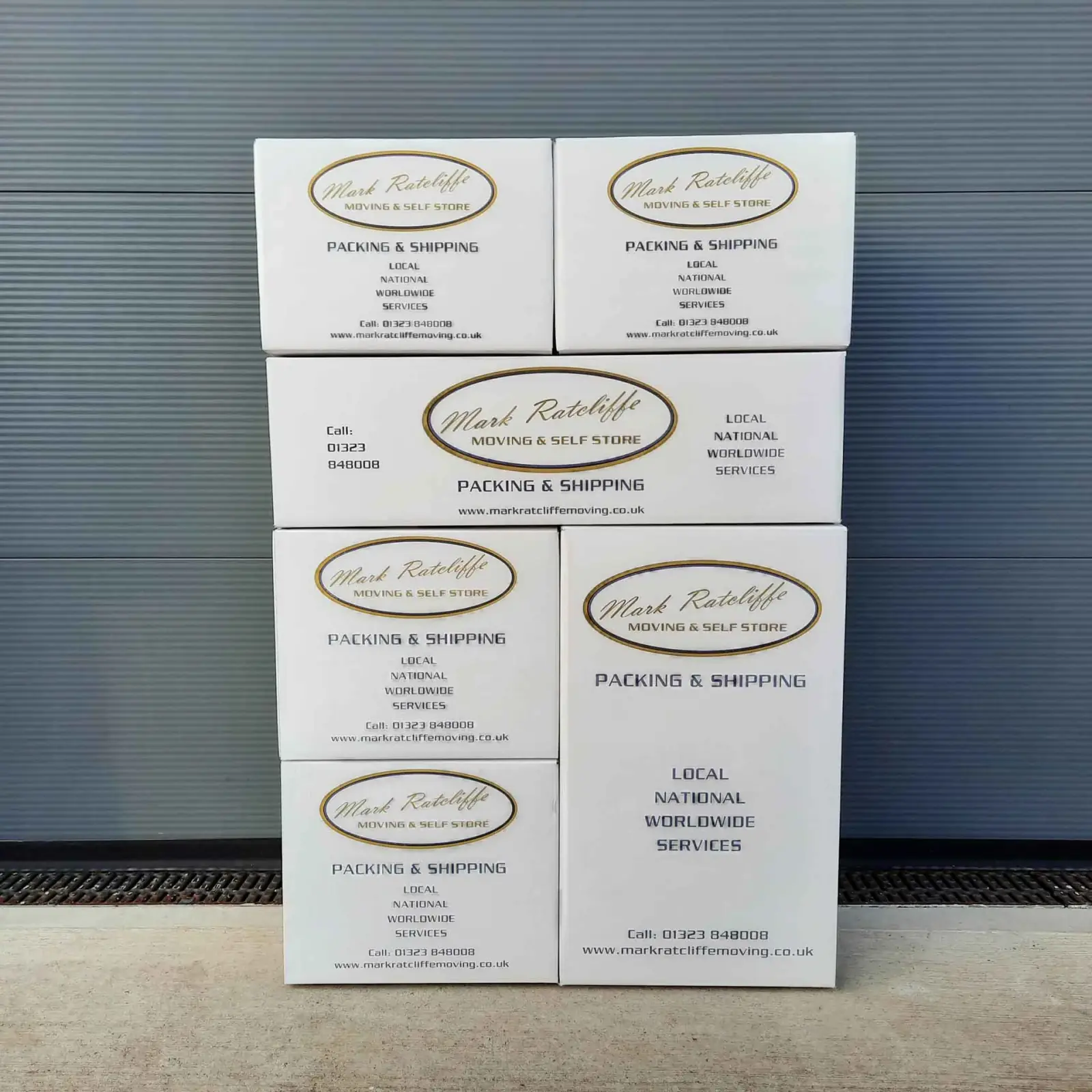
The workhorse of every move — a double-walled corrugated box, roughly 18×12×12 inches, that holds books, kitchenware, toys, electricals and clothes without buckling under the weight. Buy more than you think you need; offcuts and odd objects always need a few extra at the last minute. We stock crisp, never-used boxes (not the “recycled” ones some shops sell, which crumple under stacking) and unsold boxes can be returned for credit within a fortnight as long as they’re unused.
Designed for the heaviest items: hardback books, vinyl records, full crockery sets, file folders. The smaller volume keeps the loaded weight under what one person can comfortably lift — a useful rule when crews are stacking by hand in narrow Sussex stairwells. Customers consistently under-order these and end up with overweight standard boxes that put backs at risk. Aim for one small heavy box per shelf of books.
Tall corrugated boxes with a metal rail across the top, so your hanging clothes travel from your old wardrobe to the new one without ever folding. Five typical wardrobes’ worth of clothes fits into 4–6 wardrobe boxes. They’re bulky to store after the move, so we offer a wardrobe-box loan scheme on full-service jobs — we drop them off the week before, collect them empty the week after, and you pay only a small deposit.
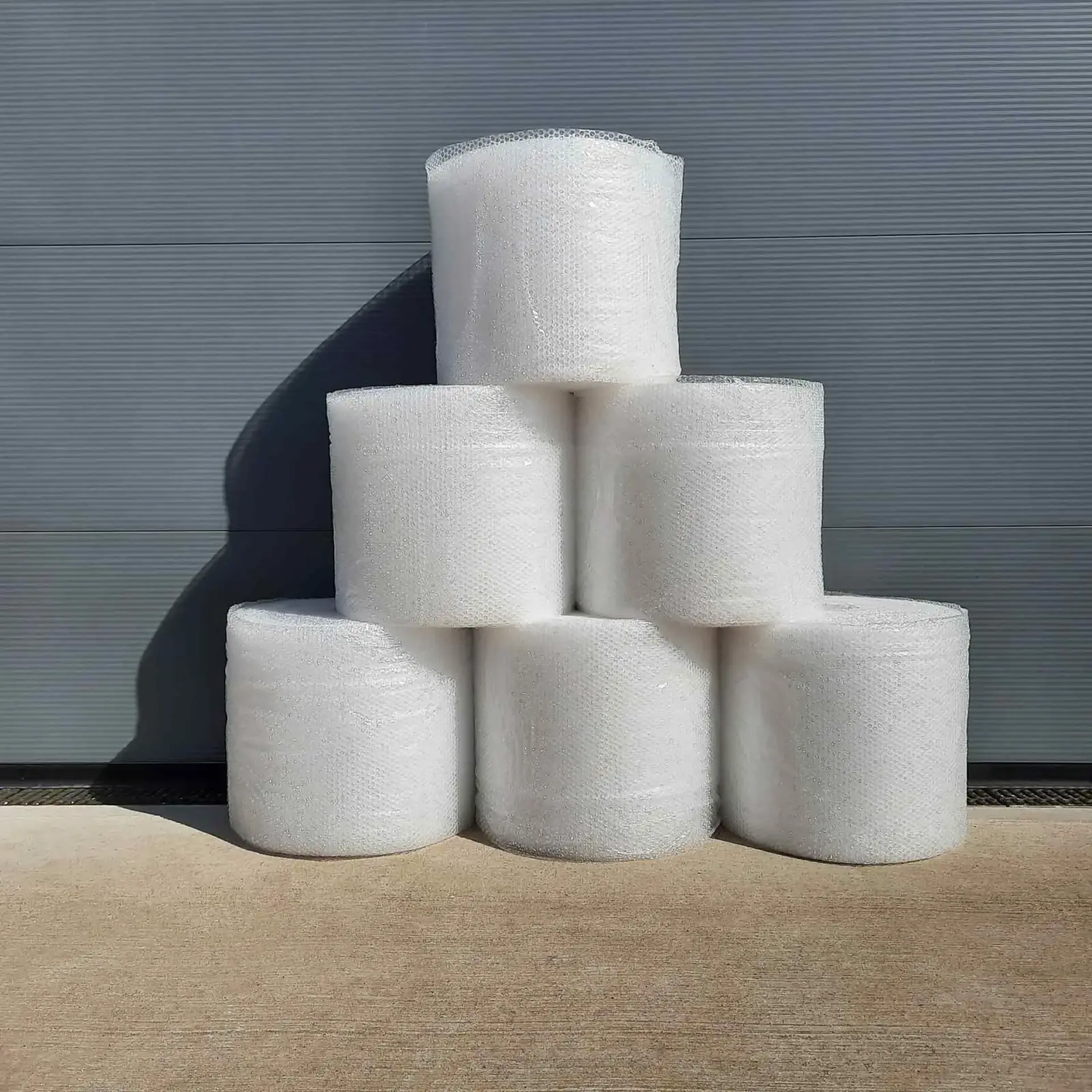
Bubble wrap protects fragile items in transit; clean newsprint or packing paper fills voids inside boxes so things don’t shift; brown packing tape (the heavy kind, not the household kind) seals everything. A typical 3-bed home uses 2–3 large rolls of bubble wrap, 5kg of packing paper and 6–8 rolls of tape. For pictures, mirrors and glass shelving, we recommend BAR-spec single-faced wrap, sold by the roll.
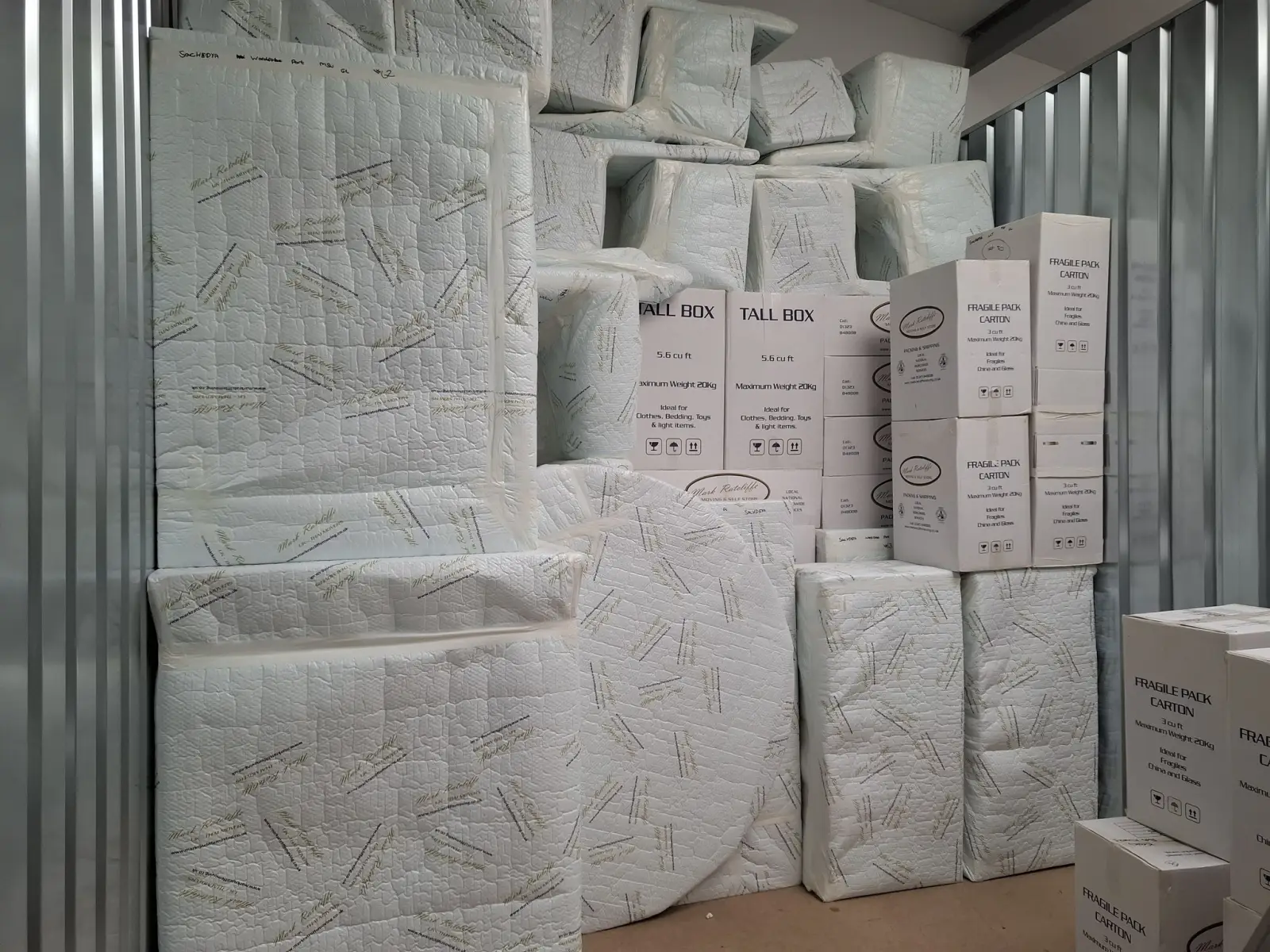
Disposable mattress covers stop the most-personal item in your home from arriving with dust or transit marks. Sofa and armchair covers do the same for upholstery. We also stock TV transit boxes, picture cartons, ski/golf-bag cases and dish-pack inserts with cushioned cardboard dividers. For anything truly fragile or high-value — antiques, art, instruments — speak to us about custom timber crating rather than a cardboard solution.
The shop is at our Lower Dicker depot (Mon–Fri 8:00–17:30, Sat 9:00–13:00). Drop in and collect, or order ahead and we’ll have it bundled for you. We deliver across Sussex, Surrey, Kent and London for a small van charge — usually next-day. Customers who’ve booked a full packing service or a removals job with us get the materials at trade prices, and for full clearances the unused boxes can be returned for refund as long as the seals haven’t been broken. Materials are part of why a careful move stays a careful move — we’d rather you over-buy a little than risk a fragile item travelling in nothing more than a tea-towel.
Most damage in transit happens not because a crew was careless but because the box couldn’t take the stack. A budget single-walled box loaded with books loses its corner integrity by the time it’s the third box up in a stack of four. A bin-bag of clothes is fine for a journey to the dry-cleaner but disastrous in the back of a 7.5-tonne lorry on the M23. Newspaper as a void-filler transfers ink to china. Cling-film as a furniture wrap traps moisture against polished wood. Every one of these is a damage claim we’ve seen on jobs where customers brought their own materials — and every one is avoidable for the cost of a few proper boxes and a roll of decent tape.
The boxes on our shelves are recyclable corrugated cardboard, and we operate a buy-back scheme for unused or single-use boxes after a move — we credit your account or donate the proceeds to a local downsize charity. The reusable plastic crates used on our office and commercial moves are part of the same loop: dispatched full, returned empty, washed, redeployed. For customers focused on a low-waste move, we also stock paper-tape (compostable), wool-felt furniture pads instead of plastic bubble, and printed packing paper made from post-consumer recycled stock.
Yes — unused, undamaged boxes can be returned within 14 days of purchase for a credit refund. Please bring the receipt and keep the boxes flat-packed; opened, taped or marked boxes can’t be returned but they’ll always be useful for storage or a future move.
Yes. Books, records and crockery go in our small heavy-duty boxes (double-walled, smaller volume, comfortably under 15 kg when full). Lighter items — clothing, soft toys, lampshades — fit our standard or large boxes. Mixing them up is the most common cause of injury during a self-pack.
Order the bundle pack appropriate to your home size (1-bed, 2-bed, 3-bed, 4-bed) — it works out roughly 25% cheaper than buying every item individually. Customers who’ve also booked a removal or packing job with us get a further trade-price discount on materials, and we’ll happily price-match any like-for-like quote from a local Sussex competitor on the same day. The packing kit we recommend has been refined across years of moving Sussex households and is the same kit our own crews use on every job — you’re buying exactly what we’d use in your home if we were doing the packing for you.
Both. You’re welcome to collect from our Lower Dicker depot during opening hours, or we can deliver a materials order to you across East Sussex — usually free of charge when it’s booked alongside a removal or packing job. Tell us your move date and we’ll time the drop-off so you have everything a few days before you start packing.
From the blog
Learn professional techniques for safely packing glass, china, mirrors, and other fragile items to prevent expensive breakages on moving day.
Read article →
The kitchen is the hardest room to pack. Learn professional techniques for safely packing plates, glasses, appliances and crockery.
Read article →
Moving TVs, computers, and other electronics? Learn the correct way to pack and protect your electronic items during a house move.
Read article →