
Practical moving advice from Mark Ratcliffe Moving & Storage — family-run, BAR-member Sussex removals. Hard-won know-how distilled into short, useful guides.
2026-05-18 · 9 min read · Packing · technique

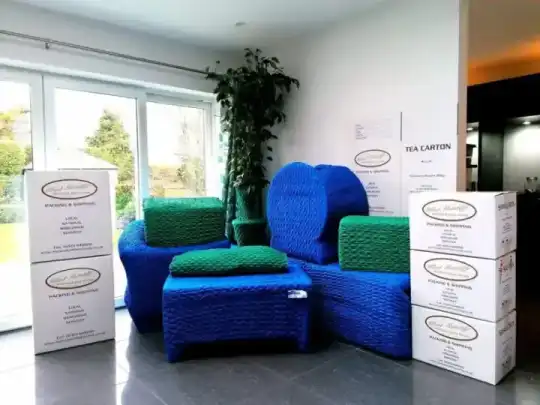
At Mark Ratcliffe Moving in Sussex we run our own BAR-accredited staff training centre — one of only a handful of UK removal companies that does. Among the most-taught modules our crew works through is packing fragile items. The reason: when self-packed boxes arrive damaged, the cause is almost always one of five technique errors, and all five are avoidable with proper materials and ten minutes of explanation. We’ve packed hundreds of thousands of fragile items; this article is the same explanation our packers learn on day one. If you’re self-packing the fragile items in your Sussex home, read it before you start.
Cheap materials are responsible for more damage than any other single factor. Before you pack a single plate:
The single biggest mistake people make: stacking plates flat. Plates lying flat break. Plates standing on edge survive.
The dividered carton insert is the secret. Without it, glasses bang together and one of them dies.
Glass under tension breaks easily. Three steps:
For genuine art — original oils, watercolours, antique prints — we strongly recommend either using our full packing service or our custom timber crates for higher-value items.
Modern TVs, computers and audio equipment are sensitive to two things in transit: shock and static electricity.
If you do nothing else, avoid these five — they account for about 80% of self-pack damage we see at the other end:
Most of the damage we see at the other end isn’t the result of a single bad pack — it’s caused by packing too late, too fast, and in the wrong order. Working room-by-room (instead of grabbing whatever is to hand) gives you a complete inventory, fewer move-day surprises, and far less breakage. It also costs you nothing except a couple of evenings’ planning.
Start with the rooms you use least. The spare bedroom, loft, garage and outbuildings are the ideal first targets. They tend to contain the items most easily forgotten in a panic-pack: framed photographs, archive boxes, retired crockery sets, garden ornaments, seasonal decorations. They’re also where dust, damp and time will already have weakened cardboard and old packaging — so anything sitting up in a loft for years needs fresh boxes and fresh tape, not the original Amazon carton from 2014.
Finish with the kitchen and the bathroom. These are the rooms you genuinely use every day right up to move morning. Packing them early means living out of half-packed cupboards for weeks. Pack non-essential china, baking trays and serving platters two to three weeks out; pack everyday cookware, glasses and one cutlery set the day before, alongside a clearly labelled ‘first-night’ carton containing a kettle, two mugs, tea, biscuits, kitchen towel and a phone charger. Tape that carton red and load it last; it comes off first at the new house.
Within each room, work top-down. Take pictures and mirrors off walls first — corner-board, bubble, vertical stack against a packed wall. Then move on to breakables on shelves and in display cabinets. Then ornaments, books and everyday items. Furniture pad-wrapping happens last, ideally on the morning of the move — but always before the item leaves the room, never in the corridor or the lorry. The few extra minutes spent wrapping a chest of drawers in the bedroom save a long argument over a scratched sideboard at the other end.
Keep a running inventory as you go. A single A4 sheet per room, numbered cartons (1.1, 1.2, 1.3 for room one), and a brief contents note alongside each number. Five minutes a day across two weeks of packing turns into a complete, searchable record at the other end — and is invaluable in the rare event of an insurance claim. Customers using our full packing service get an itemised inventory as standard; if you’re self-packing, copy the same discipline.
Stack packed cartons against an interior wall, not by the doorway. Boxes against an outside wall get cold and damp from overnight condensation; boxes near a doorway get knocked, kicked and used as seats by visitors. Leave a clear path through every room for the crew — typical loading speed almost doubles when corridors are unobstructed and the team can keep a rhythm.
One last room-by-room habit: photograph the empty room before you leave. Take a wide shot of each wall plus a close-up of each socket and switch plate. Two minutes per room. If the landlord at your old property challenges your deposit return, or if your buyer raises a question about a fitting six weeks later, those photos are the cleanest evidence you can have.
None of these habits cost anything extra; they simply spread an hour of admin across the packing weeks instead of compressing it into a panicked half-hour on move morning. Customers who pack room-by-room consistently report fewer breakages, faster unpacking, and a much quicker first-night settle-in at the new house.
For glassware yes (with internal tissue still in the bowl). For china and silver no — newsprint transfers ink. Tissue is cheap; buy proper packing tissue.
Mark FRAGILE on all six sides of the carton, not just the top. Lorry crews stack from above and don’t always see the top sticker once the box is loaded.
Original box if you have it. If not, anti-static bubble wrap then triple-wall carton with corner-block protection. Carry the TV upright at all times — don’t lay it flat.
Yes — fragile-only packing is our most popular packing option. We do the breakables; you do the easy stuff. About £220–£340 for a 3-bed home. Packing services.
Yes — order by email from our packing materials page. Removal-grade boxes, proper tape, bubble, tissue, blankets.
Email office@markratcliffemoving.co.uk or call 01323 848 008. Family-run independent business · BAR member · 4.9/5 from 120+ reviews.