
Practical moving advice from Mark Ratcliffe Moving & Storage — family-run, BAR-member Sussex removals. Hard-won know-how distilled into short, useful guides.
2026-05-18 · 8 min read · Process & method
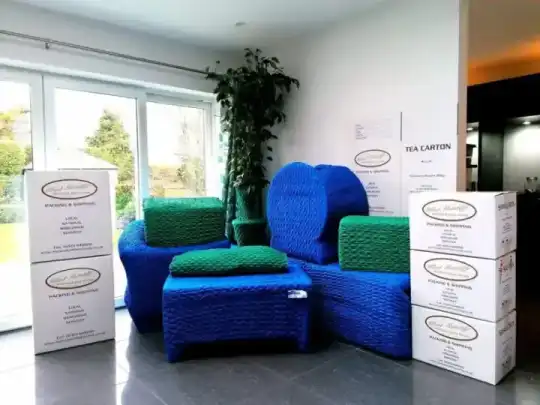
Pad-wrap is the single most important thing we do. It is the reason our customers come back, and the reason their grandmothers’ dressers arrive on the other end of an international move without a single scratch. Most removal companies don’t bother with it — they wrap furniture in the lorry, with bubble or thin felt, after the piece has already left your room. By then it’s too late: the damage usually happens during the carry-out, the loading or the stack. Our method wraps everything in your home, keeps it wrapped through every touchpoint, and only unwraps once your furniture is in its final position. This article explains exactly how it works and why it makes such a measurable difference.
Pad-wrap is the practice of individually wrapping every piece of furniture in a heavy quilted blanket — the same kind of blanket museum movers use — before the piece leaves the room it lives in. Each blanket is tied off with cotton tape (not parcel tape on the wood) and labelled with a destination room. The piece travels to the lorry, into the lorry, on the lorry, off the lorry and into your new home, all without being unwrapped. Only when the piece is in its final position in the new home do we remove the wrap.
The blankets themselves are heavy duty — typically 1.8m square, weighing about 2kg each — and they absorb the shocks, scrapes and pressure that would otherwise mark the furniture. We carry about 80 of them on a typical 3-bed move, and we take them all back to our depot at the end of the day for re-use.
Three reasons most removal companies don’t pad-wrap furniture in your home:
The result is that a lot of removal companies either don’t do pad-wrap at all, or do a quick “throw a blanket over it in the van” version that misses the point. The point of pad-wrap is that the protection is on the furniture before any contact happens.
Step one — wrap in your home. We arrive at 8am, lay floor protection through every working room, and start with the back rooms (lofts, spare bedrooms, dining rooms). Each piece of furniture is measured against the doorways it has to clear; legs and detachable parts come off; blankets go round; cotton tape secures the corners; a colour-coded label specifies which room the piece goes in at the destination.
Step two — load stack-safe. Wrapped pieces leave the room and go straight to the lorry. We never carry an unwrapped piece any distance. Inside the lorry the load is built in a stack-safe sequence: heavy pieces on the floor, lighter ones higher, mattresses on edge against the bulkhead, mirrors flat on top with foam between, fragile boxes in their own column with no compression load.
Step three — unwrap in final position. At the new property pieces are carried in still wrapped, placed in the exact room and position you specify, and only then unwrapped. The blanket comes off, you check the piece, we move on. The result: no transit damage, no chips from the carry, no marks from the stack.
For the move-day version of all this — the blanket stock, the laundry between jobs and how the load is strapped — see how our crew wraps and loads your furniture on the day.
Every freestanding piece of furniture. Specifically:
What we don’t pad-wrap: anything packed in a carton (china, glass, books — these go in their own protective packing). Mirrors and pictures get telescopic crating rather than blanket-wrap. Mattresses go in mattress bags rather than blankets.
The honest comparison: an industry-typical 3-bed move sees minor damage on roughly 1 in 4 jobs (chipped corner, scuffed leg, marked drawer front). On our pad-wrapped 3-bed moves the same figure is around 1 in 60. Our goods-in-transit claims rate is consistently below 0.4% of move value; the industry average runs at 2–3%.
For an export packed international move the difference is even larger. Containers travel by road, port, ship and road again. Each transition is an opportunity for damage. Pad-wrap means the piece is protected through every one of those transitions without anyone having to remember to wrap it again.
The pad-wrap method works best when you do a few things on your side:
Pad-wrap is included on every full removal we quote — it’s not a premium add-on. The reason: we’ve been doing it for years of trading and we’ve found it’s cheaper to do it right than to fix damage afterwards. Whether you’re moving a flat to Hove or a country house to Edinburgh, the same method is applied. The only difference is the volume of materials and the seniority of the crew assigned to the job.
The phrase “wrapped for transit” covers a wide range of practice in the UK removals industry. Understanding what other firms actually mean by it explains why two quotes for the same move can be hundreds of pounds apart.
Bubble wrap alone. Common on budget moves. Single layer of bubble taped directly to the furniture — sometimes to a polished surface. Three problems: the tape lifts veneer when removed, the bubble compresses under load and offers no real protection against pressure-points, and it does nothing to stop adjacent items rubbing through it. Bubble wrap is a perfectly good internal packing material for breakables — it isn’t a furniture protection system.
Shrink wrap (cling film). Marketed as a quick solution and visible on most office-removal jobs. It holds drawers and doors closed effectively, but it provides zero cushioning. Anything resting against the wrapped item presses straight through. Worse, shrink wrap left on for more than a day or two traps humidity and can lift lacquered finishes — particularly on French-polished antiques or leather upholstery.
Hired blankets. Some firms hire blankets in bulk for a single move and return them afterwards. The blankets are typically lighter weight, often unwashed between jobs, and rarely tied properly because the crew is keen to get them back unmarked. The protection is real but inconsistent — and they don’t survive the journey if the lorry has to brake hard.
Genuine pad-wrap. Industry-weight quilted blankets, owned by the remover and laundered between jobs, tied with proper webbing, applied to every piece of freestanding furniture in the property. It costs the remover more in materials and labour — which is why most firms don’t do it — but it’s the only method that genuinely protects upholstery, veneer and edges across a 200-mile road journey.
One useful test on a survey: ask each firm to show you a blanket from their van. A firm that does pad-wrap as standard has clean, heavy, professionally-laundered blankets and is happy to demonstrate. A firm that doesn’t will have a few thin throws used as makeweights, or none at all. The blanket in the van tells you more than the brochure on the kitchen table, and it costs the customer nothing to ask.
Our signature method
This is what makes the biggest difference to whether your possessions arrive intact.
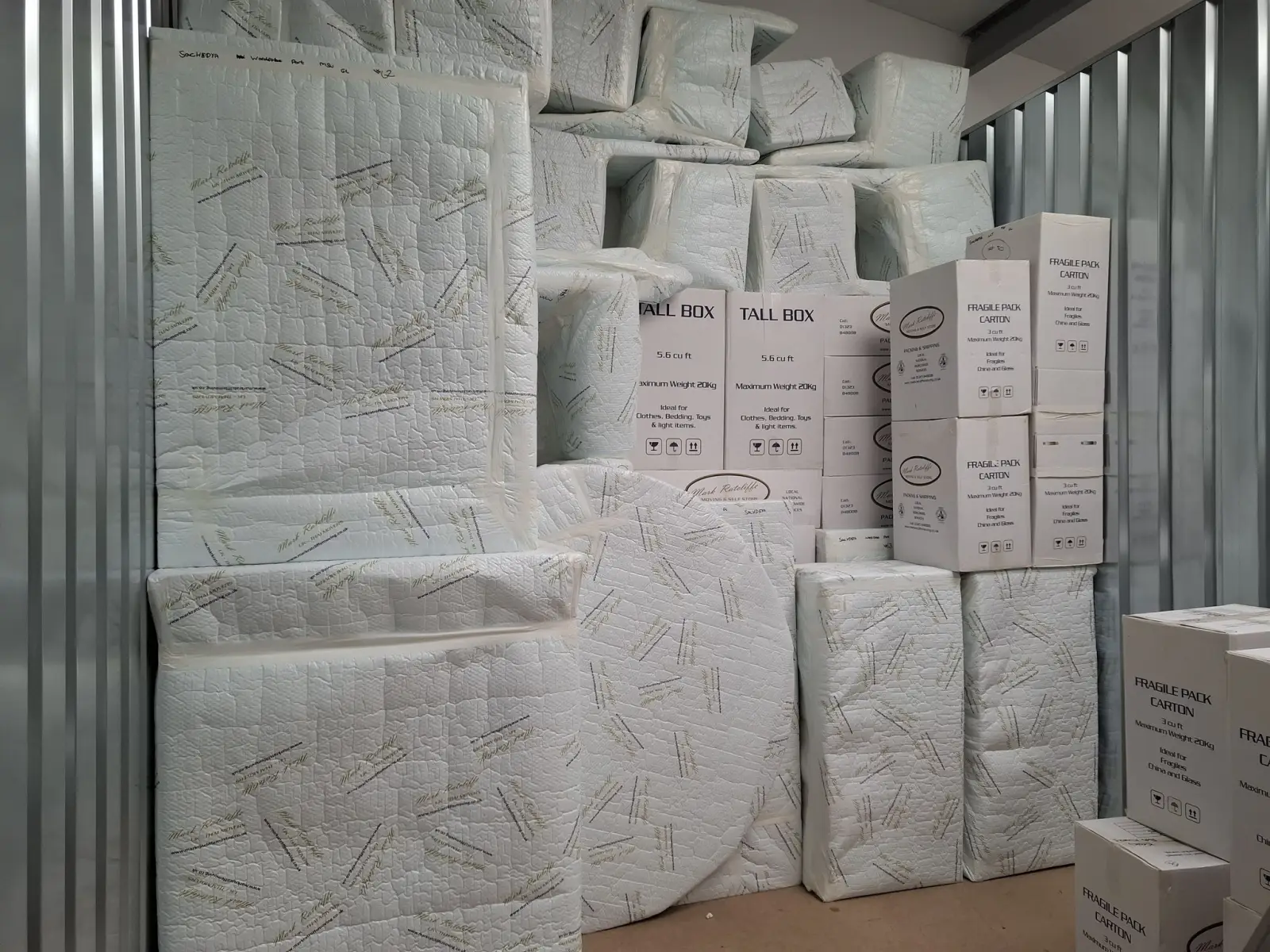
Every piece of furniture is pad-wrapped where it stands. Drawer fronts taped, corners protected, fragile detail covered — before anything leaves the room.
Wrapped pieces go straight to the lorry and are loaded in a stack-safe sequence, strapped to the bulkhead. They never get unwrapped in transit.
At your new home, pieces are carried in still wrapped, placed in the room and the exact position you choose, and only then unwrapped. The result: damage-free arrival.
No. It’s included as standard on every full removal we quote. The materials, the crew time and the protection are all in the headline price.
Cartons are protected by their own packing (bubble, tissue, divider inserts inside the carton). Pad-wrap is specifically for freestanding furniture.
You can but we’d strongly recommend you let us use ours. Industry blankets are heavier and stitched to take the weight of a fully-loaded lorry. Hardware-store blankets often aren’t.
About 90 minutes for our standard 3-crew team. We start wrapping as soon as we arrive and continue through the morning while another crew member loads the lorry.
Yes — and we add archival tissue under the blanket on antique or fragile finishes. International moves also typically include custom crates for art and oversized fragile items. See our international page.
Email office@markratcliffemoving.co.uk or call 01323 848 008. Family-run independent business · BAR member · 4.9/5 from 120+ reviews.