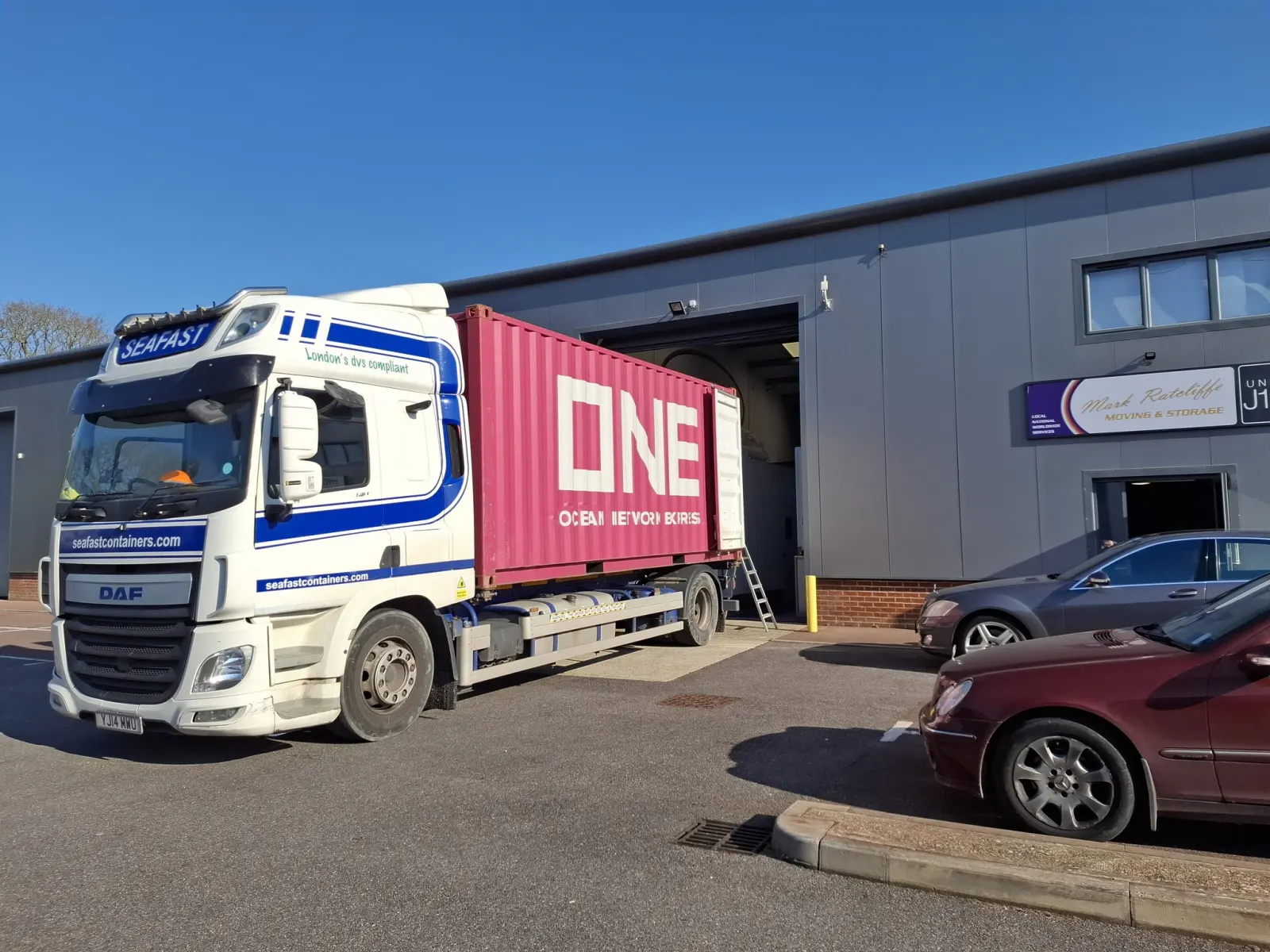
What You Can and Can't Store in Self Storage Units
Important safety information – a complete list of items you are allowed and not allowed to store in self storage units.
Read: What You Can and Can't Store in Self Storage Units →
Our blog is where we share what we’ve learned in forty-plus years of moving Sussex households — the practical stuff that doesn’t fit on a service page, the longer reads about how the removals industry actually works, the customer stories that explain why we do things the way we do. Below are the latest articles; for the full categorised library of all 90 posts, jump to the blog archive.
The posts here split roughly into five themes. They’re written by people who actually load lorries and deal with customer queries day-to-day, not by an outsourced SEO copy desk, so they tend to be opinionated, specific and occasionally honest about the parts of removals that the industry doesn’t usually discuss in public.
These are the “what should I do in the four weeks before move day” articles — what to pack first, how to handle utilities and post redirection, what to set aside for your own car on move day, what to ask when comparing removal quotes. Start with our moving checklist for a structured timeline; the blog posts add depth on specific topics that customers ask about repeatedly.
The pad-wrap method, how we pack fragile items, why we ship antiques in custom timber crates, the loading order that prevents damage, what really happens in our training centre. Read these if you want to understand why certain removers cost more than others and what that price difference is buying you.
Honest takes on the things customers ask but don’t always get a straight answer to: what to look for in a BAR member, how to spot a rogue trader, why some removers ask for a 50% deposit (we don’t), what the “volumetric clause” means and why we don’t use one. These posts are the equivalent of asking a friend who happens to run a removals firm.
Real moves we’ve handled, with the customer’s permission and identifying details abstracted — a 5-bedroom Heathfield country house, an Eastbourne-to-Bangkok overseas move, a four-storey townhouse downsize, a 30-person office relocation over a single weekend. These pair with our reviews page to give a fuller picture of the work we do.
Moves to Europe, Thailand, Australia and the USA come up often enough that we’ve written detailed primers on each — customs paperwork, container shipping versus airfreight, ToR1 returning-resident relief, what to expect from the destination-country agent, how long things actually take. If you’re considering an overseas move, start with the relevant blog post then talk to us about a survey.
We add new posts roughly every two to three weeks — not on a fixed schedule, but whenever a question comes up enough times during quotes that we’d rather write it down once than answer it twenty times by phone. Subscribe to the office newsletter via the quote form if you’d like new posts emailed; otherwise the archive index is always sorted newest-first.
If you’re new to the blog and looking for the highest-impact reading first, four posts come up again and again in quote conversations: the pad-wrap protection explainer (why this single technique reduces damage claims to near-zero), the moving-house checklist (a week-by-week timeline most customers wish they’d found earlier), the rogue-traders post (warning signs to look for in any removal quote), and the DIY versus professional piece (an honest cost comparison that helps customers decide whether to hire crew at all).
Every post is written by someone on the team and reviewed by Mark before publication. We don’t outsource to SEO content mills, we don’t use AI to draft articles, and we don’t republish other people’s content. Posts include real numbers (cubic feet, prices, mileage figures, claim rates) from our own jobs rather than industry averages where ours differ. If a post is opinionated, we say so. If a recommendation has exceptions, we list them. If we’ve changed our minds about something since an older post, we add an update note rather than quietly deleting the original. The blog is a working record, not a marketing channel.
Email office@markratcliffemoving.co.uk with “blog suggestion” in the subject. We answer every one and we tend to write posts faster when there’s a real question behind them rather than a vague brief. The best post ideas come from customers mid-quote who ask something we don’t have a written answer for yet.
If you’ve landed here from search, the blog is one of three layers of customer-facing information we maintain. The services pages describe what we do at a high level — what’s included, what’s excluded, what each service costs in rough terms. The areas-covered pages describe where we work and the local quirks of each Sussex / Surrey / Kent town. The blog is the third layer: the in-depth context behind the services and the local moves, written for customers who want to understand before they book rather than book on price alone. If you don’t find what you’re looking for in any of those three places, the office is one phone call away on 01323 848 008 — we’d much rather spend ten minutes on the phone with a prospective customer than have them book sight-unseen and discover something they wished they’d known earlier.
Important safety information – a complete list of items you are allowed and not allowed to store in self storage units.
Read: What You Can and Can't Store in Self Storage Units →
Not sure where to start packing? This guide shows you exactly what to pack first when moving house to avoid stress and last-minute panic.
Read: What to Pack First When Moving House →
Curious about moving day? We explain exactly what happens from the time our team arrives until everything is safely in your new home.
Read: What Happens on Moving Day – A Step-by-Step Guide →
Ways to save on your house move — 12 practical tips from 40 years of Sussex removals. Small decisions that compound into hundreds saved.
Read: Ways to Save on Your House Move – 12 Practical Tips →
Practical and achievable ways to reduce waste and make your house move more environmentally friendly in 2026.
Read: 10 Ways to Make Your House Move More Eco-Friendly →
Sustainable removals guide — greener moving choices for Sussex 2026: reused crates, route optimisation and how offsets actually work.
Read: Sustainable Removals Guide – Greener Moving in 2026 →