
Six ways people try to shave a few hundred pounds off a move, and what each one tends to cost them instead.

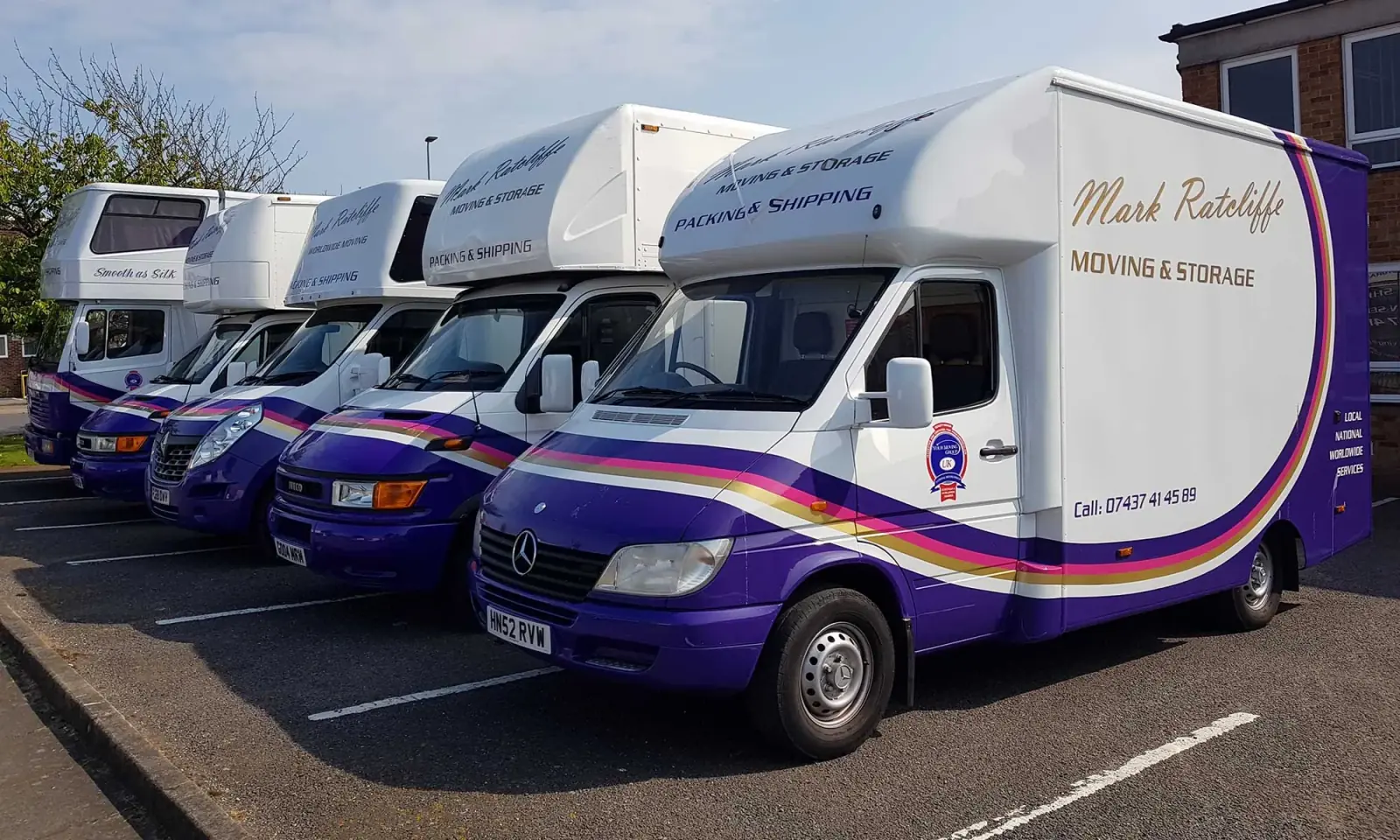
The cheap removals risks worth understanding are not the dramatic ones. Most people who lose money on a house move are not defrauded — they simply take a saving that turns out to be a cost wearing a disguise. They trim the volume they declare, decline the survey, pick the quote that is a third under everyone else’s, pack the china themselves, book a van a size too small, or pay cash and take nothing in writing. Each decision looks sensible in isolation. Each one has a predictable way of going wrong.
This page is deliberately the negative version of the argument. If you want the list of savings that genuinely work — timing, decluttering, packing tiers — read our guide to saving money on a house move instead. What follows is the other half: where cutting costs simply relocates the cost, usually to a worse moment, and usually with no insurance behind it. From our own Sussex removals work and from the jobs we get called into after somebody else’s cheap quote fell over, these six come up again and again. For the underlying numbers, the 2026 cost guide has the line-item breakdown.
This is the most common one and the most understandable. The surveyor asks about the loft and you say “oh, there’s not much up there”, because you genuinely have not looked since you moved in. The garage gets described as “a few bits”. The shed is not mentioned at all. Sometimes it is not even a conscious choice — sometimes people quietly hope that a smaller declared volume produces a smaller number and that it will somehow work out on the day.
It does not work out on the day, because a lorry has a fixed cubic capacity and a crew has a finite number of hours. When the volume turns out to be a third larger than quoted, you have exactly three options at eight in the morning, and none of them are cheap. You pay for a second trip, which on anything beyond a few miles means the crew getting back after dark and a supplement on the day. You pay for a second vehicle, if one happens to be free, which in peak season it very often is not. Or you leave things behind in a house you no longer own, which turns into a separate collection, a storage charge, and an awkward conversation with the new owners.
There is a second sting. A quote is priced on a declared scope. If the scope is materially wrong, the fixed price stops being fixed — and any dispute afterwards will turn on what you told the surveyor, which is written down. Under-declaring does not shift risk onto the remover. It keeps it with you.
The fix costs nothing. Open the loft hatch before the survey. Open the shed. Walk the garage. If you genuinely have not decided whether something is going, say that out loud and let it be priced as a maybe. Removers plan for uncertainty all the time. What we cannot plan for is a room we were never shown. Our downsizing guide covers how to get the volume genuinely down before survey — which is the honest version of the same saving, and it actually works.
Plenty of firms will price a move off a phone call or a web form. It is quick, it feels efficient, and the number that comes back is usually lower than a surveyed quote — which is precisely the problem. A quote produced without anyone seeing your house is not a price. It is an opening position.
What a survey exists to find is not really your furniture. It is the things that change how long a job takes and what equipment it needs: the carry distance from the vehicle to the door, whether the lorry can get down the lane at all, the staircase with a tight return that the sofa will not clear, the piano nobody mentioned because it has been in the corner for years, the fitted wardrobes that have to be dismantled, the flat with a lift that can only be booked between ten and four. None of that appears on a web form. All of it appears on the day.
When those things surface at 8am, the conversation is about surcharges, and you are having it while holding a set of keys with a completion time attached. You have no leverage and no alternative supplier. That is the entire economics of an unsurveyed quote, and everyone in the trade knows it.
A survey takes between thirty and ninety minutes, in person or by video, and it costs you nothing. It is also the point at which you can ask the awkward questions — our list of questions to ask a removals company is written for exactly that half hour. If a firm will not survey your move at all, that is information in itself.
People ask us whether a removal company can be too cheap. The honest answer is that price is not the signal — the gap is. Three properly insured firms quoting the same surveyed scope will normally land within ten to twenty per cent of each other, because they are all buying the same things: vehicles, fuel, insurance, blankets, and trained people who are paid for the day. When one number sits forty per cent below the rest, that difference has come out of something, and there are only a few places it can come from.
It usually comes out of labour, in the form of casual hands hired that morning who have never wrapped a wardrobe. It comes out of protection, so furniture travels shrink-wrapped or bare instead of blanket-wrapped. It comes out of vehicle standard. It comes out of scope, so the number you were shown excludes materials, dismantling, or the long carry, all of which reappear later as extras. And very often it comes out of insurance, because goods-in-transit and public liability cover is one of the largest fixed costs a remover carries, and it is invisible until the day you need it.
That last one is where the false economy really bites. If an uninsured trader damages your floor, drops a television, or writes off a van with your entire life in the back, you are not making a claim — you are suing a person, possibly a person operating with no trading company behind them and nothing to recover. The saving was a few hundred pounds. The exposure is everything you own.
None of this means the cheapest quote is always bad. It means a cheap quote deserves an explanation, and a legitimate firm will happily give you one — smaller overheads, a depot near both addresses, a gap in the diary. What you are checking is that the saving comes from efficiency rather than from something being absent. Our guide to verifying a removal company sets out exactly how to confirm insurance and trading status before you commit.
Self-packing is not a false economy in general. It is a false economy in one specific category, and the category is anything breakable.
Here is the part that surprises people, and it cuts the opposite way to what most of the trade will tell you. Almost every removal firm in the country operates a “packed by owner” disclaimer that excludes self-packed cartons from cover altogether. We deliberately do not. Our terms and insurance details cover everything in the lorry, including boxes you packed yourself, provided they were packed with reasonable care and the contents are listed on the inventory. Read the small print on a cheaper quote before you assume the same applies — on most of them it does not, and self-packing quietly moves your china outside the policy.
So the arithmetic on self-packing your own china is not simply “save a few hundred pounds versus a small risk of breakage”. Two conditions do real work in that sentence: reasonable care, and a proper inventory. A dinner service rolled in newspaper in a supermarket box that splits at the tape line is not a claim anybody wins, with us or with anyone else, and no payout replaces a piece that was never made again. For a box of paperbacks that risk is irrelevant. For a dinner service, a display cabinet, framed art, mirrors, glassware, a television, or anything with sentimental value that cannot be replaced at any price, it is the whole question.
The sensible middle ground is the fragile-only tier: the crew packs the breakables, you pack the books, clothing, linen, bedding, garage and shed. You keep most of the saving and you keep the cover on the things that matter. If you are set on packing everything yourself, at least use removal-grade materials rather than supermarket boxes and newspaper, and read our guide to packing fragile items before you start, and list what is in each carton on the inventory. That listing is what turns a self-packed box into a covered one.
One more thing self-packers underestimate: unfinished packing. If the boxes are not sealed and stacked when the crew arrives, you have not saved money at all. You have converted a planned packing service booking into an unplanned one, at short notice, in the middle of a load, on the most expensive morning of the whole process.
Van hire looks like the purest saving available. You compare a day rate against a removal quote, the gap is enormous, and the decision seems obvious. The gap narrows sharply once you count what the day rate does not include.
Start with the sizing, because this is where most self-move budgets fail. People consistently underestimate their own volume — a three-bedroom house does not fit in a Luton box van, and it usually does not fit in two of them either once everything is wrapped rather than stacked bare. If you get the size wrong, you do not simply make a second trip. You make a second trip with the fuel, the extra hire day, the extra hours, and a house you have to leave unsecured in the middle. If the two properties are any real distance apart, a second trip can quietly double the whole exercise.
Then count the rest. Fuel at commercial-vehicle consumption, insurance on a vehicle class most people have never driven, a deposit, mileage limits, and the cost of any damage to the van itself — hire excess on a large van is not trivial. Add blankets, straps, a trolley and materials, none of which come with the van. Add the friends you have asked for a favour, who are untrained, uninsured for the work, and carrying heavy things down someone else’s staircase. Add the day of annual leave. Add the fact that nothing in the load is covered by anything at all, because your household insurance almost certainly does not extend to goods you are transporting yourself.
None of that means a self-move is always wrong. For a studio flat, a short distance, and no furniture worth insuring, it can genuinely be the right call. For anything with a staircase, a piano, a full kitchen, or a completion deadline attached, the sums stop working quickly. And a middle option exists that people forget: use a removal firm for the load and do the small stuff yourself, or move part of the contents into storage so a single vehicle is enough. The cost guide sets out how the vehicle tiers actually price.
Somebody offers to knock a chunk off for cash, no invoice, no paperwork. It feels like a straightforward discount between adults. What you have actually agreed is a contract that does not exist.
Think about what the paperwork is for. A written quote defines the scope, so nobody can claim later that the garage was never included. It defines the price, so it cannot move on the day. It names a legal entity, so there is somebody to hold responsible. It carries the terms — liability limits, claim windows, what happens if the chain slips, what happens if the move is cancelled. Without it, every one of those questions is decided by whoever is standing next to the lorry when it comes up.
The deposit is the sharper end of it. Ours is 25% on booking, and it is protected under the British Association of Removers’ Advance Payment Guarantee — which means that if the worst happened and the company could not perform, your money is not simply gone. A cash deposit handed over with no receipt has no protection of any kind. It is not insured, it is not traceable, and it is not recoverable.
There is also the plain fact that a firm actively avoiding a paper trail is telling you something about how it operates. VAT-registered removers charge VAT on domestic moves because domestic removals are VATable — that is simply the law, not a markup. A quote with the VAT quietly missing is not a better deal; it is a different kind of business, and one with far less to lose than you have.
The rule is simple and it costs nothing to apply. Get the quote in writing, itemised, with a company name and address on it. Pay the deposit by a traceable method. Keep the confirmation. If you are choosing between firms, our guide to choosing a removal company covers what a legitimate written quote should contain, and you can compare ours by asking for one through the online quote form.
We've been a family-run Sussex remover. Crews are directly employed and trained at our own staff training centre. Pad-wrap on every full removal, removal-grade cartons, BAR Advance Payment Guarantee on every deposit.
120+ independent Google reviews at 4.9/5. Survey, written quote within 48 hours, deposit-protected booking, calm move day. Whichever category your move falls into — routine local, overseas, antiques, business — the approach is the same.
Booking the survey takes ten minutes via the online form.
Free in-home or video survey, written fixed-price quote, BAR-protected deposit. Sussex’s family-run independent remover.
Every false economy on this page fails the same test, and once you see the pattern you can apply it to any decision on your own move.
A real saving removes work or removes volume. Moving mid-week instead of a Friday genuinely costs the remover less, because the vehicle and crew are easier to schedule. Decluttering the loft genuinely reduces the cubic footage on the lorry. Packing your own books genuinely removes hours of labour from the job. In each case something is actually smaller, so the price is actually smaller, and nothing has been transferred to you in exchange.
A false saving removes protection, or removes certainty, or removes a promise. Nothing gets smaller — the same house still has to be moved by the same number of people over the same number of hours. What has changed is who carries the risk if it goes wrong. Skipping the survey does not make the loft smaller; it just means nobody has priced it yet. Choosing an uninsured trader does not make the job cheaper to do; it means the cost of a damaged item now lands on you. Paying cash does not reduce anyone’s workload; it removes your evidence.
So when you are looking at two quotes, or at a tempting shortcut, ask one question: what is physically less, and what is merely unaccounted for? If nothing is physically less, the money has not been saved. It has been parked somewhere you cannot see it, and it usually reappears on the worst possible morning.
It is also worth being clear about what is not on this list. Negotiating is fine. Asking for an itemised quote and querying a line is fine. Asking whether a mid-week date is cheaper is fine, and the answer is usually yes. Reputable firms expect all of that and most of us would rather have the conversation at survey than have a customer quietly go elsewhere. The line is not between paying more and paying less — it is between paying for something and hoping you will not need it. For the savings that genuinely do work, the companion house move savings guide lists them in order of how much they are worth.
Most of the false economies above are only possible because two quotes are not comparable. If every quote you hold is itemised the same way, the cheap one either explains itself or exposes itself. Here is what to insist on seeing.
A named legal entity and address. Not a trading name alone. Ours is EMV London Ltd trading as Mark Ratcliffe Moving & Storage, operating from Lower Dicker in East Sussex and from Coulsdon in Croydon. A company you can look up is a company that can be held to something.
The surveyed volume. A cubic-footage figure, or at minimum the property size and what was included. This is the number every other line depends on, and it is the number that under-declaring corrupts.
Vehicle and crew. How many vehicles, how many people, and for how long. Two quotes at similar prices with different crew numbers are not the same job.
What packing tier is included. Full pack, fragile-only, materials-only, or load-only — and if materials are included, how many cartons of what size. This is the single most common place for a cheap quote to be quietly thinner than it looks. Our packing service page sets out what each tier actually covers.
Protection standard. Whether furniture is blanket-wrapped, whether floors and door frames are protected, whether dismantling and reassembly are included.
Liability and insurance. The cover in place, the limits, and the claim window. Read this next to the terms and insurance details rather than taking a verbal summary of it.
The extras that are not included. Long carries, parking suspensions, waiting time, storage if the chain fails, specialist items. A good quote names them even when they do not apply, so you know what would trigger a change.
Payment terms. Ours are 25% on booking, protected under the British Association of Removers’ Advance Payment Guarantee, with the balance on completion. Whatever a firm’s terms are, they should be written down before you pay anything.
Ask for that, from three firms, and the comparison does itself. You can request ours through the online quote form or by calling the office on 01323 848 008, Monday to Friday 8am to 5:30pm and Saturday 9am to 1pm.
The price on its own tells you little; the gap tells you a lot. Properly insured firms quoting the same surveyed scope usually land within 10–20% of each other. A quote sitting far below that has taken the difference out of labour, protection, scope or insurance — ask which, and expect a straight answer.
For books, clothing, linen, bedding and the garage, yes. For breakables, usually not — not because we exclude them, since unlike most removers we cover owner-packed cartons, but because cover depends on reasonable care and an inventory listing, and a broken heirloom is not really replaced by a cheque. The fragile-only tier keeps most of the saving and takes the judgement away from you.
The foreman raises it at the morning walk-round rather than mid-load. From there it is a second trip, a second vehicle if one is free, or items left behind — all chargeable, all decided while you are holding a completion deadline. Opening the loft before the survey avoids the entire situation.
For a studio flat with easy access, a video survey is usually enough. For anything with stairs, a long carry, a narrow lane, fitted furniture or a piano, an unsurveyed quote is an opening position rather than a price. The survey is free either way, so there is little reason to skip it.
Sometimes, for a studio and a short distance. Once you add fuel at van consumption, hire insurance and excess, materials, a day of leave, untrained help and the strong chance of needing two trips, the gap closes fast — and nothing in the load is insured while you drive it.
No. Without a written itemised quote you have no agreed scope, no fixed price, no named entity to hold responsible and no protected deposit. Ours is 25% on booking under the BAR Advance Payment Guarantee; a cash deposit with no receipt has no protection at all.