
A weekly removals service to Paris, collecting from anywhere in the UK. Our vehicles run regular routes through London, Sussex, Norfolk, Wales, the Midlands and Scotland, consolidate at our Lower Dicker depot and cross the Channel on a fixed weekly schedule — so a part-load to Paris does not wait months for a container to fill.

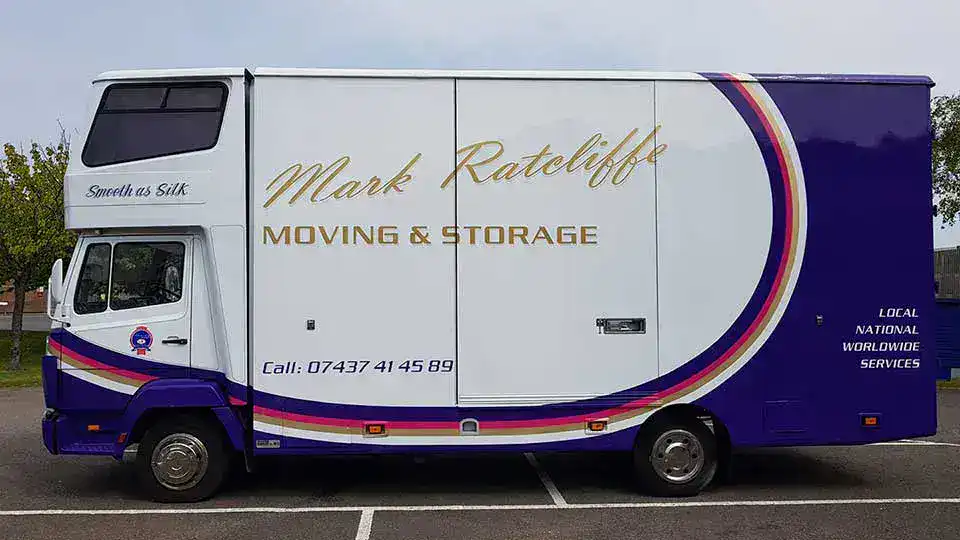
Our weekly removals to Paris exist for a simple reason: most people moving a household to Paris do not have a full lorry-load, and they should not have to pay for one or wait months for a shared load to fill. We run a fixed weekly schedule to Paris, collect from anywhere in the UK on regular routes, consolidate at our Lower Dicker depot in East Sussex and cross the Channel to a timetable. If your dates are tight — a lease start, a job start, a completion — a scheduled service is worth a great deal more than a cheap quote with no departure date attached.
You do not need to be in Sussex to use this service. Our vehicles run regular routes that between them reach most of the country, and a Paris consignment can join the schedule from any of them. We collect on established runs through London, across Sussex and the South East, out to Norfolk and East Anglia, into Wales, through the Midlands and Scotland. Those are collection runs rather than premises. Our depots are at Lower Dicker in East Sussex and Coulsdon in Croydon, and every Paris load is consolidated, checked and sealed at Lower Dicker before it travels.
That matters more than it sounds. Because every Paris load passes through Lower Dicker under one team, your inventory is compiled in one place by people who will answer the phone about it later. A national network that hands your goods between four subcontractors will usually be cheaper on paper and considerably worse when something needs explaining.
If you are moving from our own patch, our areas covered pages list the towns we work in weekly, and a Paris collection simply attaches to the local job.
A sole-use load means the vehicle is yours. It goes from your door to your Paris address without transhipment, which is the fastest and most secure option and the one that makes sense for a three-bedroom house or larger. Nothing else is on board, so nothing else dictates the timing.
A shared part-load puts your consignment on the weekly Paris vehicle alongside other customers’ goods, each separately inventoried and secured. You pay for the volume you occupy rather than the whole lorry, which is what makes a flat, a studio or a partial move affordable. Because the service runs weekly rather than on demand, a part-load still gets a departure date — the usual objection to groupage does not apply here.
Not sure which you need? Our volume and cost calculator will give you a cubic-feet figure from a room-by-room list, free and without contact details. That number is what decides the answer.
Since Brexit the UK is a third country for customs purposes, so a move to Paris is now a formal export from Britain and a formal import into France. In practice, if you are transferring your normal residence to France you can usually import your used household effects free of duty and VAT, provided you have lived outside the EU for at least twelve months, the goods have been in your possession and use for at least six months, and they arrive within twelve months of your transfer of residence.
What French customs want to see is a proper detailed inventory — a numbered list of what is in the vehicle with values, not "12 boxes, household" — together with evidence of your move: your French address, proof you are giving up the UK one, and identification. Alcohol, tobacco, firearms and vehicles all sit outside the standard relief and need declaring separately. We prepare the documentation with you before the vehicle leaves rather than at the border, because a French customs query answered from a layby is an expensive way to learn the rules. For the official position, the French customs service publishes current guidance on transferring residence.
Paris is one of the harder European cities to deliver into, and the difficulty is almost always the building rather than the distance. A classic Haussmann apartment block has a grand staircase that narrows sharply as it climbs, a courtyard entrance a lorry cannot enter, and frequently no lift at all — or a lift built for two people and a shopping bag. Sofas, wardrobes, pianos and anything longer than the stairwell turn goes in through a window on an external furniture lift.
Then there is the street. Parking a removal vehicle in central Paris requires reserving the space with the authorities in advance, the arrondissements vary in how they handle it, and the low-emission zone rules affect which vehicles may enter the city at all. Booked three weeks ahead, the permit is paperwork. Discovered on the day, it is a vehicle that cannot legally stop outside your building.
So we ask about it at survey: which floor, is there a lift, how wide is the stairwell, is there a courtyard, can a vehicle stop outside. If the answer means a furniture lift or a shuttle vehicle, that is quoted from the start rather than sprung on you as an extra.
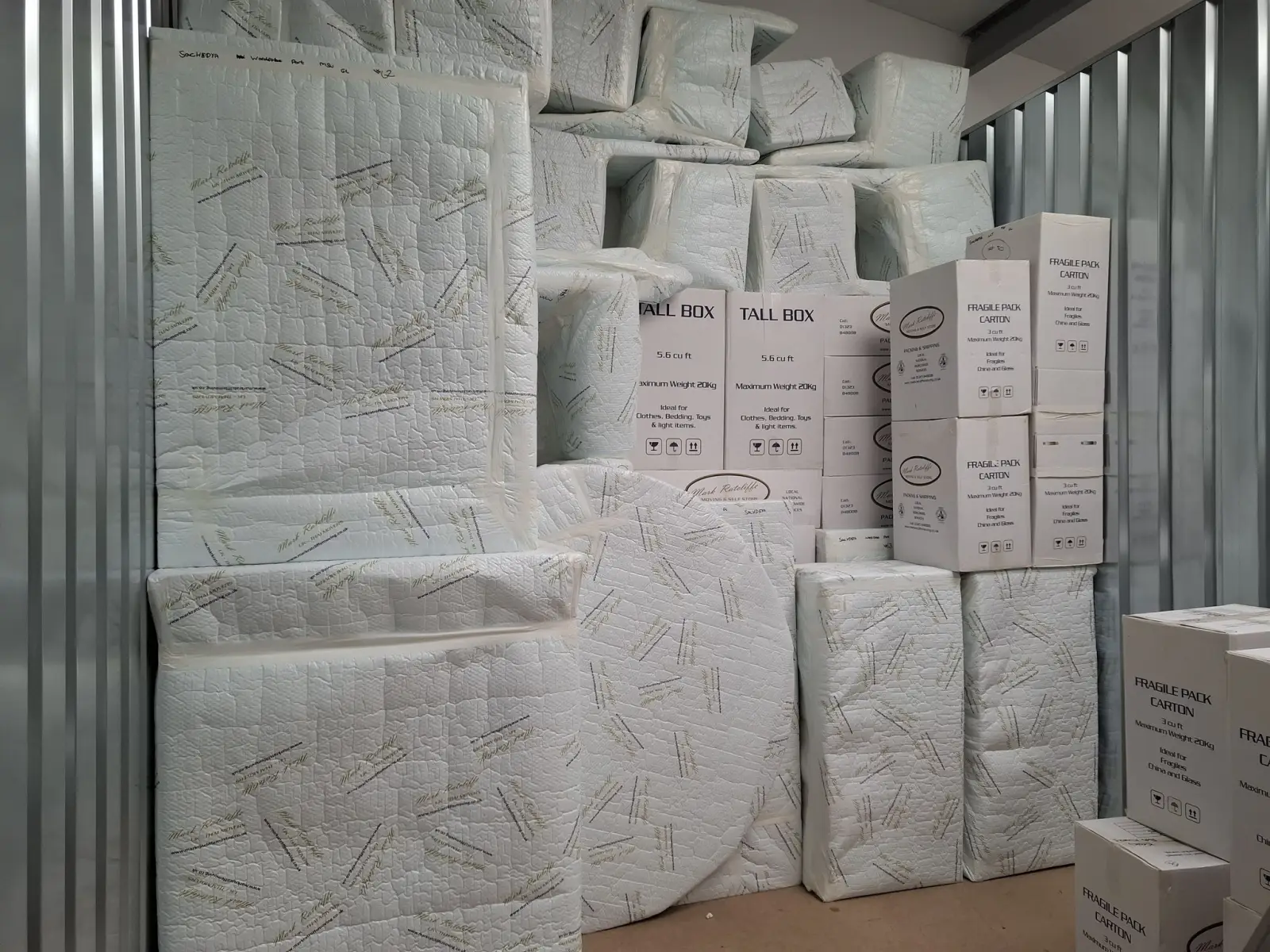
Because the Paris service runs weekly, the timeline is unusually predictable. Your collection is booked onto the next available run, the load is consolidated and sealed at Lower Dicker, and the vehicle crosses the Channel on schedule. Crossing itself is a matter of hours; delivery in Paris typically follows two to four days after the crossing, depending on your access and the delivery slot. For most Paris moves that means completion within 7–10 days of collection, in line with the rest of our European removals service.
A sole-use load can be quicker still, since it does not wait for a scheduled departure. The variables that genuinely move the date are peak season — late July and August are busy across the whole industry — port delays, and access arrangements at the Paris end that need a permit. We give you a realistic window at quote stage and tell you when it changes.
We are a family-run Sussex firm, established in 2017, and international work is a large share of what we do rather than a sideline sold from a brochure. Our crews pad-wrap furniture in the UK the same way for a Paris move as for a Sussex one — our white-glove method, where each piece is wrapped in your home and unwrapped only once it is in its room. We are a member of the British Association of Removers Overseas Group, we work to the BS 8564 quality standard for international moves, and every consignment is fully insured for the journey.
Read what customers say on our reviews page, browse the gallery, or call Mark directly on 01323 848 008. You will get a straight answer about what is worth taking, what the French paperwork needs and what your building in Paris is going to require.
The rules changed fundamentally after Brexit and a lot of the advice still circulating online predates it. UK nationals can visit France for up to ninety days in any one-hundred-and-eighty-day period, but living there requires a long-stay visa obtained before you travel — you cannot arrive as a visitor and convert. Which visa depends on whether you are working, retiring, joining family or studying, and the financial evidence required differs accordingly.
Once in France, a long-stay visa is typically validated online shortly after arrival, and thereafter renewed as a carte de séjour through your local prefecture. Appointments are the usual bottleneck, so start early. The official position is on France-Visas, and it is worth reading directly rather than relying on expat forums, which are full of pre-2021 advice presented as current.
France’s health system is well regarded and, unlike Switzerland or the Netherlands, is substantially state-funded — but it reimburses rather than being free at the point of use, and most residents hold a top-up policy, a mutuelle, to cover the balance. Access generally comes through PUMA once you have been resident on a stable basis, which in practice means a waiting period after arrival. The tangible milestone is the carte vitale, the green card that makes reimbursement automatic; it takes time to arrive, so keep receipts in the meantime.
Banking is the other chain to start early, because a French account generally wants proof of address, and a Paris landlord generally wants a French account. It is circular and it resolves, but it resolves faster if you begin on week one rather than week four.
The Paris rental market runs on the dossier. Landlords and agents expect a complete file — identity, visa, employment contract, recent payslips, tax documents — and often a garant, a French-resident guarantor, or a paid guarantor service in place of one. Arriving without the dossier assembled is the most common reason a search stalls, and it is entirely preventable. Apartments are measured in square metres and are smaller than the British equivalent, which matters directly for a removal: the volume that fitted a three-bedroom semi in Sussex will not fit a Haussmann two-bed, and we would far rather flag that at the survey than deliver furniture that has to go straight back down the stairs.
Schools are free in the public system and taught in French, with bilingual sections in some establishments and a substantial international-school presence in and around the city. Younger children generally absorb French quickly; teenagers arriving mid-cycle need more thought.
Everyday costs are a mixed picture that surprises people in both directions. Rent per square metre is high and space is scarce, but transport is cheap and excellent, healthcare costs less out of pocket than many expect, and eating and drinking well is not the luxury it has become in London. Utilities and internet are competitively priced.
We are removers rather than relocation consultants, so we point at the official sources rather than improvising. What we control is the part that touches your furniture: a weekly departure you can plan around, a survey that tells you honestly what will and will not fit, and storage at our depot if the apartment is not ready when the vehicle is.
These are the rates we quote from, not a teaser figure with the extras stripped out. A shared load to Paris starts at £95 per cubic metre with a 3 m³ minimum, and a dedicated vehicle — yours alone, no transhipment — starts at £2,650. Typical transit is 7–10 days.
| Your home | Typical volume | From |
|---|---|---|
| Studio or single room | 10 m³ | £950 |
| One-bedroom flat | 18 m³ | £1,710 |
| Two-bedroom house | 30 m³ | £2,850 |
| Three-bedroom house | 45 m³ | £4,275 |
| Four-bedroom house | 62 m³ | £5,890 |
| Five-bedroom house or larger | 85 m³ | £8,075 |
These are the prices you pay. International removals are zero-rated for UK VAT, so unlike a domestic house move there is nothing to add on top. Import duty or VAT levied by the destination country, where your goods do not qualify for transfer-of-residence relief, is separate and is payable there rather than to us.
Above roughly 55 m³ a dedicated vehicle usually beats the shared-load rate. We will tell you when that crossover applies to your move rather than let you overpay for groupage. Volumes above are typical rather than measured; the survey sets the real figure and the quote is then fixed in writing. Our free volume calculator gives you a cubic-feet number in a couple of minutes without needing to speak to anyone.
Included as standard
Priced separately
| Service | Price from | What it covers |
|---|---|---|
| Full export packing | £38 per m³ | All materials included. Typically £1,100–£1,400 for a three-bed house. |
| Fragile-only packing | £22 per m³ | China, glass, pictures and electronics. You do the rest. |
| Unpacking at destination | £18 per m³ | Boxes emptied, contents placed, cartons removed. |
| Transit insurance | 2.5% of value | £75 minimum. All-risks cover on a valued inventory. |
| Storage in transit | £4.50 per m³ per week | £25 weekly minimum. Individual steel rooms, 24-hour CCTV. |
| Upright piano | £395 | Skid trolley, crating and specialist straps. |
| Grand piano | £695 | Legs removed, side-crated and blanket-boxed. |
| Custom timber crating | £185 per crate | Art, marble, mirrors and antiques. ISPM-15 compliant timber. |
| Shuttle vehicle | £280 | Where the lorry cannot reach the door — common in Italian ZTL zones and Swiss old towns. |
| Long carry over 20 m | £95 | Per property, per move. |
| Second delivery address | £180 | Within 25 km of the primary address. |
| Vehicle shipping | On application | Cars, motorcycles and trailers via our specialist partner. |
For the full eight-route comparison across France, Switzerland, Spain, Italy and the Benelux, see our European removals rate card.
Weekly. We operate a fixed schedule to Paris rather than waiting for a load to fill, which is the usual frustration with shared-load European removals. Your collection is booked onto the next available run, consolidated at our Lower Dicker depot and crossed to a timetable, so you get a departure date at the point of booking.
Yes — from anywhere in the UK. Our vehicles run regular collection routes through London, Sussex, Norfolk, Wales, the Midlands and Scotland, and a Paris consignment can join the schedule from any of them. Those are collection runs rather than premises. Our depots are at Lower Dicker in East Sussex and Coulsdon in Croydon, and every Paris load is consolidated, checked and sealed at Lower Dicker before it travels.
For most Paris moves, completion within 7–10 days of collection. The Channel crossing is a matter of hours and delivery in Paris typically follows two to four days after crossing, depending on access and the delivery slot. A sole-use load can be quicker because it does not wait for a scheduled departure. Late July and August are busier across the whole industry, so book earlier for a summer move.
A detailed numbered inventory with values — not "12 boxes, household" — plus proof of your transfer of residence: your French address, evidence you are giving up the UK one, and identification. If you are transferring your normal residence you can usually import used household effects free of duty and VAT, subject to the qualifying conditions. Alcohol, tobacco, firearms and vehicles sit outside the standard relief and are declared separately. We prepare all of it with you before the vehicle leaves.
Yes, and it is common. Haussmann buildings frequently have no lift, a stairwell that narrows as it climbs and a courtyard a lorry cannot enter. Anything that will not turn on the stairs goes in through a window on an external furniture lift. Tell us the floor, the lift, the stairwell width and whether a vehicle can stop outside, and we quote the lift or shuttle from the start rather than adding it on the day.
Yes. A shared part-load puts your consignment on the weekly Paris vehicle alongside other customers’ goods, each separately inventoried and secured, and you pay for the volume you occupy rather than the whole lorry. Because the service is weekly, a part-load still gets a firm departure date.
For anything beyond ninety days in any one-hundred-and-eighty-day period, yes — and it must be obtained before you travel. You cannot arrive as a visitor and convert. Which long-stay visa applies depends on whether you are working, retiring, joining family or studying, and the financial evidence differs accordingly. Much of the advice circulating online predates 2021 and is simply wrong now; France-Visas is the authority.
This is the question we most wish people asked earlier. Paris apartments are measured in square metres and are markedly smaller than the British equivalent — the contents of a three-bedroom Sussex semi will not fit a Haussmann two-bed. We would far rather flag that at the survey and help you decide what travels than deliver furniture that has to go straight back down six flights.
It is the complete file a Paris landlord or agent expects before considering you: identity, visa, employment contract, recent payslips and tax documents, often plus a garant — a French-resident guarantor — or a paid guarantor service instead. Arriving without it assembled is the most common reason a search stalls, and it is entirely preventable.
It is substantially state-funded but reimburses rather than being free at the point of use, which is why most residents also hold a top-up policy, a mutuelle. Access generally comes through PUMA once you have been resident on a stable basis, so there is a waiting period. The carte vitale that makes reimbursement automatic takes time to arrive — keep your receipts until it does.
Yes. Paris completions and lease starts slip regularly, and because our Paris service runs weekly rather than on demand it is easy to hold your goods at our Lower Dicker depot and book you onto a later run. That is far cheaper than a failed delivery or short-notice storage in Paris.
Call us for a free, no-obligation quote, or use our online form. Whether it is a shared part-load or a whole house, we have handled the route before and we will handle yours with care.