
Specialist removals to Thailand handled end-to-end from our Lower Dicker depot — full-container and shared-container sea freight, express air freight, export-grade tropical packing and full Thai customs clearance. BAR Overseas Group member, fully insured for the voyage, with our own Bangkok partner depot covering every region of Thailand.

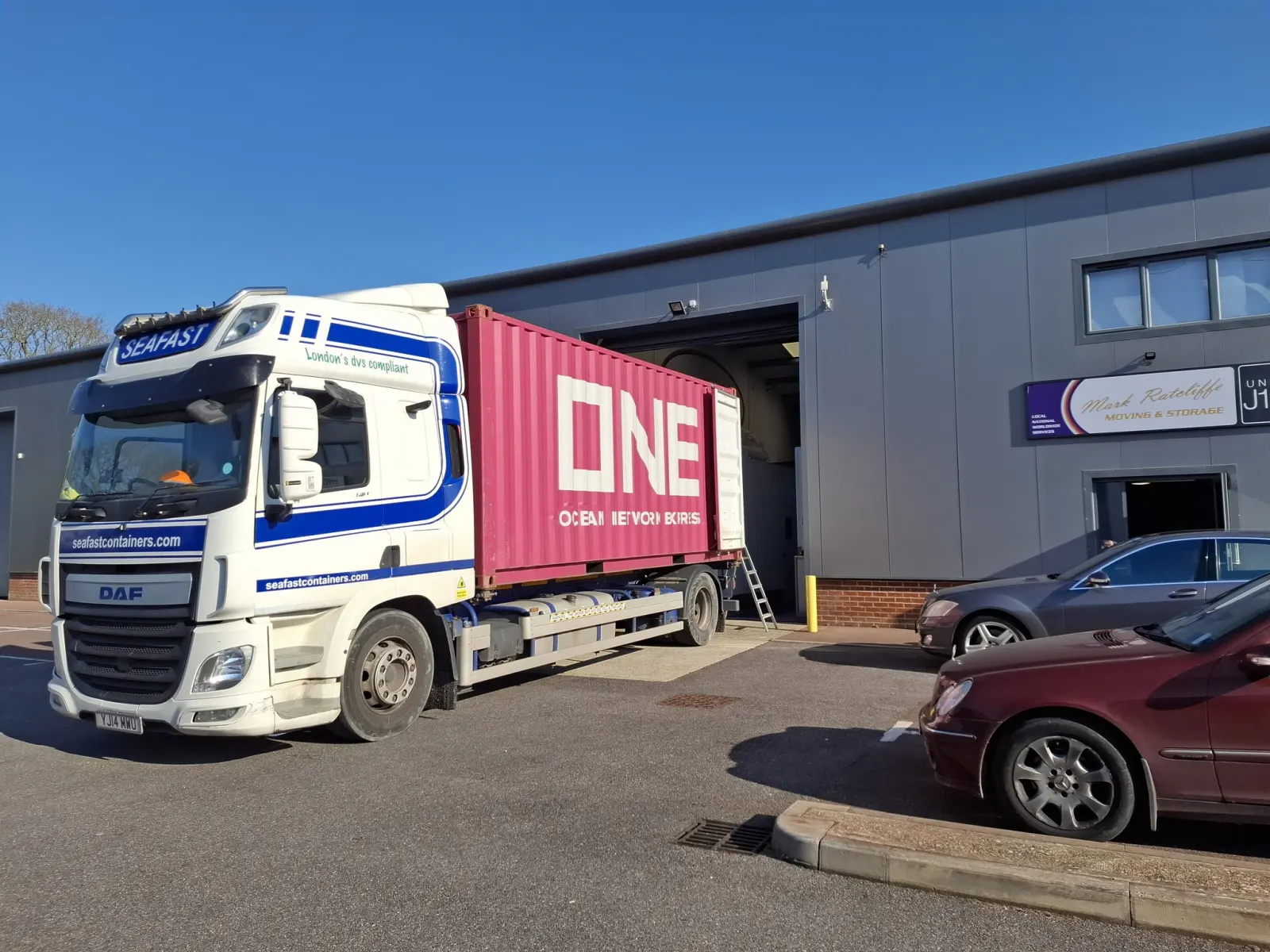
Removals to Thailand from the UK are one of our genuine specialisms, and one we’re known for across Sussex. Since 2017 Mark Ratcliffe Moving has been moving households to Thailand from the UK — retirees settling in Hua Hin, families relocating to Bangkok for work, and couples starting a new chapter on Koh Samui or Phuket. Thailand sits on the far side of the world, so shipping to Thailand from the UK is a sea-freight or air-freight job, not a van down the motorway: it needs export-grade packing, the right container choice, and customs paperwork that matches your visa. Get any of those wrong and your belongings sit on the dock at Laem Chabang racking up storage charges. We are a British Association of Removers (BAR) Overseas Group member, fully insured for the whole voyage, and we run every shipment through our own Bangkok partner depot — see our dedicated UK–Thai removals service for more on the team.
Thailand has quietly become one of the most popular long-haul destinations for British movers, and it is easy to see why. The cost of living is a fraction of the UK’s, the climate is warm year-round, the food and the welcome are famous, and the retirement and long-stay visa routes are well established. Hua Hin and Pattaya draw retirees who want the beach without the bustle; Bangkok pulls in remote workers, teachers and families on company postings; Chiang Mai suits a slower, greener pace inland; and the islands — Phuket, Koh Samui, Koh Pha Ngan — appeal to anyone chasing the sea. A growing number of our customers are Thai nationals returning home after years in the UK, bringing a British household back with them.
Whatever the reason, the practical question is the same: how do you get a lifetime of belongings safely from a Sussex semi to a condo in Bangkok or a villa in Hua Hin? That is the part we handle. Every move begins with a free survey at your UK address — in person across East Sussex, Kent and West Sussex, or by video call for outlying postcodes — followed by a clear, itemised written quote that separates the UK packing and collection, the sea or air freight, Thai customs clearance and the final delivery in Thailand. No vague “from” prices, no surprises on the dock.
There are three ways to ship a household from the UK to Thailand, and the right one depends on how much you are moving, how quickly you need it and your budget. We quote whichever genuinely suits you — often a blend, with the bulk going by sea and a small air-freight box of essentials following behind.
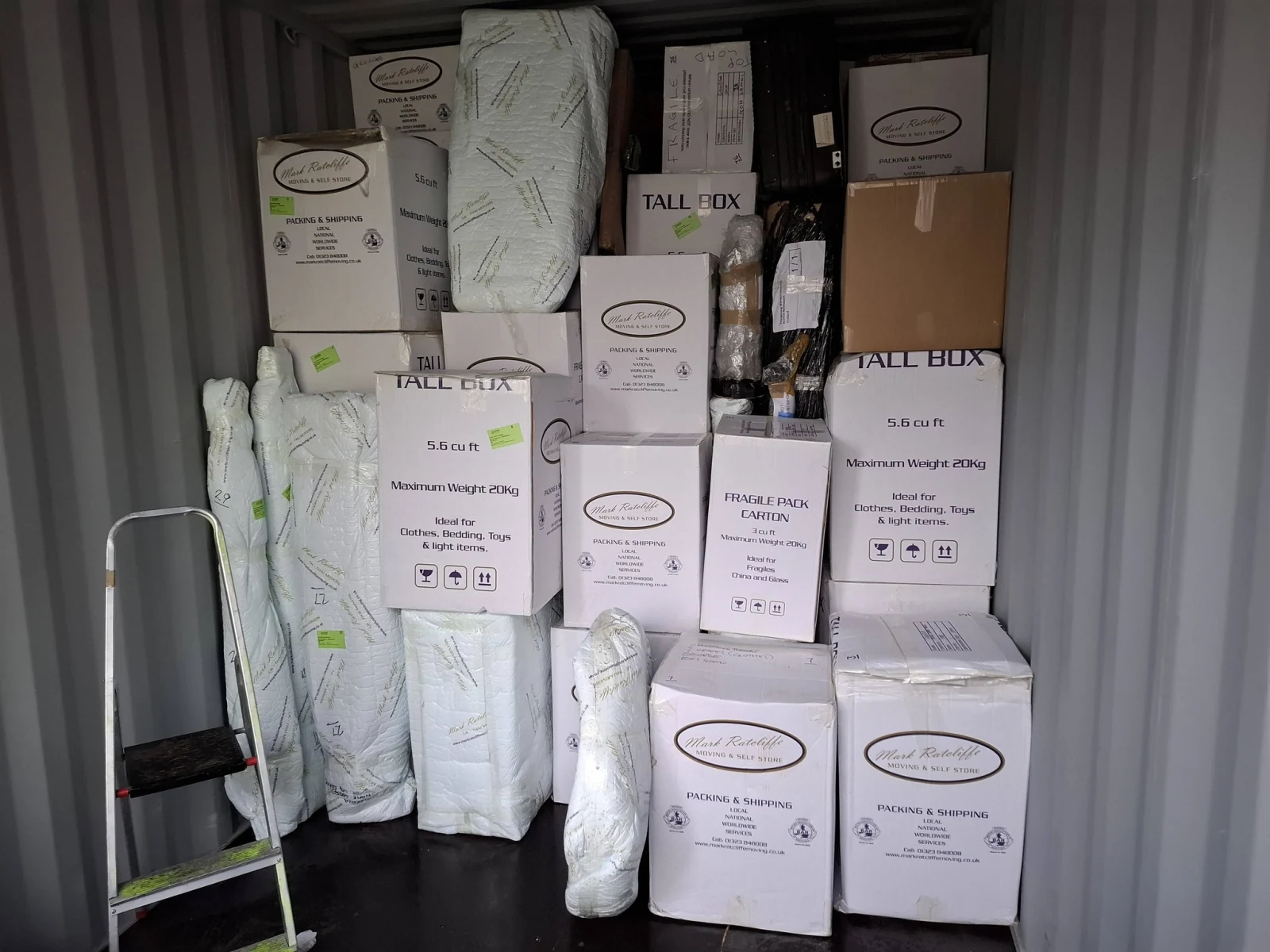
A sole-use container is the standard choice for a full home. A 20ft container comfortably holds a typical two- to three-bedroom household; a 40ft takes a large four- or five-bed move with garden and garage contents. Your goods are loaded at your UK home, the container is sealed in your presence, and it is not opened again until it reaches our depot in Thailand — the safest, most secure option and, per cubic foot, often the best value for a whole house.
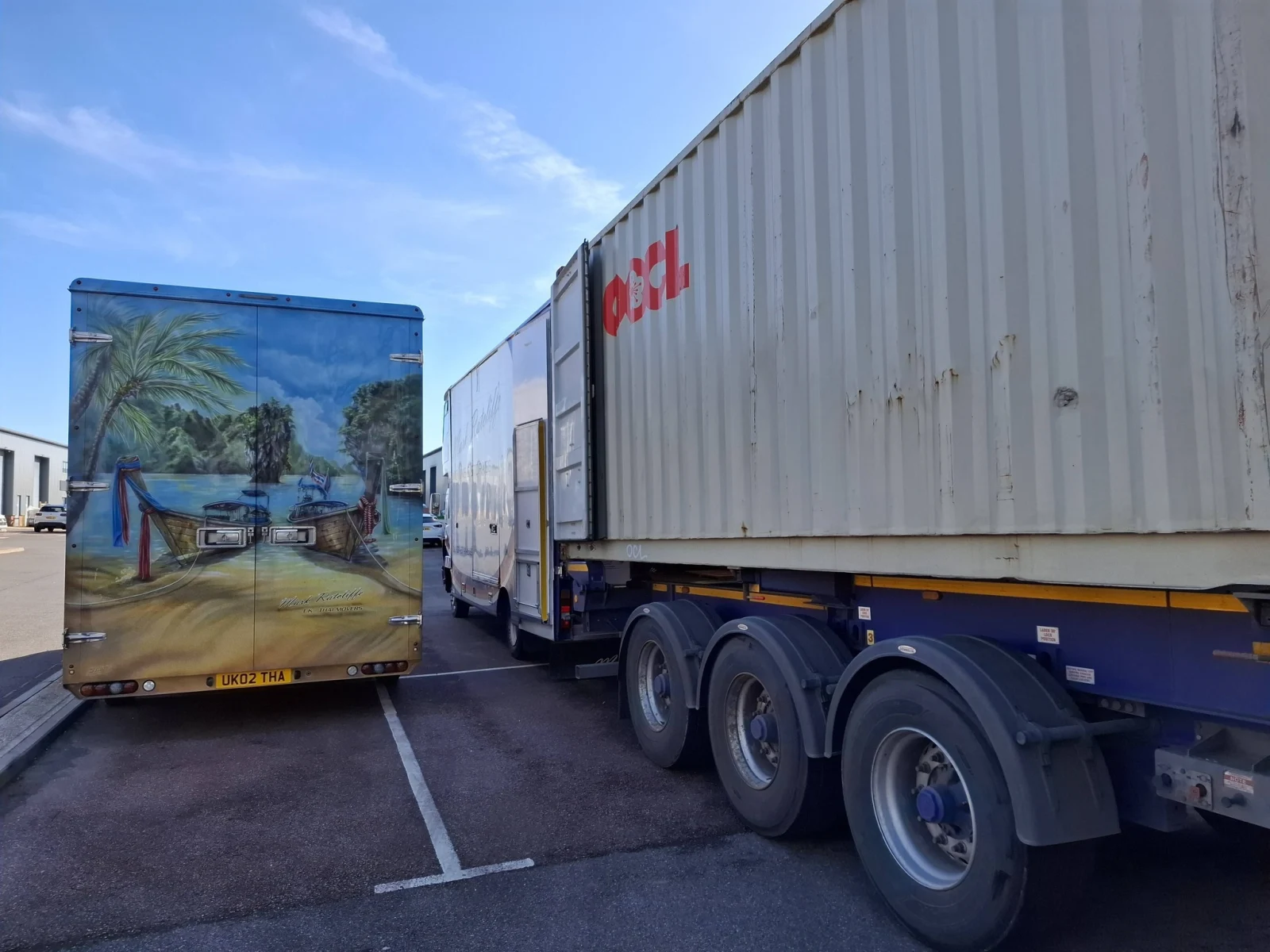
If you are moving part of a home — a one-bedroom flat, a downsizer’s essentials, or just the things worth keeping — a shared container (also called LCL or groupage) lets you pay only for the space you use. Your consignment travels alongside other UK-to-Thailand loads in the same container. It is the most economical route for smaller volumes; the trade-off is a slightly longer timeline while we consolidate compatible loads and clear them individually at the far end.
When you need things quickly — a box of work equipment, children’s essentials, or anything you cannot be without for a couple of months — air freight is the answer. It is far quicker than sea, with door-to-door delivery usually inside one to two weeks, but it is priced by weight as well as volume, so it suits a tightly chosen box or two rather than a full home. Many of our customers send the bulk by sea and a small air-freight consignment to bridge the gap.
Honest transit times matter, because Thailand is a long way and the sea leg alone is several weeks. These are the windows we actually work to, not best-case marketing figures:
| Stage of your move | Typical time |
|---|---|
| Export packing and UK collection | 1–2 days on site |
| Ocean voyage, UK port to Bangkok | 5–6 weeks |
| Collection to arrival, Port of Bangkok (allow for consolidation and sailing schedules) | 8–12 weeks |
| Thai customs clearance through to final delivery | Add a further 2 weeks |
| Door to door by sea freight | 10–14 weeks |
| Air freight, door to door | 1–2 weeks |
A sole-use container sails as soon as it is loaded and booked, so it sits at the shorter end of that window. A shared groupage container waits until it is full before it sails, which is what buys you the lower price. Island destinations such as Koh Samui or Koh Pha Ngan add a few days for the final ferry and road leg from the mainland.
Once your goods are on the water we email you a tracking link with a live ETA for the Port of Bangkok, so you are never left wondering where your life has got to. We update you at each milestone after that — sailing date, arrival, customs cleared, and out for delivery.
Thai customs treat used household goods differently depending on your status, and this is where experienced staff earn their keep. If you are taking up residence in Thailand — a non-immigrant visa holder with a one-year extension and work permit, or a returning Thai national — you can usually import one household’s worth of used personal effects free of import duty, provided you owned and used them before the move and they arrive within the qualifying window of your arrival. The relief covers one set of household goods per family, not duplicate items.
If you do not yet meet the residency conditions — for example you are entering on a tourist visa — Thai customs may assess import duty plus 7% VAT on the value of your goods. We will tell you honestly at the survey which category you fall into and help you time the shipment so it lands when your paperwork is in order. Either way, you will need your original passport, your visa and work permit (or house registration for Thai nationals), a detailed packing list and the bill of lading. Our Bangkok depot prepares and lodges the entry, attends the inspection, and clears the container so you are not standing at the port with a form you have never seen. For the official rules, the Thai Customs Department publishes the current residence-transfer guidance.
Some things simply cannot go in the container, and a few that are perfectly legal in the UK are not in Thailand. Flagging these at the survey saves you from a held shipment or a fine. Prohibited items include narcotics and controlled drugs, pornographic material, counterfeit goods, ivory and protected wildlife products, and — importantly — e-cigarettes and vaping devices, which are illegal to import into and possess in Thailand. Leave the vape kit behind; it is not worth the risk.
Restricted items can travel but need permits, declarations or special handling: firearms and ammunition (a licence is required), drones (which must be registered with the Thai authorities), certain medicines and large quantities of prescription drugs, plants, seeds and soil (these need phytosanitary checks), and live animals (pets travel separately under their own scheme). Alcohol and tobacco are dutiable and fall outside the duty-free household relief, so a wine collection is best declared and discussed in advance. Used cars and motorcycles are heavily restricted and expensive to import — we will give you a straight answer on whether it is worth it. Antiques and religious artefacts can be imported, but we crate and document them carefully so there is no question at the border.
Thailand’s tropical climate is the single biggest threat to your belongings on this route, and it is the reason cheap packing fails. A steel container crossing the equator gets brutally hot, and the temperature swings cause “container rain” — condensation that drips back onto your furniture over weeks at sea. Solid wood swells and cracks, veneers lift, upholstery and mattresses grow mould, and paperwork and photographs cockle. Our export packing is built specifically to beat that.
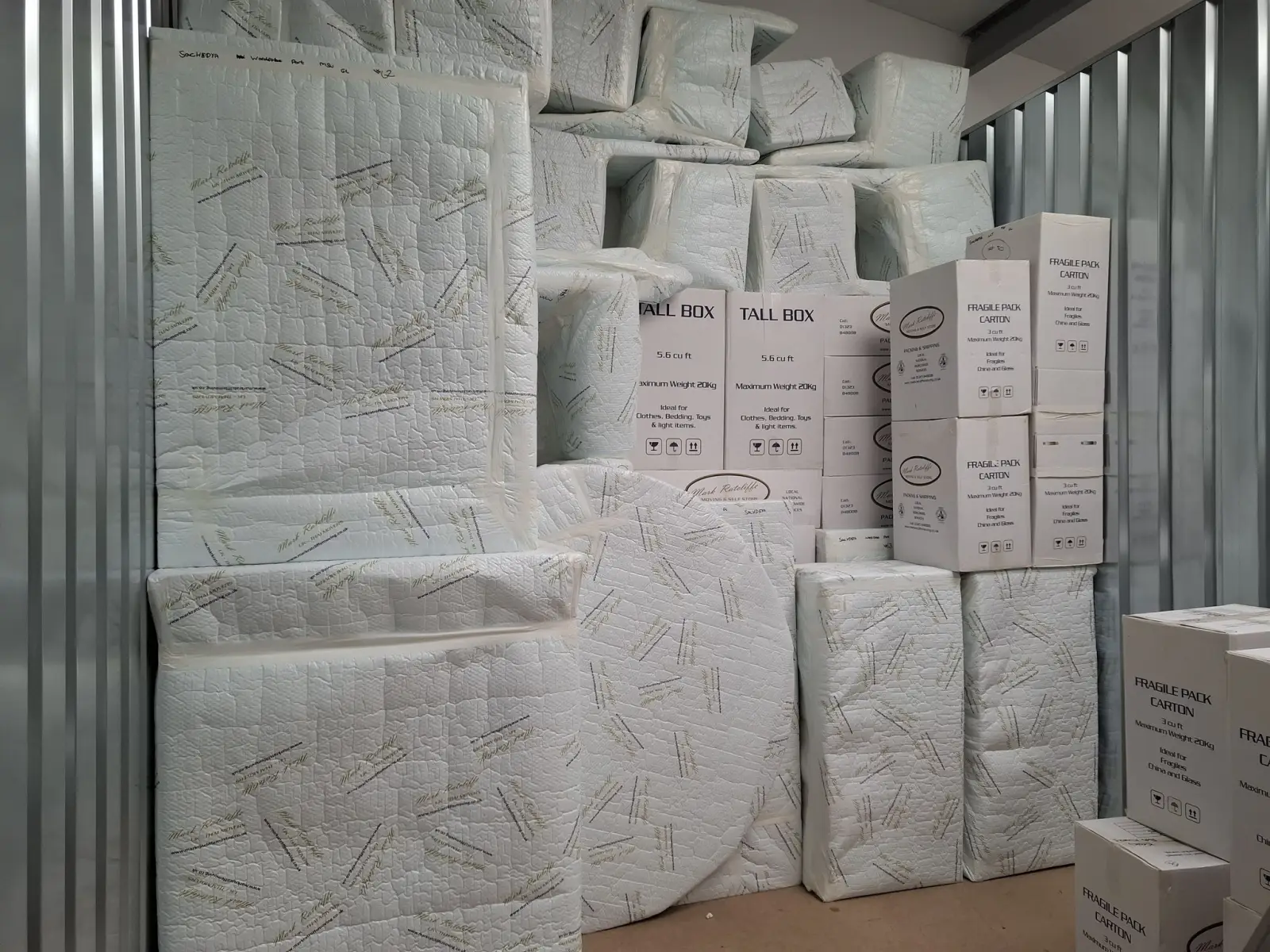
We use export double-wall cartons, full furniture pad-wrap with moisture-barrier outer layers, and vacuum-bagging for soft furnishings, bedding and clothing so damp can’t take hold. Desiccant sachets go inside the container to soak up airborne moisture, and anything wooden, antique or high-value is built into a custom ISPM-15 crate rather than left loose. Our crews also fit our signature pad-wrap protection — the same white-glove method we use on Sussex house moves — so each piece is wrapped in your home and only unwrapped once it reaches its room in Thailand. If you would rather not lift a finger, our full packing service handles everything; if you are self-packing, we deliver export-grade packing materials beforehand.
Most removal firms will not put a price for removals to Thailand on their website. We will. Your move is priced largely on volume, your UK location and your destination address in Thailand — but for the most common case, a sea-freight shipment from our Lower Dicker depot delivered to a residence in Bangkok, here is what it actually costs. No UK VAT is added to any of it.
| What you are shipping | Volume | Price |
|---|---|---|
| 2 × tea cartons | 8 cu ft | £290 |
| 4 × tea cartons | 16 cu ft | £390 |
| 6 × tea cartons | 24 cu ft | £490 |
| 8 × tea cartons | 32 cu ft | £590 |
| 10 × tea cartons | 40 cu ft | £690 |
| 15 × tea cartons | 60 cu ft | £890 |
| 20 × tea cartons | 80 cu ft | £990 |
| Sole-use 20ft container — a full household load | Full container | £3,790 |
The price you see is the price you pay — there is no UK VAT to add. International removals are zero-rated for UK VAT, so unlike a domestic house move there is no 20% on top. (Thai import duty and 7% Thai VAT are a separate matter, assessed by Thai customs on arrival — see the customs section below.)
Where these rates start and stop. They run from our Lower Dicker depot (BN27 4EL) in East Sussex through to delivery at a residence in Bangkok, and they already include standard customs clearance charges. Rates are based on our own super-strong tea cartons, 23″H × 19″L × 16″W, four cubic feet each, sea freight only. For destinations elsewhere in Thailand — Hua Hin, Pattaya, Phuket, Chiang Mai, Koh Samui — the price is quoted on application, because the inland or ferry leg from the port varies. Ask and we will tell you.
You do not have to live in Sussex, and you do not have to get your goods to us. We quote collection from anywhere in the UK as a separate line, so you can see exactly what the UK leg costs against the shipping. We have vans around the country most weeks, which usually makes that leg cheaper than people expect — and if you are shipping a sole-use container we can collect from your home well ahead of the container booking date and hold everything at the depot, with the first month of storage free.
Full services are quoted the same way, so you take as much or as little as you want: our export packing and crating, a custom ISPM-15 crate for anything wooden, antique or high-value, fragile-only packing if you will do the rest yourself, or a full packing service where our crew wraps and boxes the entire house. Self-packing instead? We deliver export-grade packing materials to any UK address for a nominal charge.
Those are real numbers, not a teaser rate with the extras stripped out. The large national relocation firms shipping this route typically start their published pricing in four figures for a part-load. We are a family-run Sussex firm using the same deep-sea ports and the same Bangkok destination agent, without the national overhead — which is why a small groupage shipment starts at £290 and a sole-use 20ft container to a Bangkok residence is £3,790, customs clearance included and no VAT on top.
The biggest factor is volume — sea freight is priced largely by the cubic feet you ship, so a decluttered three-bed costs far less than a packed-to-the-rafters one. Next comes your shipping method: a sole-use container, a shared-container part-load, or air freight, each with a different cost profile. After that come destination and access (Bangkok and Hua Hin are straightforward; islands like Koh Samui add a ferry and road leg), the level of packing service you choose, marine transit insurance on the declared value, and — if you do not qualify for residence-transfer relief — any Thai duty and 7% VAT. Storage at either end, should your dates slip, is the final variable; load a sole-use container at our warehouse and you get one month’s storage free of charge.
For anything outside the table above, a free survey gives you a fixed, itemised price with the freight, the packing, the customs work and the delivery each shown separately. Our 2026 cost-of-moving guide explains how we build a quote, and our Lower Dicker storage can hold your goods if the move and the visa don’t line up to the day.
Included in the rates above
Not included — quoted separately if needed
We would rather you saw that second list before you book than discovered it on delivery day. If any of it is likely to apply to your Thai address — a walk-up condo above the second floor, a soi too narrow for the lorry — tell us at the survey and we will price the shuttle in from the start.
Clearance is straightforward when the file is complete and slow when it is not, so we ask for all of this up front:
To book, the Acceptance Form and a 20% deposit secure your move date, with the balance due seven days before we pack. Once the booking is in, we deliver our export cartons to you for a nominal charge — or, if we are packing for you, the materials are already built into the packing charge.
From the first call to the last box in Thailand, here is how a typical move runs:
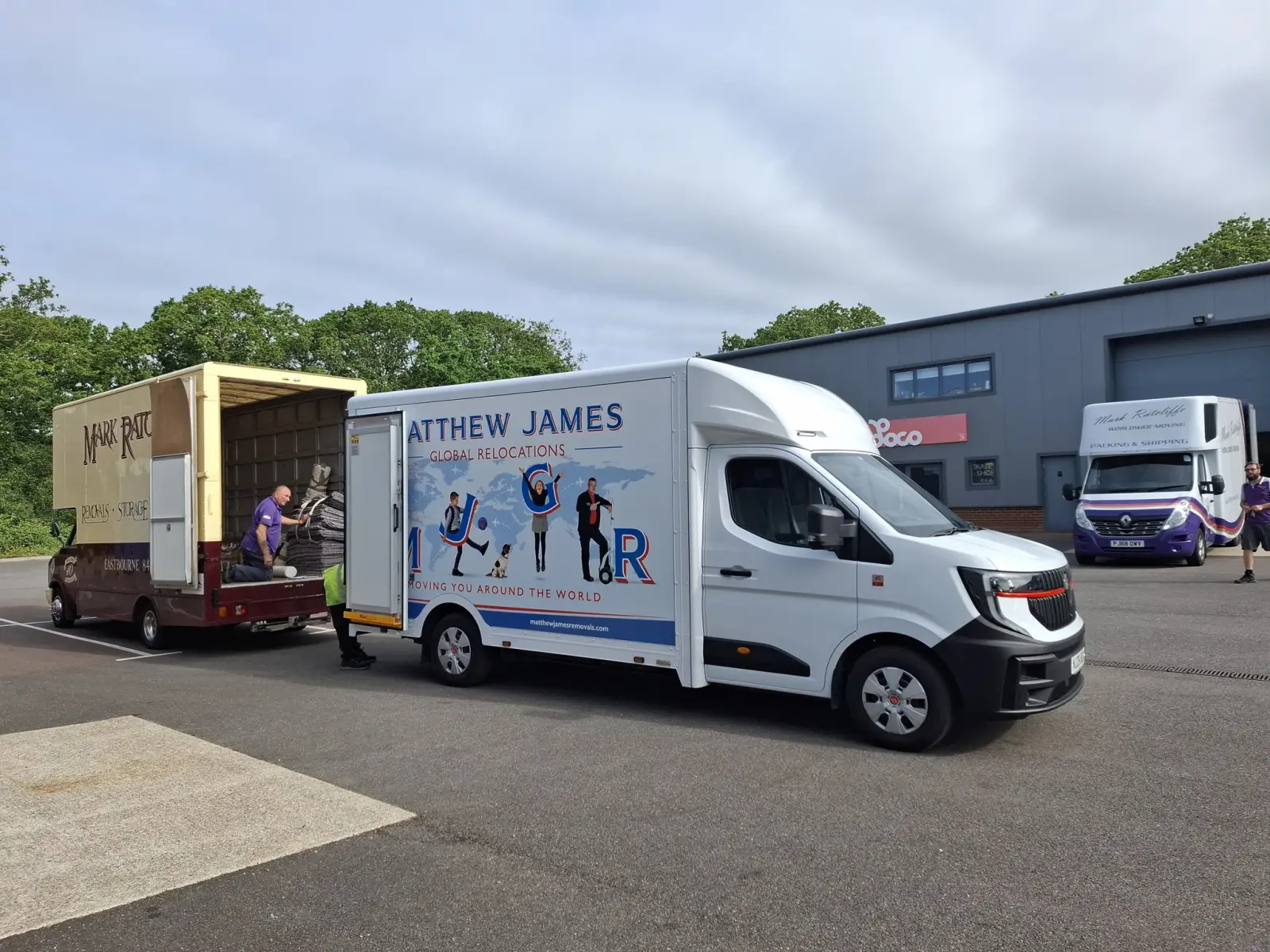
Condos, townhouses and company relocations across the capital. Our partner depot is here, so clearance and city-centre delivery are handled in-house.
One of our most frequent destinations — retirees and second-home owners on the western Gulf. Villa and beachfront delivery a speciality.
Jomtien, Naklua and the wider Eastern Seaboard. Close to Laem Chabang port, so transit and delivery are quick once cleared.
The cooler, greener north. An inland road leg from the port, so we plan timing carefully and pack for the longer haul.
Andaman-coast villas and condos. Tropical humidity is at its strongest here, so export packing and desiccant matter most.
Samui, Koh Pha Ngan and Koh Tao. Mainland clearance then a ferry and road leg — add a few days and we manage the crossing.
We are a small, owner-managed Sussex firm, not a national franchise selling Thai moves as a sideline. About a third of our annual work is international, and Thailand is one of the destinations we know best — we have our own branded UK–Thai operation and a partner depot in Bangkok rather than a name pulled from a directory the week before your move. The experienced staff who pad-wrap your furniture in Sussex have done it on dozens of Thai shipments, and the crew who clear and deliver in-country are people we work with month in, month out.
That continuity is exactly what a long-haul move needs. The wrong packing and your furniture arrives mouldy after eight weeks of container rain. The wrong customs entry and your container sits at Laem Chabang while the charges climb. The wrong destination agent and the lorry turns up but nobody has the keys. We run our overseas moves under BS 8564, the British Standard for overseas moving services, with the same crews and inventory discipline we use on a local house removal, we are BAR Overseas Group members, and every shipment is fully insured for the voyage.
Read what customers say on our reviews page, browse the gallery for photos of recent moves, or call Mark directly on 01323 848 008. We will give you straight answers about what is worth shipping, what Thai customs will and won’t allow, and a realistic timeline for your part of Thailand.
Our 8-page overseas moving brochure covers the whole route in detail — how to export-pack your own cartons, what the service includes and excludes, the documents Thai customs will want, the five steps from survey to delivery, and the rate card. Turn the pages below, or download the PDF.
Click or swipe the page corners to turn — a soft page-turn sound plays as you flick.
The map below shows Thailand, one of the international destinations we ship UK households to from our Lower Dicker depot in East Sussex.
Allow 8–12 weeks from UK collection to arrival at the Port of Bangkok, of which the ocean voyage itself is 5–6 weeks, then a further two weeks for Thai customs clearance through to final delivery. Door to door by sea, that is 10–14 weeks. A sole-use container sails as soon as it is loaded and booked so it sits at the shorter end; a shared groupage container waits until it is full, which is what buys you the lower price. Air freight is 1–2 weeks door to door. Island destinations such as Koh Samui add a few days for the ferry and road leg.
From our Lower Dicker depot (BN27 4EL) to a residence in Bangkok, including standard customs clearance: two tea cartons (8 cu ft) is £290, ten cartons (40 cu ft) is £690, twenty cartons (80 cu ft) is £990, and a sole-use 20ft container is £3,790. There is no UK VAT to add — international removals are zero-rated, so the price you see is the price you pay. Those are sea freight rates based on our own tea cartons at four cubic feet each, starting from the depot; if you want us to collect from your home, that UK leg is quoted on top. For destinations elsewhere in Thailand the price is quoted on application, because the inland or ferry leg from the port varies.
No. International removals are zero-rated for UK VAT, so unlike a domestic house move there is no 20% added to your shipping price — the figure we quote is the figure you pay. That is separate from Thai import duty and the 7% Thai VAT, which Thai customs may assess on arrival if you do not qualify for residence-transfer relief. Those are payable to Thai customs, not to us, and we will tell you at the survey which category you fall into.
The published rates run from our Lower Dicker depot in East Sussex (BN27 4EL) through to delivery in Bangkok. We quote collection separately — and we collect from anywhere in the UK, not just Sussex. We have vans around the country most weeks, so a collection is often cheaper than people expect. If you are shipping a sole-use container we can collect from your home ahead of the container booking date and hold it at the depot, with the first month of storage free. Full services are quoted the same way: export packing, custom crating, fragile-only packing or a complete pack-and-wrap of the whole house — take as much or as little as you want.
It depends on volume and urgency. A sole-use container suits a whole two- to five-bedroom home, is the most secure option and gives the best value per cubic foot — load it at our East Sussex warehouse and you get one month’s storage free of charge. A shared container (groupage) is cheaper for part-loads because several customers split the ocean freight cost to the port of entry, normally Laem Chabang or the Lat Krabang inland container depot. Air freight is for things you need fast: a box or two of essentials sent ahead while the bulk follows by sea. We often quote a sea-plus-air blend.
We need a copy of your Thai national passport where you have one — it is always preferred for customs clearance. On a British passport we need that copy together with your Thai retirement visa or work permit. Alongside it: a numbered packing list of anything you packed yourself, your full UK origin address, your full Thai delivery address with contact email and telephone number, and our completed Moving Quotation Acceptance Form — plus the Marine Transit Insurance Valuation Form if you want cover for the voyage. Clearance is quick when the file is complete and slow when it is not.
If you are transferring residence to Thailand — a non-immigrant visa holder with a one-year extension and work permit, or a returning Thai national — you can usually import one household’s worth of used personal effects free of duty, provided you owned them before the move and they arrive within the qualifying window. If you do not yet meet the residency conditions, for instance on a tourist visa, import duty plus 7% VAT may apply. Import tax and duty sit outside our shipping rates and are payable to Thai customs. We assess which category you fall into at the survey and time the shipment accordingly.
Once you are happy with the quote, you complete our Acceptance Form and pay a 20% deposit, which secures your move date. The balance of the moving and packing charge is due seven days before we pack. After booking we deliver our export cartons to you for a nominal charge — or, if we are packing for you, the materials are already built into the packing charge.
It is not compulsory, but we strongly recommend it. Your goods spend five to six weeks at sea in a steel container crossing the equator, handled at two ports and on two road legs, and standard carrier liability is nowhere near replacement value. Cover is arranged on the declared value of your shipment using our Marine Transit Insurance Valuation Form, which you complete before sailing. We will talk you through what to declare so you are neither under- nor over-insured.
That is common, and it is why we build storage into the plan at both ends. Load a sole-use container at our BN27 4EL warehouse and the first month of UK storage is free, so we can collect from your home before the container booking date while your Thai paperwork catches up. At the Thai end, storage is available through our Bangkok destination agent and is quoted separately. The usual advice is not to sail until you have an address, because demurrage and destination storage are avoidable costs.
Everywhere. The published rate card covers delivery to a residence in Bangkok; beyond that we regularly deliver to Hua Hin and Cha-Am, Pattaya and the wider Chonburi Eastern Seaboard, Chiang Mai and the north, Phuket and Krabi on the Andaman coast, and the islands including Koh Samui, Koh Pha Ngan and Koh Tao. Everything clears customs on the mainland first; island destinations then add a ferry and road leg. Destinations outside Bangkok are quoted on application because that final leg varies so much.
Our destination agent, United Relocations (Thailand) Co., Ltd, based at Bangna in Bangkok. Once the container clears the port it is moved the short distance to their warehouse and decanted, and they contact you with the delivery notification and any duty payable. Delivery normally follows that week or the next depending where in Thailand you are. Our clients get a personal service from that agent under the supervision of our own bilingual team leader, so nothing is lost in translation at the far end.
Prohibited items include narcotics, pornographic material, counterfeit goods, ivory, and e-cigarettes and vaping devices — vapes are illegal to import into and possess in Thailand, so leave them behind. Restricted items needing permits or declarations include firearms, drones, certain medicines, plants, seeds and soil, and live animals (pets travel separately). Alcohol and tobacco are dutiable and fall outside the household relief. Used vehicles are heavily restricted. We flag all of this at the survey so nothing holds up your shipment.
Tropical transit causes “container rain” — condensation that can mould upholstery and crack solid wood over weeks at sea. We counter it with export double-wall cartons, moisture-barrier pad-wrap, vacuum-bagging for soft furnishings, desiccant sachets inside the container, and ISPM-15 timber crates for anything wooden, antique or high-value. Only brand-new shipping cartons in five sizes are used, each piece is wrapped in your home, and our crew produces a numbered packing list you check and sign before loading.
From the blog
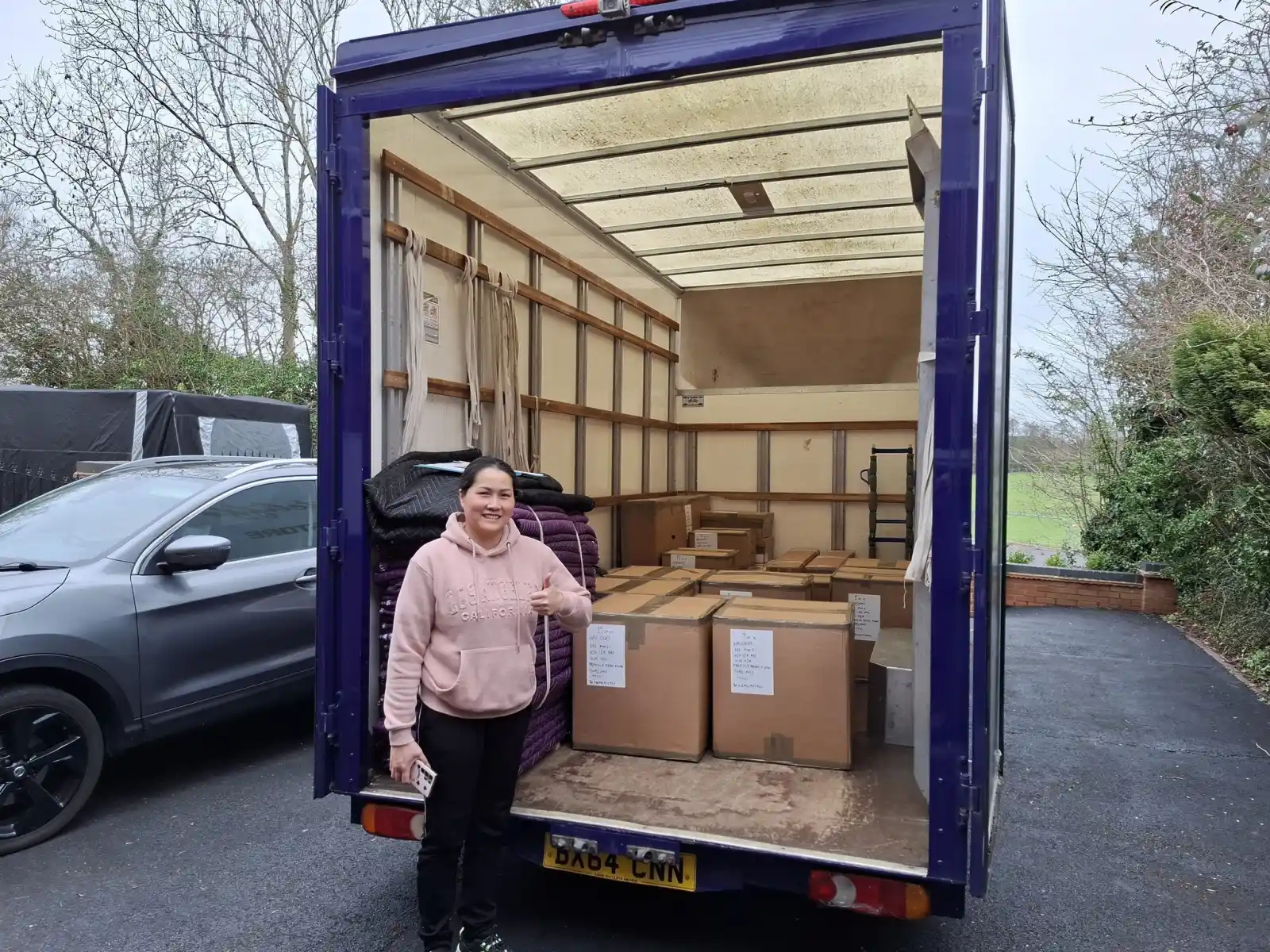
How a long-haul international move actually works — surveys, sea freight, customs and door-to-door delivery.
Read article →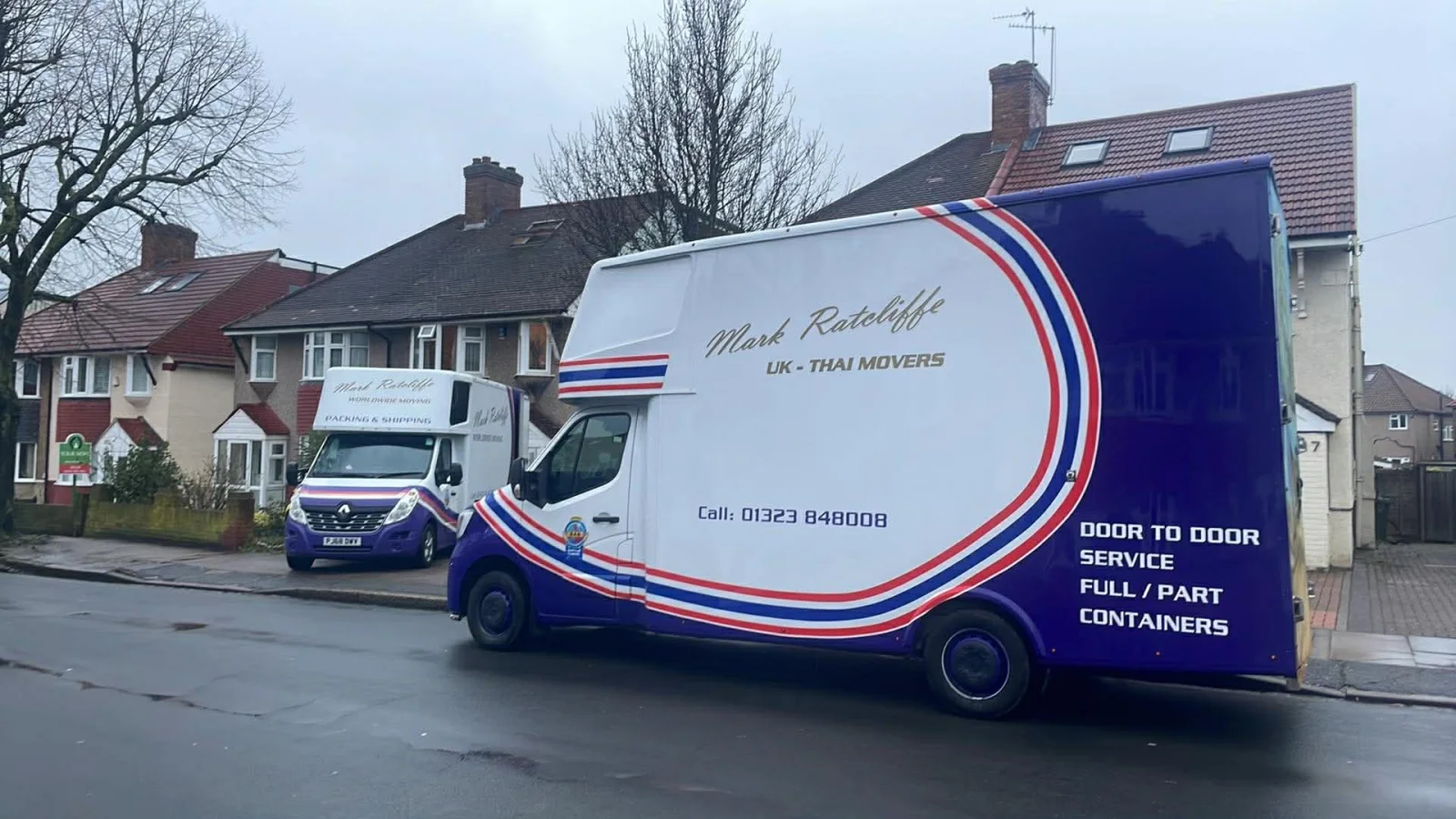
Planning, paperwork and timelines for shipping a UK home abroad — what to expect and how to prepare.
Read article →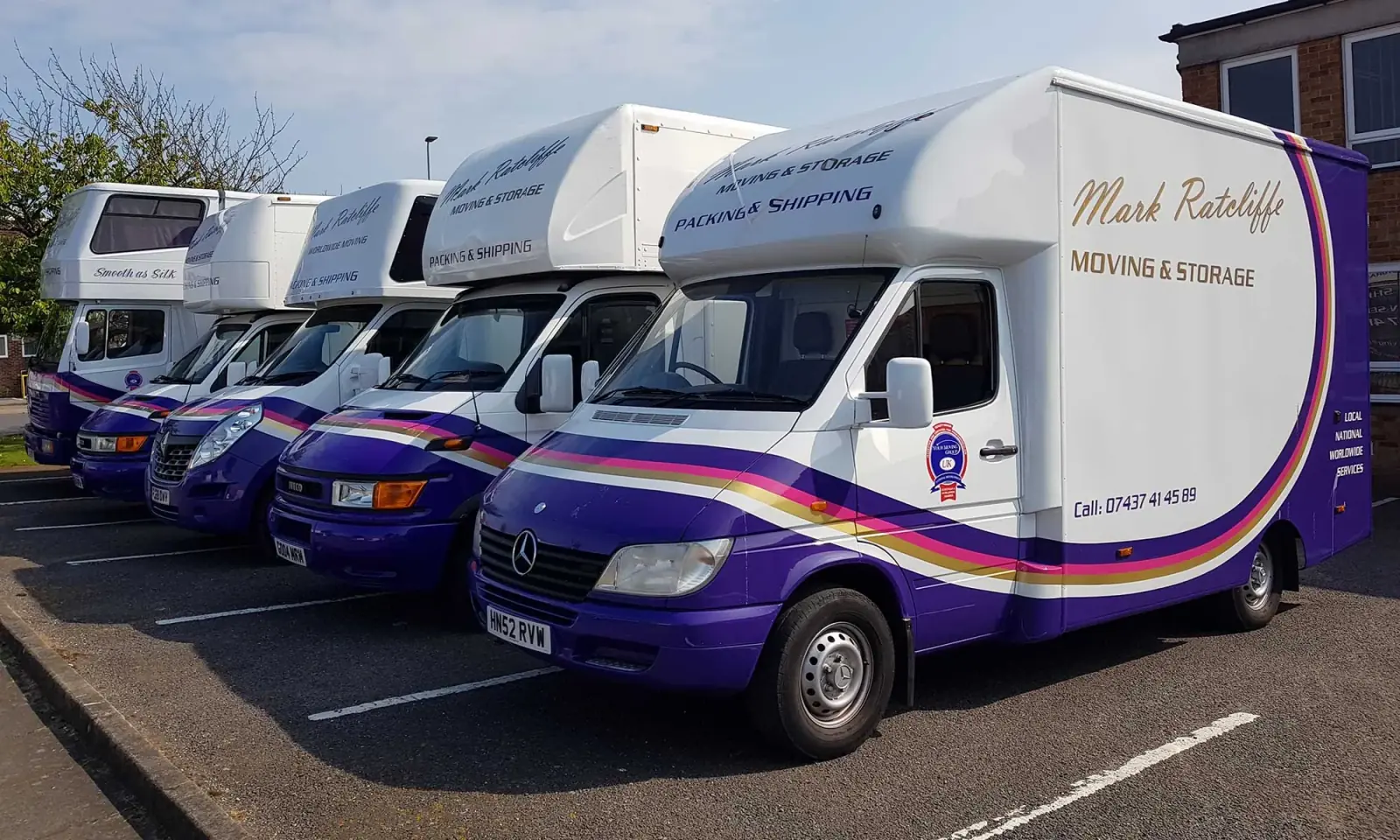
Real 2026 prices for Sussex moves — local, long-distance, packing, storage and international. No “from £150” tricks.
Read article →Call us today for a free, no-obligation quote — or use our online form. Whether it’s a shared-container part-load or a full home shipped to Bangkok, Hua Hin or the islands, we’ve handled it before and we’ll handle yours with care.