
Higher-spec packing for international moves and long-term storage. Moisture-resistant pad-wrap, custom timber crates for art and antiques, full ISPM-15 compliance for destination-country wood-packaging regulations. BAR Overseas Group member.

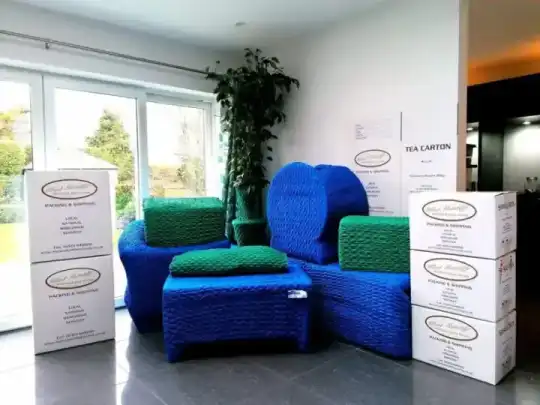
Export packing and crating is the packing spec we use on every international removal and every long-term storage assignment. The materials are heavier, the wrapping is more thorough, the wood-packaging meets ISPM-15 phytosanitary standards, and high-value items go into bespoke timber crates built to each piece’s dimensions. Mark Ratcliffe Moving is a British Association of Removers (BAR) Overseas Group member working from our Lower Dicker depot, and about a third of our packing workload is export-spec. Common destinations include France, Spain, Australia & New Zealand, the USA & Canada, the UAE, South Africa, plus UK-to-Thailand.
A domestic Sussex move travels in our lorry for an hour or three, is handled four times (load, drive, unload, place), spends one day in transit. An international move travels in a sealed container for four to twelve weeks, is handled ten to fifteen times (UK pack, UK load into container, road haul to port, lift onto vessel, vessel stowage, vessel discharge, port handling, customs inspection at destination, road haul to destination, unload, place), and crosses multiple climate zones. The packing has to survive all of that without failing.
Long-term storage is similar in profile — goods sit in a steel strong room at our Lower Dicker depot or a destination warehouse for months or years, with seasonal humidity changes, and need to come out at the end intact. Standard domestic packing fails on long timescales because the bubble-wrap inside the cardboard loses air and the cardboard absorbs ambient moisture. Export packing uses moisture-resistant materials specifically to handle that.
Standard pad-wrap is a heavy cotton/poly removal blanket fitted around each piece of furniture and taped at the seams. Export pad-wrap adds a polythene layer between the blanket and the furniture to block water vapour ingress over a long voyage. The pad-wrap stays on the furniture inside the container, comes off only at the destination property.
Standard packing uses single-wall cartons for clothes and books, double-wall for fragile and kitchen. Export packing uses double-wall throughout, with extra reinforcement at seam corners and a humidity-resistant glue. Cartons are sized to stack predictably inside a 20-foot or 40-foot shipping container without wasted space.
Long voyages on metal-hulled vessels generate static. TVs, computers, audio kit and other electronics travel in anti-static bubble wrap inside foam-lined cartons. Sensitive items (vintage audio, certain musical instruments) get desiccant packs added.
The container itself gets dunnage to absorb moisture in transit: typically thick craft paper laid over the floor, against the walls and across the top of the load. Some routes (UK to Australia in the Australian summer, UK to UAE) get desiccant bags hung at intervals. The aim is that nothing inside the container experiences relative humidity above 60%.
Anything that won’t survive the journey in cardboard goes into a bespoke timber crate. We design and build crates in our own workshop at Lower Dicker, sized to each item, with internal padding cut to fit. Crates are ISPM-15 heat-treated and stamped so destination customs releases them without quarantine.
Crating is reserved for items where cardboard isn’t enough. Each crate is built once and stays with the item, so if you move again it’s ready to re-use. Common crating jobs from our Sussex customers:
ISPM-15 is the international rule that controls wood packaging in cross-border trade. The aim is to stop wood-boring pests (in particular the Asian longhorn beetle and pine wood nematode) being moved between countries via untreated wooden crates and pallets. Compliance is mandatory for destination customs in:
Practically, every solid-wood crate or pallet we use is heat-treated to ISPM-15 standards (held at 56°C for 30 minutes through the core) and stamped with the ISPM-15 mark, the IPPC logo and our country code. Plywood, OSB and other engineered wood is exempt because the manufacturing process already kills any pests. We never use untreated softwood that doesn’t carry the stamp.
A crating job runs in five steps:
At the destination the crates are opened by our destination agent’s crew, the items inspected and placed in your new property, the empty crates either returned to us for re-use or recycled locally (the destination agent has the discretion to do whichever is cheaper).
Export-spec packing isn’t only for international moves. Anything destined for long-term storage at our Lower Dicker depot or a destination warehouse benefits from the same approach. Standard packing degrades over months or years — cardboard absorbs ambient moisture, bubble wrap loses air, cotton pad-wrap pulls moisture from the surrounding air into the furniture surface. Export-spec packing is designed to sit for a year or longer without degradation.
Common long-term storage scenarios: probate clearance pending property sale, expat assignment with eventual return, downsizing where the children may want the furniture in five years’ time, full-home contents storage during major renovation. We’ll talk through the timeframe at the survey and recommend export-spec packing where the storage duration justifies it — usually for anything over six months.
Export packing and crating is a craft job — the difference between a crate that holds and a crate that doesn’t isn’t obvious to a customer at the point of packing, but it’s very obvious when the destination crew opens it and the contents are intact (or aren’t). We build our own crates in our own workshop using our own crew. We don’t sub-contract crating to a third party because we’ve seen what happens when the crate-builder hasn’t handled the item being crated.
About a third of our packing workload is export-spec. The crews who pad-wrap and crate your items in Sussex are the same crews who’ve done it on hundreds of international moves to France, Australia, the USA, the UAE, South Africa and beyond — not casual day-rate labour hired the week before.
Read what customers say on our reviews page, see crating examples in the gallery, or call Mark on 01323 848 008 to discuss what your move would need. We’ll give you straight answers about what warrants crating, what ISPM-15 means for your destination, and how export packing fits into the wider packing services we offer.
Export packing assumes the goods will travel further (typically 4 to 12 weeks on a sea container or weeks in long-term storage), be handled more times (UK loading, port handling, vessel loading, customs inspection, destination unloading, road delivery), and face climate variation (humidity in transit, temperature swings between UK winter and tropical destinations). The materials are heavier-spec: moisture-resistant pad-wrap on every piece of furniture, dunnage in the container to absorb water vapour, anti-static wrapping for electronics, and custom timber crates for high-value or fragile items.
ISPM-15 is the International Standards for Phytosanitary Measures regulation that controls the treatment of wood-packaging materials in international trade. Crates, pallets and dunnage made of solid wood must be heat-treated or fumigated and stamped with the ISPM-15 mark or your destination country will quarantine, treat at your cost or destroy the wood. Plywood, OSB and engineered wood are exempt. We use ISPM-15 compliant materials on every international move where wood packaging is involved.
No — most household goods travel fine in standard double-wall export cartons inside a sealed container, with pad-wrap on the furniture. Crating becomes necessary for: high-value art and antiques, marble and stone tops, large mirrors and pictures, anything irregularly shaped that won’t stack safely, anything requiring custom support to prevent vibration damage. We identify the crating list at the survey and quote separately.
For a typical 3-bedroom Sussex household heading to Australia, Spain or the USA, export pack-day is usually a full day with a crew of three. Larger homes or homes with extensive art and crating items can run to two or three days. We always pack one full day before the container loading slot so we can spot anything that needs rework.
Custom timber crates are quoted per piece. A typical art crate for a framed picture up to a metre across is £120 to £220. A marble table-top crate is £220 to £380. Large antique cabinet crates run £300 to £600. Crating is built bespoke to each item, ISPM-15 stamped, and the crate stays with the goods for any subsequent moves.
Yes. Items in custom crates can be declared at their full appraised value for transit insurance, and our underwriters give favourable rates for crated art and antiques because the crate substantially reduces the risk profile. We arrange marine transit insurance through a specialist Lloyd’s-syndicate broker; premiums on crated high-value items typically run 1.5 to 2.5% of declared value (versus 2 to 3% for non-crated).
From the blog
Step-by-step packing for china, glassware, art, framed pictures and electronics — from packers trained at our own facility. The five mistakes …
Read article →
Moving TVs, computers, and other electronics? Learn the correct way to pack and protect your electronic items during a house move.
Read article →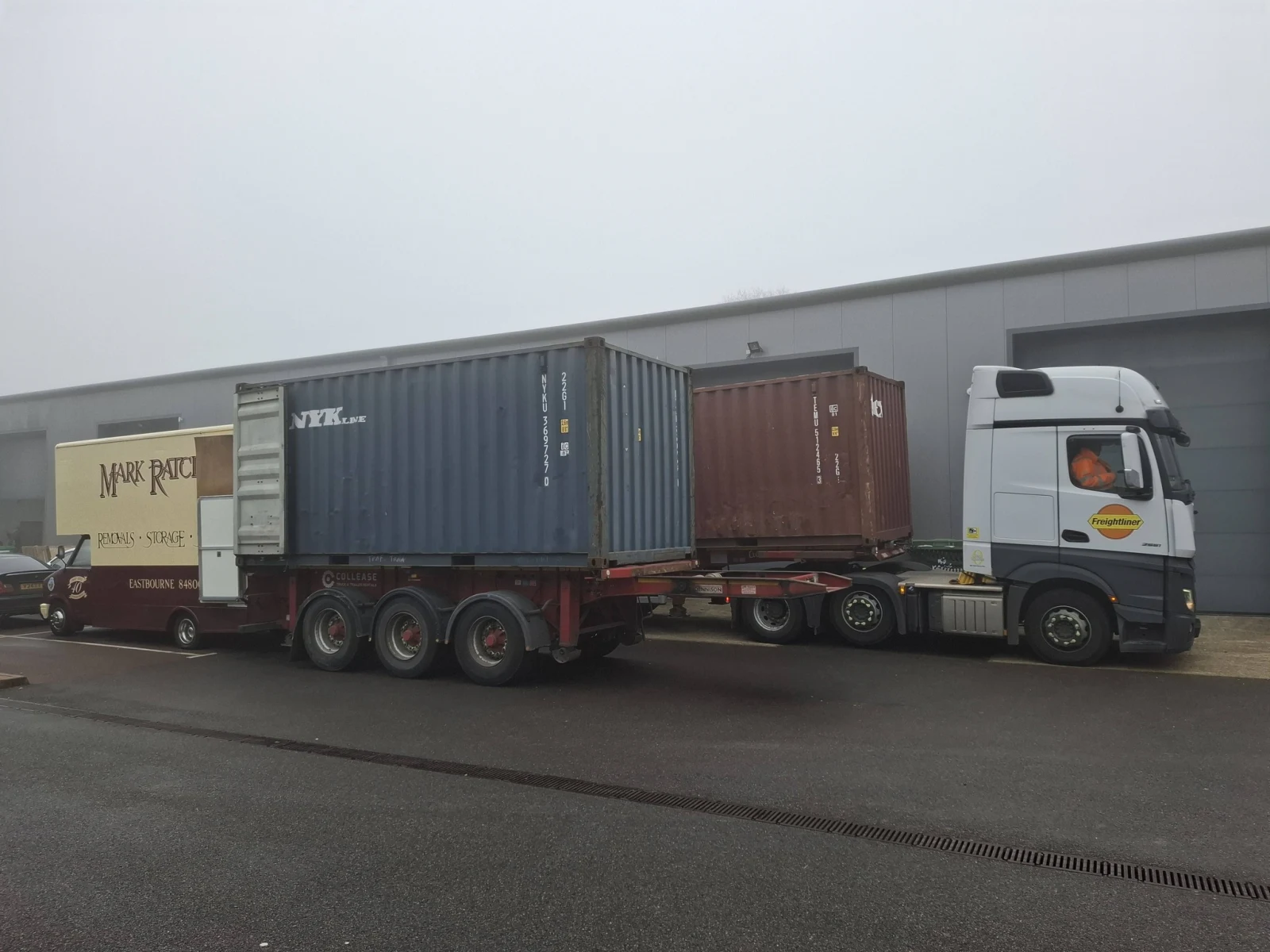
Learn professional techniques for safely packing glass, china, mirrors, and other fragile items to prevent expensive breakages on moving day.
Read article →Call us today for a free, no-obligation quote — or use our online form. Whether it's a one-room move or a full international relocation, we've handled it before.