
Removals from the UK to Switzerland, handled end-to-end. We pack and load in the UK, run the road leg to the Swiss border, and our Swiss destination agent clears customs and delivers to your address. Switzerland sits outside the EU customs union, so the paperwork is the part that decides whether your move is smooth.

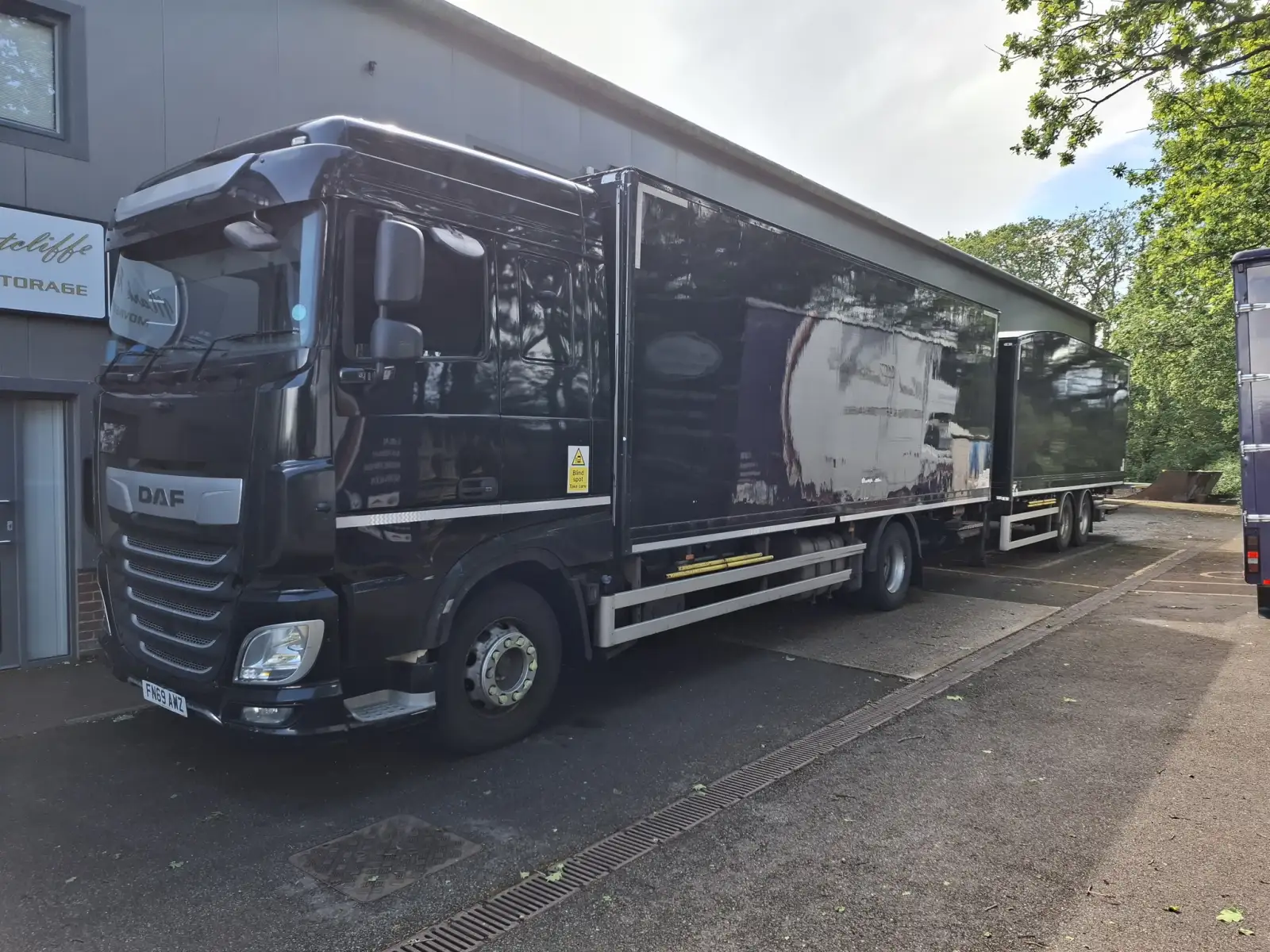
Removals to Switzerland from the UK are the most paperwork-heavy moves we run in Europe, and the ones where choosing on price alone goes wrong most often. Switzerland sits outside the EU customs union, its frontier controls are applied properly, and a shipment presented with a vague inventory does not get a warning — it gets held. We handle the UK packing, loading and export, run the road leg to the Swiss frontier, and our Swiss destination agent clears customs and delivers to your address.
Switzerland is not in the EU and not in its customs union, which is the single fact that shapes every Swiss removal. Your goods make a formal entry at the Swiss frontier and the paperwork is checked properly rather than waved through. Used household effects can normally be imported free of duty and Swiss VAT as Übersiedlungsgut — removal goods — when you are genuinely transferring residence, but the conditions are specific: the goods must have been in your use for a period before the move and be kept for a period afterwards, you need your residence permit or confirmation of registration, and you must submit a full itemised inventory in German, French, Italian or English. Vehicles, alcohol, tobacco, firearms and plants are all handled separately from the standard relief. The Swiss Federal Office for Customs and Border Security publishes the current rules, and because they are applied strictly we prepare the file with you well before the vehicle leaves.
The practical advice we give every Swiss customer is the same: do not book the vehicle until you know your permit position. A shipment that arrives before your residence registration exists is a shipment sitting in bond accruing storage. Get the sequence right and Swiss clearance is orderly and predictable; get it wrong and it is the most expensive mistake available on this route.
We pack and load in the UK, and everything is inventoried as it goes into the vehicle — numbered, described and valued, because that inventory becomes the customs document rather than a packing note. The load is consolidated and sealed at our Lower Dicker depot, then runs by road across the Channel and down through France or Germany to the Swiss frontier.
At the border the file is presented and your goods enter Switzerland. From there our Swiss destination agent takes over: clearance, any inspection, and the final delivery to your address, with the local knowledge that matters in a country where the delivery problem is usually a narrow old-town street, a booked goods lift or a mountain gradient. It is the same model we have used successfully on our Thailand route for years — our crews and standards at the UK end, a specialist agent doing what only a local can do at the far end.
Switzerland is small but its regions are genuinely different — four national languages, twenty-six cantons, and delivery conditions that change completely between a lakeside apartment and a Jura hill town. Each of these pages covers what that city actually needs:
Allow 10–14 days door to door, and budget more time for the paperwork than you would on an EU route. That is the figure we publish across our European service and we have not shortened it for this page, because Swiss clearance is the step that varies. The road leg itself is predictable; the frontier is where a thin inventory costs days.
Beyond that, geography adds time at the margins. Lugano sits the far side of the Gotthard, St. Gallen is a long run east, and anything in the Jura or the higher cantons can be affected by winter weather between roughly November and March. We build a realistic contingency into a winter delivery date rather than promising a day we cannot hold.
We are a family-run Sussex firm, established in 2017, and international removals are a core part of what we do. Our crews pad-wrap every piece in your home using our white-glove method, build custom crates for anything fragile or high-value, and produce the itemised inventory that a Swiss entry depends on. We are a member of the British Association of Removers Overseas Group and work to the BS 8564 quality standard, with every consignment fully insured for the journey.
If your dates and your permit do not line up, our Lower Dicker storage can hold your goods in the UK until Switzerland is ready for them — which is very often the cheapest way to solve a Swiss timing problem. Read our customer reviews or call 01323 848 008.
Since Brexit, UK nationals are third-country nationals for Swiss immigration purposes, which is the single biggest change to this route and the one people are most often unprepared for. You can no longer simply arrive and look for work. In practice a Swiss employer sponsors the permit, the job usually has to be advertised locally first, and third-country permits are subject to annual quotas that can run short late in the year. The permit types you will hear about are L for short-term stays, B for ordinary renewable residence, and C for settlement after a qualifying period.
Once you land, you must register in person at your commune — the Gemeinde, commune or comune depending on the language region — typically within fourteen days of arrival and before you start work. That registration is what unlocks almost everything else: the bank account, the health insurance, the residence card. It is also the step that has to exist before your household goods clear customs, which is why we ask about your permit position before we book a vehicle. The State Secretariat for Migration publishes the current rules, and they are worth reading rather than taking second-hand.
This is the one that catches British movers hardest, because it works nothing like the NHS. Swiss basic health insurance is compulsory and privately purchased, not funded through tax. You choose an insurer, you pay a monthly premium per person — including for each child — and you carry an annual excess before the policy starts paying. There is no household cap that makes a large family cheap.
You normally have three months from arrival to arrange cover, and this is the sting: when you do, it is backdated to your date of arrival, so a delay does not save money, it simply produces a larger first bill. Premiums vary by canton, by age and by the excess you choose, which is why the same family can pay noticeably different amounts in Zug and in Geneva. Budget for it from day one and compare properly; the Federal Office of Public Health explains what basic cover must include.
Banking generally follows registration rather than preceding it: most banks want your residence permit or at least confirmation of registration plus a Swiss address. That ordering matters if your employer needs an account to pay into, so it is worth starting the day you register.
Schools are a genuine Swiss strength and a genuine surprise. Public schooling is free, well funded and highly regarded, but it is taught in the language of the canton — German, French or Italian — and younger children are usually expected to integrate into it rather than be taught in English. That is often excellent for a seven-year-old and hard for a fifteen-year-old mid-GCSE, which is why international schools cluster around Geneva, Zurich, Zug and Basel and charge accordingly. It is worth deciding this before you choose a canton, not after.
Cost of living is high and the headline numbers are real, though salaries are correspondingly high. The three that reshape a British budget are rent, health insurance and eating out. Rental deposits are typically substantial and are held in a blocked account in your name rather than by the landlord, so the money is protected but tied up. Buying property as a foreign national is restricted in ways that surprise people, particularly for second homes, so take advice before assuming you can purchase.
None of this is our field — we are movers, not immigration advisers, and we will say so rather than guess. What we can do is make the shipping side line up with it: hold your goods at our depot until your permit and registration are in place, and time the container so it does not arrive before you legally exist in the system. That sequencing is where most Swiss moves go wrong, and it is entirely avoidable.
These are the rates we quote from, not a teaser figure with the extras stripped out. A shared load to Switzerland starts at £145 per cubic metre with a 4 m³ minimum, and a dedicated vehicle — yours alone, no transhipment — starts at £4,250. Typical transit is 10–14 days.
| Your home | Typical volume | From |
|---|---|---|
| Studio or single room | 10 m³ | £1,450 |
| One-bedroom flat | 18 m³ | £2,610 |
| Two-bedroom house | 30 m³ | £4,350 |
| Three-bedroom house | 45 m³ | £6,525 |
| Four-bedroom house | 62 m³ | £8,990 |
| Five-bedroom house or larger | 85 m³ | £12,325 |
These are the prices you pay. International removals are zero-rated for UK VAT, so unlike a domestic house move there is nothing to add on top. Import duty or VAT levied by the destination country, where your goods do not qualify for transfer-of-residence relief, is separate and is payable there rather than to us.
Above roughly 55 m³ a dedicated vehicle usually beats the shared-load rate. We will tell you when that crossover applies to your move rather than let you overpay for groupage. Volumes above are typical rather than measured; the survey sets the real figure and the quote is then fixed in writing. Our free volume calculator gives you a cubic-feet number in a couple of minutes without needing to speak to anyone.
Included as standard
Priced separately
| Service | Price from | What it covers |
|---|---|---|
| Full export packing | £38 per m³ | All materials included. Typically £1,100–£1,400 for a three-bed house. |
| Fragile-only packing | £22 per m³ | China, glass, pictures and electronics. You do the rest. |
| Unpacking at destination | £18 per m³ | Boxes emptied, contents placed, cartons removed. |
| Transit insurance | 2.5% of value | £75 minimum. All-risks cover on a valued inventory. |
| Storage in transit | £4.50 per m³ per week | £25 weekly minimum. Individual steel rooms, 24-hour CCTV. |
| Upright piano | £395 | Skid trolley, crating and specialist straps. |
| Grand piano | £695 | Legs removed, side-crated and blanket-boxed. |
| Custom timber crating | £185 per crate | Art, marble, mirrors and antiques. ISPM-15 compliant timber. |
| Shuttle vehicle | £280 | Where the lorry cannot reach the door — common in Italian ZTL zones and Swiss old towns. |
| Long carry over 20 m | £95 | Per property, per move. |
| Second delivery address | £180 | Within 25 km of the primary address. |
| Vehicle shipping | On application | Cars, motorcycles and trailers via our specialist partner. |
For the full eight-route comparison across France, Switzerland, Spain, Italy and the Benelux, see our European removals rate card.
Allow 10–14 days door to door, and expect the paperwork to take longer than on an EU route. The road leg is predictable; Swiss customs clearance is the step that varies, and a thin inventory can cost days at the frontier. Geography adds time at the margins too — Lugano sits beyond the Gotthard, St. Gallen is a long run east, and winter weather can affect the higher cantons between roughly November and March.
Normally not. Used household effects can usually be imported free of duty and Swiss VAT as Übersiedlungsgut — removal goods — when you are genuinely transferring residence. The conditions are specific: the goods must have been in your use for a period before the move and kept for a period after it, you need your residence permit or confirmation of registration, and a full itemised inventory is required. Vehicles, alcohol, tobacco, firearms and plants are handled separately.
Our Swiss destination agent. We pack, load, inventory and export from the UK and run the road leg to the Swiss frontier; the agent handles clearance, any inspection and the final delivery to your address. It is the same model we use on our Thailand route — our crews and standards at the UK end, a specialist doing what only a local can do at the far end.
Do not send it. A shipment arriving before your Swiss residence registration exists is a shipment sitting in bond accruing storage charges, and it is the most expensive mistake available on this route. Our Lower Dicker storage can hold your goods in the UK until Switzerland is ready for them, which is usually far cheaper than solving it at the Swiss end.
All of them. We have dedicated pages for Zurich, Geneva, Basel, Bern, Lausanne, Lucerne, Winterthur, St. Gallen, Zug, Fribourg, Neuchâtel, La Chaux-de-Fonds and Lugano, covering what each destination actually needs — and we deliver to every other canton and commune on the same service.
In practice, yes. Swiss customs clears removal goods against your residence status, so the relief depends on you being registered or holding the permit that entitles you to it. A container that arrives before you legally exist in the system sits in bond accruing storage. This is the single most common way a Swiss move goes wrong, and it is entirely avoidable — we hold goods at our depot until the paperwork lines up.
Nothing like the NHS, and it is the cost people most often fail to budget for. Basic cover is compulsory and bought privately from an insurer, with a monthly premium per person including each child, plus an annual excess. You normally have three months from arrival to arrange it, and it is backdated to your arrival date — so delaying produces a bigger first bill rather than a saving. Premiums vary by canton and age.
In the public system, no. Swiss state schooling is free and well regarded but taught in the language of the canton — German, French or Italian — and younger children are generally expected to integrate into it. That tends to work well for a seven-year-old and is much harder for a teenager mid-exam. International schools exist around Geneva, Zurich, Zug and Basel at considerable cost. It is worth deciding this before choosing a canton.
Vehicles are handled separately from household goods and are not covered by the standard removal-goods relief. There are conditions on prior ownership and use, a separate declaration, and Swiss roadworthiness and emissions requirements to meet once there. We will tell you honestly whether shipping the car is worth it for your situation, which for an older British car is frequently no.
Yes, and on this route we often recommend it. Our Lower Dicker depot can hold your household in the UK until your permit, registration and address are all in place. It is almost always cheaper than storage at the Swiss end and very much cheaper than demurrage on a container waiting at the frontier.
Call us for a free, no-obligation quote, or use our online form. Whether it is a shared part-load or a whole house, we have handled the route before and we will handle yours with care.