
Student storage across Sussex and Brighton, built around term dates rather than yours. We collect from halls or a shared house before the move-out deadline, store it over the summer, and bring it back for the start of the new term.


Student storage in Sussex is normally sold to you by the box, and that works perfectly right up to the moment you are standing in a corridor with a desk chair, a bike and a mini fridge that no box will take. The by-the-box operators are honest about it in their terms. They carry cartons, and a carton is where it stops.
We arrive with a van and two crew instead, so the awkward third of the room is the part we are actually there for. The same firm lifts it out of your room, wraps it, stores it and brings it back, on one inventory and one booking. Nothing is handed to a courier in the middle, and there is no second contract with a storage company you have never spoken to.
That gap matters most for Brighton summer storage, where a lot of second and third years are in privately rented houses rather than halls. A halls room is mostly soft goods and cartons. A rented room is a desk, a chest of drawers, a mattress topper, a drying rack and a bookcase that came from a marketplace listing in October and will not survive being posted anywhere.
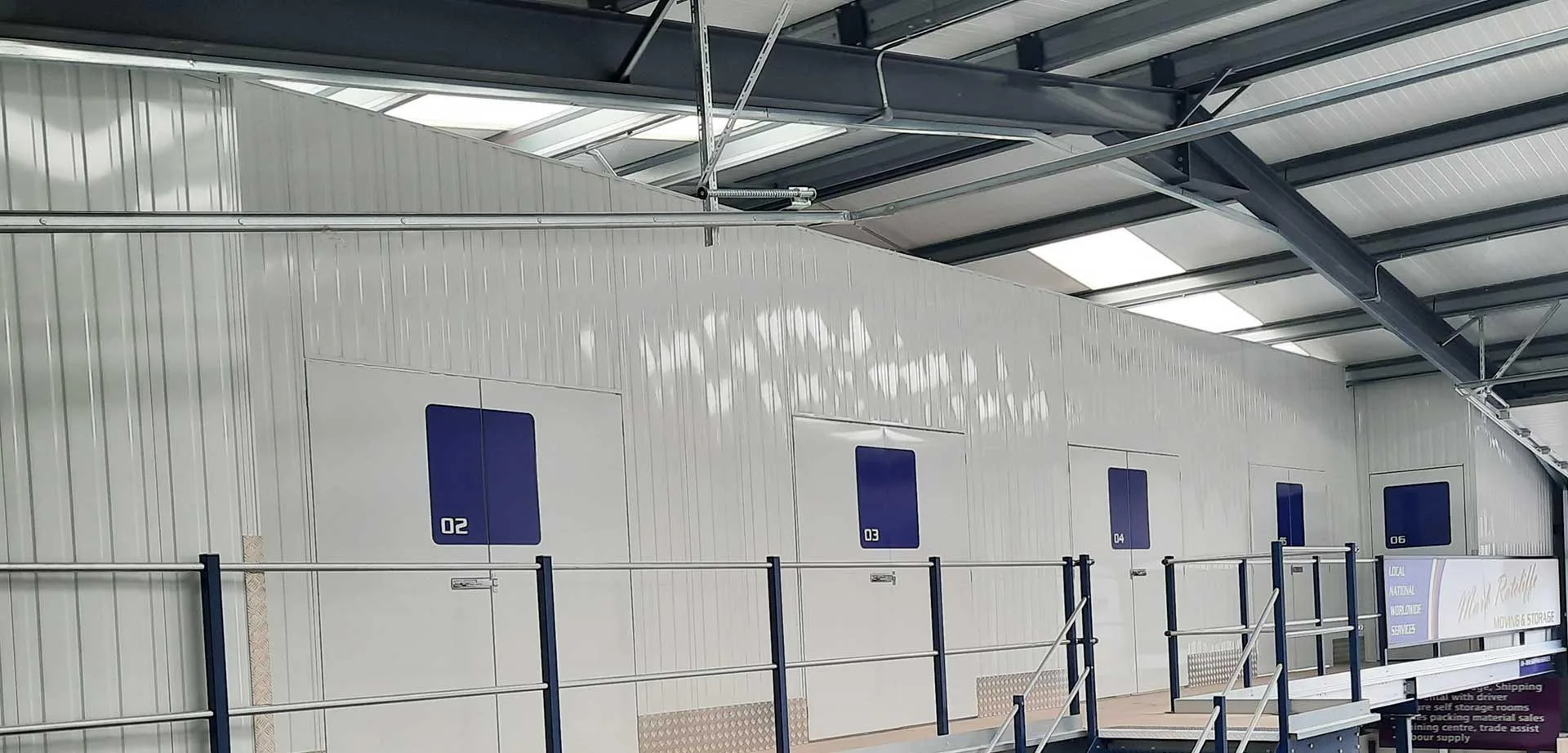
If what you actually need is the move rather than the store, that is our student removals service, and the two are booked the same way. If you want the building your things will sit in, that is our Prestige steel storage rooms at Lower Dicker. This page is about the load, the room size it needs and the calendar it has to fit.
Storage is sold by volume, not by how a room looks stacked against a wall. We plan at seven cubic feet of packed goods per square foot of floor, and how a Sussex storage quote is built from volume, duration and handling works that conversion through for every room size we run. What is harder to find anywhere is a student load counted item by item, so that is what this page does.
Below is a real halls room, measured from the kind of load our crews put on a van in June. Every cubic-foot figure in it is the same figure our own storage volume calculator uses, so you can rebuild this list item by item and arrive at the same total rather than taking our word for it.
| Item | Typical count | Cubic feet each | Cubic feet |
|---|---|---|---|
| Tea-chest cartons — clothes, bedding, kitchen kit | 6 | 4.5 | 27 |
| Book cartons — textbooks, files, folders, shoes | 4 | 1.5 | 6 |
| Wardrobe carton, tall, with hanging rail | 1 | 6 | 6 |
| Linen carton — duvet, pillows, bedding | 1 | 6 | 6 |
| Desk or office chair | 1 | 8 | 8 |
| Under-bed plastic crates, large | 2 | 4 | 8 |
| Undercounter fridge | 1 | 8 | 8 |
| Bicycle | 1 | 12 | 12 |
| Drying rack, lamp, mirror, fan, kettle and pans | — | — | 5 |
| One halls room, total | — | — | 86 |
Eighty-six cubic feet divided by seven is a fraction over twelve square feet of floor. That is one halls room. Two students together come to a hundred and seventy-two cubic feet, or about twenty-five square feet of floor, and the pair of you still sit inside the smallest room on our rate sheet, which is 30 square feet and holds 210 cubic feet.
A privately rented room with the student’s own furniture in it runs higher. Add a desk at eighteen cubic feet, a small bookcase at twelve and a small chest of drawers at fourteen and the same room becomes a hundred and thirty cubic feet, which is about nineteen square feet of floor on your own. That figure is usually what decides whether you store alone or club together with housemates.
Two things the table deliberately shows. The bike, the chair and the fridge are twenty-eight of the eighty-six cubic feet, a third of the room, and not one of the three fits in a carton. And a bare halls room is small enough that storing it alone is rarely the sensible arrangement, which is the honest answer rather than the one that sells the biggest room.
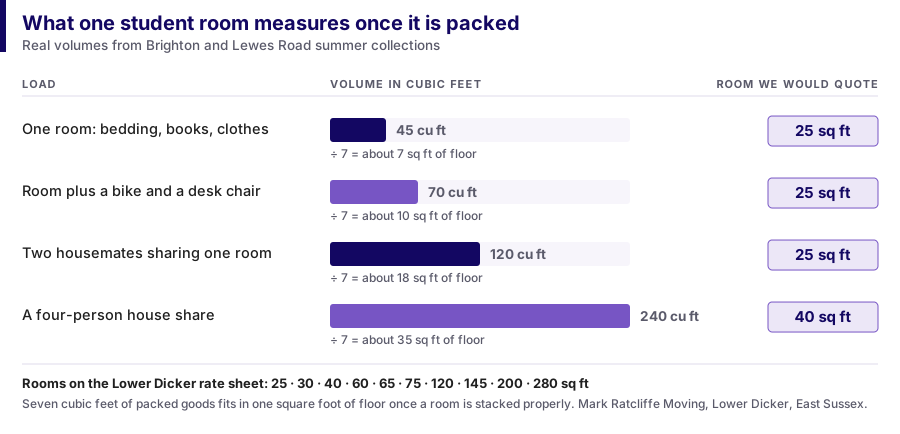
Once you have a cubic-foot figure the room size follows from it and there is no judgement involved. Divide by seven. The table below runs the common student configurations through that conversion, names the room on our rate sheet each one lands in and prices it at our Sussex weekly rate, so you can see before you ring us roughly what you are booking and what it costs.
| What is being stored | Packed volume | Floor needed at 7 cu ft per sq ft | Room on our rate sheet | Per week including VAT |
|---|---|---|---|---|
| One halls room — cartons, bedding, chair, fridge, bike | 86 cu ft | About 12 sq ft of floor | 30 sq ft room — the smallest room, and better shared | £18 a week |
| One privately rented room with the student’s own desk, bookcase and drawers | 130 cu ft | About 19 sq ft of floor | 30 sq ft room — the smallest room, comfortably on its own | £18 a week |
| Two students storing on one collection | 172 cu ft | About 25 sq ft of floor | 30 sq ft room — one room between the two of you | £18 a week |
| Three housemates, halls-sized loads | 258 cu ft | About 37 sq ft of floor | 50 sq ft room — one room between the three of you | £27 a week |
| Four housemates plus the shared kitchen and lounge kit | 385 cu ft | About 55 sq ft of floor | 75 sq ft room — one room between the four of you | £36 a week |
| A whole six-bed student house including sofas and beds | 840 cu ft | About 120 sq ft of floor | 150 sq ft room — the next size up from 120 sq ft of floor | £63 a week |
Two things that table is doing quietly. The floor column is arithmetic — cubic feet divided by seven — and the room column is what we actually rent, which comes in fixed sizes. Our rooms run 30, 50, 75, 100, 150 and 200 square feet, with 250 square feet and above for a whole house or business stock, so a load goes into the smallest of those that genuinely holds it rather than into a size invented to match the sum. That is why a six-bed house needing 120 square feet of floor is booked into the 150.
Every figure in the right-hand column includes VAT and includes £5,000 of cover. Collection or delivery is charged separately, each way, and it starts at £240 in Sussex for the smallest room. And there is one offer worth knowing about before you book: First 4 weeks half price when we collect for you.
The practical consequence of fixed room sizes is that sharing is where the saving is. Four housemates in a 75 square foot room at £36 a week are each paying for about nineteen square feet of it, which is nine pounds a head. One person on their own cannot buy twelve square feet; the smallest room we rent is 30 square feet at £18 a week, and a single halls load rattles around in it.
What the figure is built from is worth knowing before you compare anybody’s quote, ours included. Five things move it. The volume, which the table above settles. The duration, counted in whole periods rather than in days. The handling at each end, meaning how many crew and how far they carry. The access, meaning permits, lifts and parking. And the level of cover you choose against the declared value of the goods. Anything on a quote that is not one of those five is a surcharge, and you are entitled to ask what it is for.
Duration is the one students misjudge. A summer store is short. A research student writing up, a year in industry, a visa decision that slips or a postgraduate going home for a full academic year is not, and a load that will stay past six months should be wrapped for that from the start rather than re-wrapped in November. Chipboard flat-pack furniture is the usual casualty; it survives one move, tolerates a second and frequently does not justify a year in store, and we will say so if we think it is true. If you already suspect that is you, read storage that runs past six months before you book rather than after. For the line-by-line anatomy of what a move and a store are priced on, what removals and storage actually cost in Sussex sets out every item to ask any provider for. When you have your cubic feet, send them through our online removals and storage quote form and we will size the room against them.
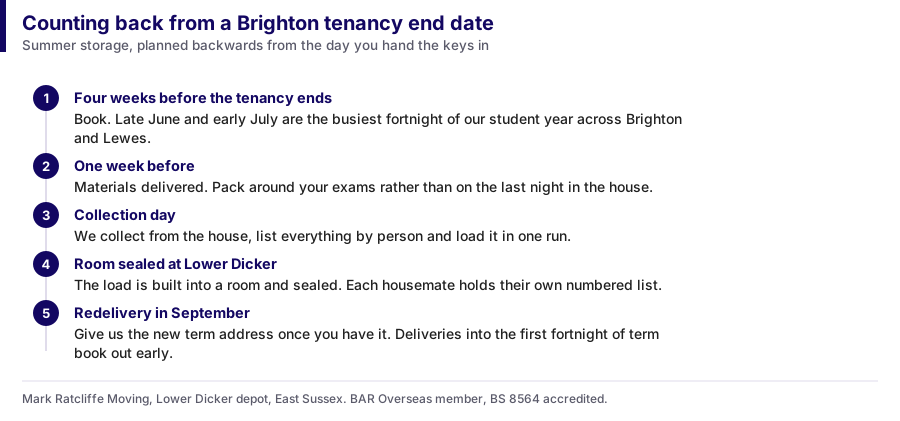
The only date that matters is the day your contract ends, because that is a hard stop. Everything else is counted backwards from it. Students who book in the week of their move-out get whatever slot is left, and in the third week of June there are not many left.
This is the sequence we run, expressed as a countdown rather than as a set of calendar dates, because Sussex and Brighton contract ends are staggered across late May, June and the first week of July depending on the landlord and the accommodation provider.
| Stage | When | What you need settled | What happens our end |
|---|---|---|---|
| First enquiry | As soon as the contract end date is confirmed | End date, and whether housemates are storing too | A provisional slot pencilled in, no deposit, no commitment |
| Collection booked | Six to eight weeks before move-out | A rough item list, including furniture and bikes | Slot confirmed, room size reserved against your volume |
| Materials with you | Two weeks before | How many cartons you actually need | Cartons, tape and markers dropped off or collected from the depot |
| Pack-down | Final forty-eight hours | Everything boxed except what travels with you | Nothing — this part is yours unless you have booked packing |
| Collection day | Move-out day or the day before | Someone present, or a named person nominated in writing | Wrap, inventory, load, seal against your reference |
| In store | June to September | Nothing | Sealed room, inventory on file, no action needed from you |
| Redelivery booked | Three to four weeks before teaching starts | New address, floor, lift, parking | Slot confirmed and the room pulled forward |
| Redelivery day | Usually the week before term | Someone to sign and open the door | Unload, place in the room, empty cartons taken away |
The pinch point is not June. It is the last ten days of September, when every stored load in the county wants to be somewhere on the same Saturday. Book the redelivery when you book the collection, even if the address is a guess, and change it later. Changing a date is easy. Creating one in the last week is not.
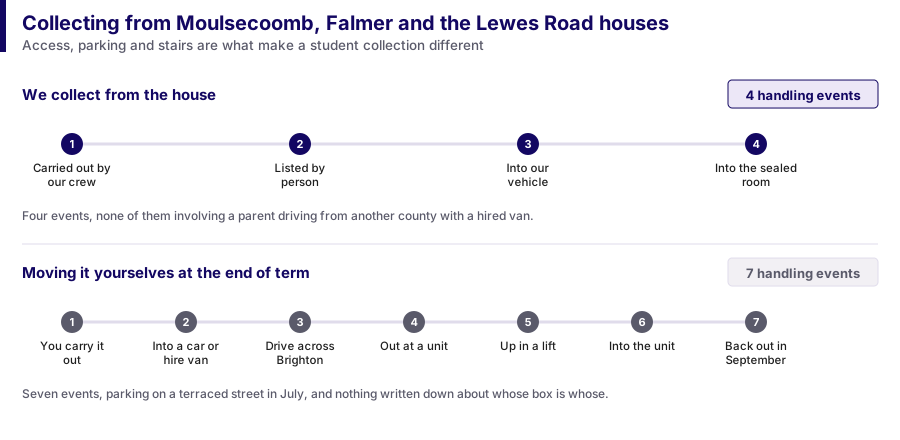
Most of the difficulty in a student collection is not the lifting. It is the last thirty metres, and the university or the landlord usually controls those thirty metres. We ask about access at the booking stage precisely so that nobody discovers the problem at eight in the morning with a queue of other leavers behind them.
These are the sites we are in most often. Access rules are set by the accommodation teams and they change from year to year, so treat the middle columns as what we plan around rather than as a published rule, and give us the block and room number when you book so we can confirm it with the residence office ourselves.
| Where we collect | What sets your deadline | The access problem | The collection window we run |
|---|---|---|---|
| Moulsecoomb halls, University of Brighton | The accommodation contract end date published by the housing team | Campus barrier, permit needed in advance, short loading bays shared with every other leaver that week | A booked morning slot on the deadline day or the day before |
| Varley Park, Coldean | Accommodation contract end date | Blocks set back from the road on a steep site, so it is a carry rather than a doorstep load | Early slot, with the extra crew for the carry added at quote stage |
| University of Sussex campus at Falmer | Residential contract end date set by the university | Controlled campus roads, vehicle permits, stairs in the older blocks | Permit requested at booking, morning slot before the campus fills up |
| Lewes Court, Falmer | Residential contract end date | Courtyard layout with no vehicle access to the door | Nearest legal vehicle point plus a planned carry, agreed before the day |
| Phoenix Halls and the city-centre blocks | Contract end date, often with a fixed morning hand-back time | Timed loading bay and a single service lift booked by the hour | First lift slot of the day, van loaded inside the booked window |
| Lewes Road, Bevendean, Hollingdean and Coombe Road houses | The end date on your tenancy agreement, usually late June or the first days of July | Controlled parking zone, terraced street, no driveway, and often a landlord inspection the same day | Bay suspension applied for in advance, collection booked ahead of the inspection |
Two honest points about Brighton. Our depot is at Lower Dicker near Hailsham, about twenty-two road miles out, which would matter enormously if this were a product you drive to. It is not. You never visit the room. We collect from your door and redeliver to your door, and the mileage is our problem rather than a reason for you to be in a car park in August. And where a lane genuinely will not take a lorry, or the load is one room and nothing more, the job runs as a man and van instead, which is often the right answer anyway.
We collect across the university towns and the places students actually live, including Brighton, Lewes, Eastbourne and Hastings. The full list is on the areas we cover.
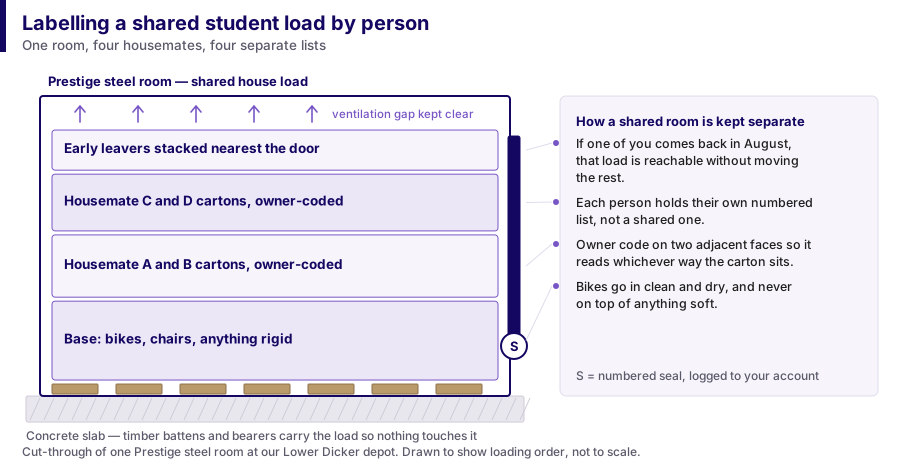
Four housemates storing together is the cheapest sensible arrangement, and it is also the one that goes wrong if nobody thinks about labelling on the day. The problem is never the collection. It is September, when three of you want your things back on different dates and to different addresses, and the room is a single stacked wall with no way to tell whose duvet is whose.
So we label by person before anything moves. Each student gets a letter, the letter goes on two faces of every carton and on a tag on every loose item, and the written inventory is split into four lists rather than one. When the room is loaded, each person’s goods go in as a block with theirs at the front if they are leaving first.
If the four of you are also moving between houses rather than storing, the load is handled differently again, and a parent’s guide to moving student belongings covers the move side of that decision. This page is about what happens once the door is sealed.
Student loads contain a category of thing that household loads generally do not, and it is worth being blunt about it before collection day rather than leaving items on a pavement. A sealed room holds nothing living, nothing perishable and nothing that can start a fire on its own.
The one that catches people out every year is the e-scooter or e-bike. Large lithium-ion cells are not going into a sealed room for three months, and no reputable operator will take them. Where a battery can be removed from a device and is small, we will discuss it; where it cannot, the item does not travel. A mini fridge is fine, but only after it has been defrosted, drained and dried, and that takes a day you have to allow for.
Packing for a store is a different job from packing for a van ride across town, and the difference is mostly about time. A carton that survives four hours in a lorry is not the same carton that survives a summer under stack pressure. Packing goods that are going into a sealed room covers what actually changes, preparing furniture for storage deals with the chair and the drawer unit specifically, and if you are buying your own materials, the packing materials we sell are the double-walled ones for that reason.
This is the question we get asked more than any other in June, and it is the one the box-collection services answer worst. You are storing in June. You do not know where you will be living in September, because the house viewing is in July and the contract will not be signed until August. Does that stop you booking?
No. The collection and the redelivery are booked as two separate events against one reference. The redelivery slot is a date and a rough area, and the exact address is added when you have it. We hold the date; you fill in the blank. Changing the address is a phone call, and moving the date by a few days is usually possible if you tell us before the last fortnight of September.
What we ask for once the address exists is narrow and specific: the floor, whether there is a lift, whether a van can get within carrying distance, and whether anyone else is moving into the same building on the same day. Those four answers determine how many crew turn up and how long the drop takes. Shared student houses in September frequently have three tenancies starting on the same morning in the same street, which is fine if it is known and difficult if it is not.
If the address turns out to be another county entirely, that is a different job and it gets quoted as one. If it turns out you are not coming back at all and the goods need to go to a family address, that is also fine, and it is the same conversation. The hour-by-hour detail of how a collection or a drop actually runs is covered on how a collection day runs from the door.
International students almost never want the whole room stored and almost never want the whole room shipped. They want a split: two suitcases of clothes on the plane, the winter coat and the textbooks and the desk lamp in a sealed room until October, and occasionally a box or two sent on properly to a home address abroad.
So we split the inventory at the door into three lists rather than one, and the lists are written before anything is wrapped. Travelling with you. Going into store. Going overseas. The third list is the one that needs the most thought, because anything crossing a border wants an inventory that will satisfy a customs officer as well as a storage index, and that is worth writing once properly rather than twice badly.
The practical advice is duller than people expect. Put the things you will want in August on the travelling list even if they are heavy, because pulling one item out of a sealed room in the middle of a store is an appointment, not a favour. Medication, documents, laptop chargers, the degree certificate and anything with a deadline attached to it travel with you.
Where goods are genuinely going abroad rather than into store for the summer, that runs as international removals from Sussex, and if the shipping date is months away from the move-out date — which it usually is, because visas and graduations do not synchronise — storing here before the container sails is the page that covers the wait.
In most student stores the person on the phone is not the person whose things are being stored. It is usually a parent, often in Surrey, Kent or Hampshire, who has been asked to sort it out with ten days’ notice and who has never seen the building their money is paying for. That is a different set of worries from the student’s, and it deserves a straight answer rather than reassurance.
What parents ask us, in order: who physically has the keys to the room, who is allowed to take things out of it, what happens if my child is abroad when it needs collecting, and whether I am dealing with a company or a marketplace of subcontracted drivers. The answers are that the goods sit sealed against a single customer reference, that only a named person can authorise release, that a student does not need to be present if someone is nominated in writing beforehand, and that the crew collecting the room is employed by us rather than booked through an app.
We are a family firm, established in 2017, a member of the British Association of Removers Overseas Group and accredited to BS 8564. BAR Overseas Group membership brings the Advance Payment Guarantee, which covers money paid in advance if a member firm ceases trading before the work is done. It is insolvency cover with a cap and a claim window rather than a blanket promise, and it is the part that matters when a parent is paying months ahead of the collection. You can read the detail on what BAR membership actually obliges us to do, or see what customers say in our customer reviews.
Parents are also welcome to come and look at the depot before booking rather than after. Nobody takes us up on it often, and everyone who does books.
Worth being honest about, because it explains why the process above looks the way it does. In our first couple of student seasons we treated a four-housemate collection as one job with one inventory, on the reasonable-sounding basis that it was one room and one invoice. It was fine in June. It was not fine in September, when one housemate wanted their half of the room in Falmer and another wanted theirs in Hove on a different day, and the room had been loaded as a single wall.
That is why the load is now split by person at the door and why each student signs their own list. It costs a few extra minutes at collection and saves an afternoon in September.
The second thing we got wrong was believing stated move-out dates. Students tell you the date on the contract. What actually happens is the last exam moves, or a flight is cheaper on the Tuesday, or the accommodation team brings the deadline forward by a day for a whole block. We now confirm the collection date twice, once at booking and once in the week before, and we build a small amount of slack into June rather than running the diary back to back.
The third is a standing limitation rather than a mistake, and it is the reason this page is written for Sussex rather than for a campus gate. We are a removals firm with a storage depot, not a student specialist operating out of a marquee in freshers’ week, and we do not do doorstep box drops at ten at night. If what you need is four cartons collected from a room and nothing else, a by-the-box service will suit you better and we will say so on the phone. Where we are the right answer is when the room contains furniture, when it is a whole house, when it has to come back to a different address, or when somebody wants one firm accountable for the whole of it. That is the same argument made at household scale on removals and storage from one Sussex firm.
Work your cubic feet out first, because that decides the room size — a halls room is about 86 cubic feet, roughly twelve square feet of floor, and that sits inside our smallest room, 30 square feet, at £18 a week including VAT. Two or three of you sharing still fits a small room; four housemates plus the shared kitchen and lounge kit come to about 385 cubic feet, which is a 75 square foot room at £36 a week including VAT. £5,000 of cover is included in every price, collection or delivery is charged each way from £240 in Sussex, and there is a standing offer — First 4 weeks half price when we collect for you. Give us your volume and your dates and you get a written quote covering collection, storage and redelivery as one job rather than three separate ones.
Yes to all three. Bikes, desk chairs, mini fridges, bookcases, drawer units, monitors, instruments and gym equipment all go into store as normal items. The fridge needs to be defrosted, drained and dried first, which takes about a day, so start it the day before we come. Cartons-only services cannot take any of these, which is usually the reason people ring us.
Not necessarily. Someone has to be able to let us into the room and sign the inventory, but it does not have to be you. A housemate, a parent or a friend can be nominated in writing when you book, and we will take the name and a contact number. What we cannot do is take goods from an unattended room with nobody authorised, because the inventory is signed evidence of what we received.
Yes, along with Lewes Court, the city-centre blocks and the private houses on Lewes Road, Bevendean, Hollingdean and Coombe Road. Tell us the site, the block and the room number when you book and we deal with the residence office over permits and loading bays ourselves. Campus access rules change from year to year, so we confirm them rather than assume them.
Usually, but book it early and expect us in the morning. Last-day collections in late June are the busiest slots we run, and a lot of Brighton streets are in controlled parking zones where we need a bay suspension arranged in advance. If the landlord’s inspection is the same day, tell us at booking so we go in ahead of it rather than across it.
Nothing breaks. The store simply continues while you find one, and the redelivery date moves. We would rather hold a provisional September date with a blank address than have no date at all, because the last two weeks of September are when every stored student load in Sussex wants to move at once.
Yes, and it is normal. The load is labelled by person at collection and each of you signs your own inventory list, so the room can be split across two or three redelivery drops on different dates and to different addresses. Four halls-sized loads plus the shared kitchen and lounge kit come to roughly 385 cubic feet, which is a 75 square foot room at £36 a week including VAT, or nine pounds a head, and splitting one room four ways is the cheapest arrangement a student can make.
Generally yes, with a permit, and the permit usually needs requesting several days ahead. Campus barriers often carry a height restriction, so we match the vehicle to the barrier rather than turning up in a lorry that cannot get through. Tell us which site and which block at booking and we will deal with the accommodation team directly.
Only a named person agreed at the time of booking. The room is sealed against a single customer reference and released to that reference or to somebody that reference has nominated in writing. If the student is going to be out of the country for the whole store, name a parent or guardian at the start; it takes ten minutes in June and is awkward to arrange from another time zone later.
From the blog

Halls close each summer. What student storage costs against driving it home, the halls check-out, and the move into a second-year house.
Student move tips for parents — term-start and end-of-year trips. What to pack, what to ship, what to leave at home, plus halls logistics.
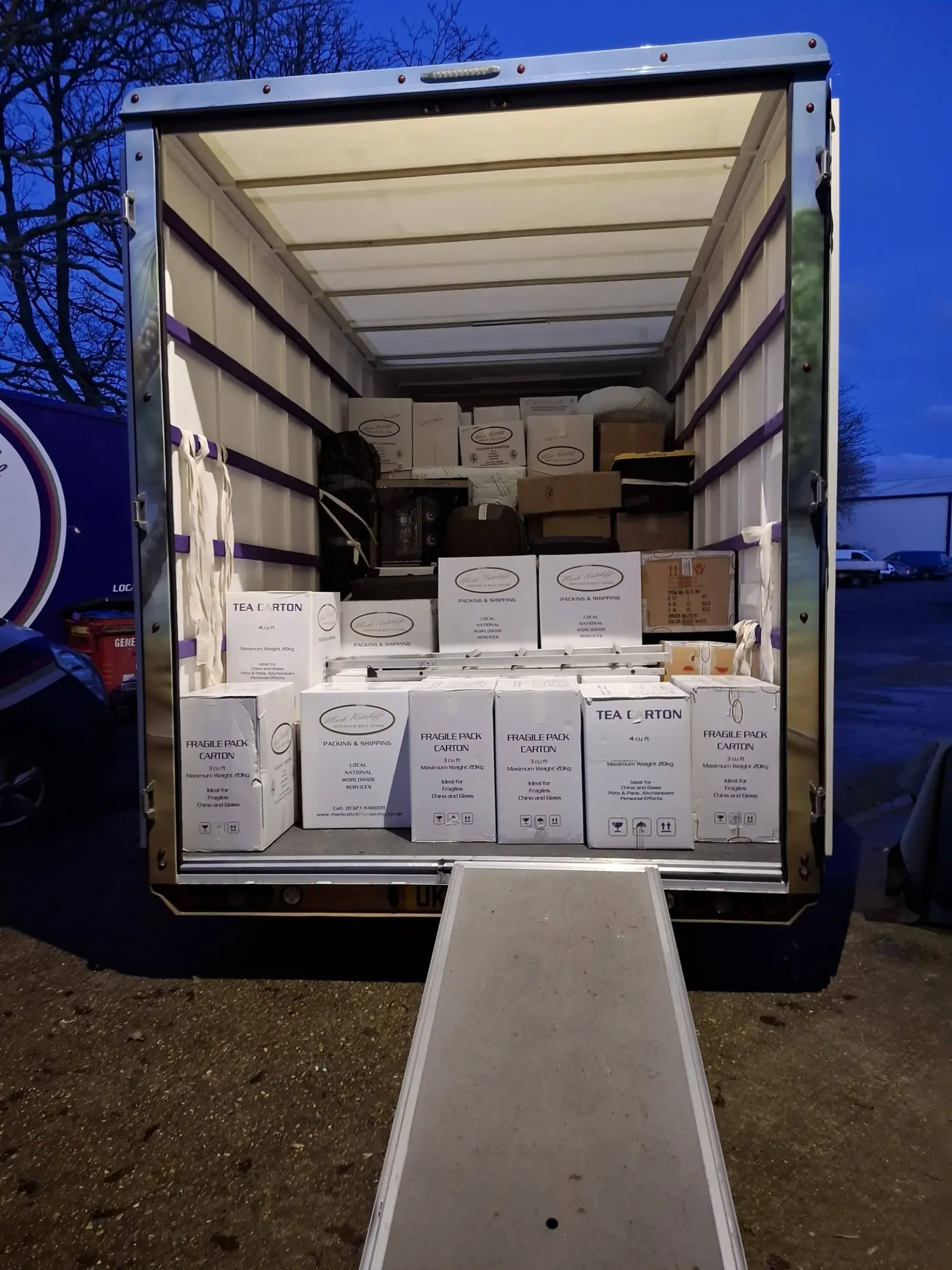
Need to reduce the amount of stuff before moving? Learn effective decluttering and downsizing strategies that actually work.
Tell us your tenancy end date, roughly what is in the room and whether housemates are storing with you, and we will size the room against your cubic feet, confirm a collection slot and pencil in a September redelivery date you can change later. Call 01323 848 008 or 07437 414 589, or email office@markratcliffemoving.co.uk.