
Packing and storage booked as one job, because packing for a sealed room is a different task from packing for a two-hour van run. Different materials, different labelling, different rules about what can go in at all.


A packing and storage service is booked as one job for a reason. Packing a house that is going straight into a new home means the cartons have to survive a couple of hours on a lorry and one set of stairs. Packing a house that is going into a sealed steel room at our Lower Dicker depot means the same cartons have to hold their shape, their tape and their contents for months with nobody looking at them. Those are two different specifications, and getting the second one wrong stays invisible until the day the room opens.
Almost all of the damage we are asked about at retrieval was not caused in store. It was decided on packing day. A single-wall carton at the bottom of a stack. A strip of parcel tape that let go in August. A label written on the one face that ended up against the wall. Nothing in the room did that.
Booking the pack and the room together keeps the crew that tapes the carton on the job through loading, sealing and retrieval, which is the part of combined removals and storage in Sussex a room-only operator cannot sell you at any price.
The honest way to explain the difference is item by item. A transit pack is engineered against shock and vibration over a short, supervised journey. A storage pack is engineered against static load, moisture, chemical transfer and time, none of which a two-hour run has time to do. Several materials that are perfectly correct for the first job are actively harmful in the second.
This is the table our crews work from when a survey is marked for storage rather than direct delivery. It is not a general packing guide — the room-by-room method sits on our Sussex packing services page. This is only what we change when the destination is a sealed room.
| Item class | Packed for a van run | Packed for months in store | Why it changes |
|---|---|---|---|
| Everyday china & glass | Single-wall carton, newsprint interleaved, stacked two or three high | Double-wall carton, acid-free tissue against the glaze before any bubble, stacked no more than four high | Newsprint ink transfers onto glazed and unglazed ceramic given long enough contact; single-wall board creeps under sustained stack load |
| Books & paper | Book carton filled to the top, loaded low in the vehicle | Double-wall book carton filled to a liftable weight, kept off the floor on battens, never at the base of the stack | Paper draws moisture and gains weight; an over-filled carton under six months of load deforms and pulls its tape |
| Artwork, mirrors & framed prints | Telescopic picture carton with corner protectors | Same carton, plus a rigid board face, stored on edge in a rack with nothing laid across it | Glass and frames bow under static load; flat storage under other goods is how long-stay mirrors crack |
| Mattresses & upholstery | Disposable cover or shrink-wrap for the journey | Vacuumed, aired, then a breathable cover; stored flat or upright, never folded or compressed | Plastic is a transit material; a storage pack uses a breathable cover. The mechanism is set out in preparing furniture for long-term storage |
| Wardrobe contents | Wardrobe carton with rail, straight into the new wardrobe the same day | Same carton, but garments must be clean and fully dry, and the carton is sealed top and bottom | Creasing does not matter over hours; body oils, damp and moth larvae matter a great deal over months |
| Electronics & AV | Anti-static bubble, own carton, cable bag taped to the unit | Same, plus cells removed, carton raised off the floor, nothing stacked on a screen | Condensation forms on cold boards during temperature swings, and batteries left in place degrade unattended |
| Kitchen appliances | Wiped, doors taped, loaded | Drained, run dry, left open for 24 hours before collection, transit bolts fitted, doors wedged in store | Residual water in a sealed drum or sump turns to mould in a closed room within weeks |
| Garden & garage | Loaded broadly as found | Fuel drained, blades cleaned and lightly oiled, pots emptied of soil and dried | Soil carries insects, spores and moisture straight into an otherwise dry room |
Nothing in that right-hand column is exotic. It is all ordinary work, and it is all work that a mover packing for a same-day delivery has no reason to do. That is precisely why a pack booked without telling anyone about the storage leg so often disappoints.
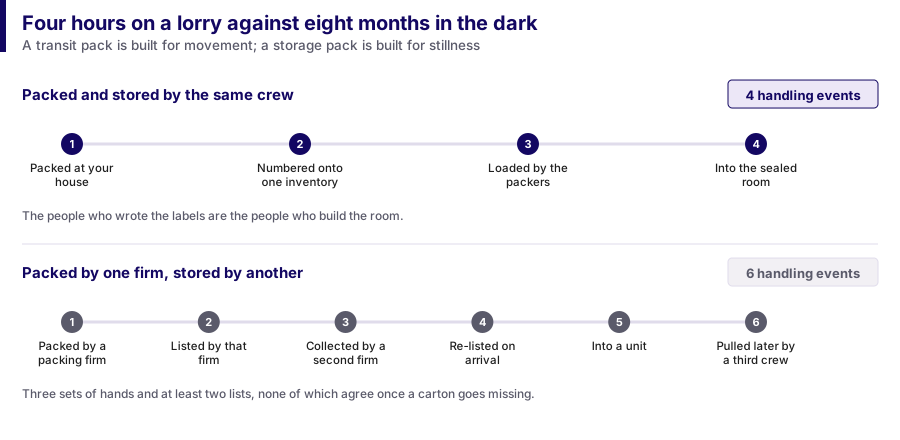
Three things fail in a storage room, and all three are decided by what was bought and how it was closed.
The first is board grade. A single-wall carton is rated for its own contents in motion, not for the weight of four more cartons sitting on it through a summer. Board loses stiffness as it takes up ambient moisture, and a stack that stood square in March will have leaned by September. We use double-wall throughout on a storage pack and reserve the heaviest triple-wall cartons for the base course. Supermarket and greengrocer boxes are refused outright: they have already been damp once, they are often open-topped, and produce boxes have carried fruit and therefore insects.
The second is tape. Ordinary hardware-shop parcel tape is a pressure-sensitive acrylic that creeps. It holds for a move and slowly releases over a long static hold, particularly on recycled board and particularly where somebody taped a single strip along the seam. We run a proper H-pattern — centre seam plus both end seams, top and bottom — in storage-grade tape, because a carton that opens in the middle of a sealed stack cannot be re-closed until the whole room comes out.
The third is fill. Voids are worse in store than in transit. A half-empty carton with air at the top is a crushing point for everything above it, and a carton packed proud so the lid bulges will not stack square at all. We fill to the shoulder with paper or void fill and we keep the profile flat. If you are packing some of it yourself, that is the rule worth copying, and it is worth reading our comparison of cardboard cartons against plastic rental crates before you buy, because rental crates are due back long before your storage term ends.
The wrapping that touches the object is where short-term habits do the most quiet damage. Newspaper is the obvious one. It is a perfectly sensible interleaf for a journey, and it is the wrong thing to leave pressed against glazed china, silver, marble or painted surfaces for half a year, because the ink migrates and the paper is acidic. On a storage pack the first layer against the object is always plain newsprint or acid-free tissue, and printed paper is used only as outer void fill.
Bubble wrap is the second. It is excellent shock protection and a poor long-term dressing against a polished or french-polished surface, because it is non-breathable and it prints its own pattern into soft finishes under pressure and warmth. On anything with a delicate finish we tissue first and bubble over the tissue, never bubble to bare wood or lacquer. The same reasoning drives the breathable covers on soft goods, and the related question of how furniture itself is dressed is covered in detail in our guide to preparing furniture for long-term storage and on our furniture storage in Eastbourne and Sussex page.
A word on desiccant, because customers ask and the internet oversells it. A handful of silica sachets does very little inside a forty square foot room; the moisture budget of a room is orders of magnitude larger than a few sachets can absorb, and once saturated they stop working and are never replaced. Desiccant is genuinely useful inside a small sealed enclosure — a camera case, a sealed instrument case, a crate of documents — and close to useless scattered around a storage room. Ventilation, dry goods going in and no moisture sources in the room do the actual work.
The final rule is the least intuitive: do not seal anything that is still giving off moisture. A cast iron pan that was washed that morning, a chopping board that felt dry, a plant pot that was rinsed. Those go in the next day or they go in the van with you. Our kitchen packers work to the guidance in packing kitchen items safely, with an added drying day whenever the destination is a store.
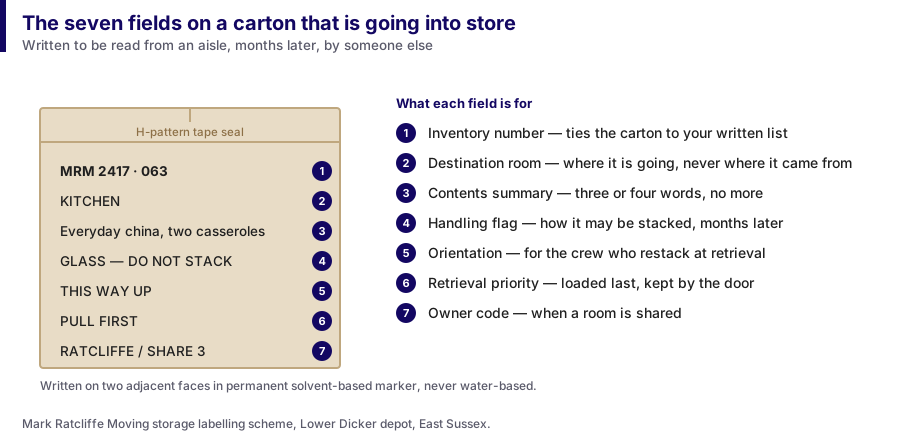
A normal move label answers one question: which room does this go to. A storage label has to answer a harder one: can somebody who was not there find this specific carton inside a sealed room, at short notice, without emptying it. That changes what is written and where it is written.
Two points of practice matter more than the rest. The inventory number goes on two adjacent faces, not one, because whichever face you choose will sometimes end up against the steel wall. And the marker has to be a proper permanent solvent-based pen, because water-based markers fade badly on recycled kraft over a long stay and ballpoint is unreadable at three metres in a lit aisle.
| Field on a storage carton | Example | Why it earns its place once the room is sealed |
|---|---|---|
| Inventory number | MRM 2417 · 063 | The only thing tying the carton to the written inventory you hold; the number we quote back if you ring asking for one item |
| Destination room | KITCHEN | Where it is going, never where it came from — the new house may not have the same rooms |
| Contents summary | Everyday china, two casseroles | Three or four words are enough to avoid opening four cartons to find one item |
| Handling flag | GLASS — DO NOT STACK | Tells the crew loading the room, and the crew reloading it months later, how it may be stacked |
| Orientation | THIS WAY UP | Cartons get restacked at retrieval by people who were not there when it was packed |
| Retrieval priority | PULL FIRST | Marks the cartons you told us you may want early; those are loaded last and sit by the door |
| Owner code | Surname or share reference | Matters when two households or several housemates share one room and one collection |
The priority flag is the field most worth thinking about on packing day. If there is any chance you will want the winter coats, the work files or the children’s books back before the room comes out, say so while the cartons are open. Deciding it later means a crew opening the room and working through a stack, and that is chargeable time you did not need to spend. The same logic applies to a whole load going into long-term storage in Sussex, where part retrieval is the normal case rather than the exception.
Every storage contract in the country carries an exclusion list, and almost nobody publishes theirs before you book. We would rather you saw it at survey stage, because the usual failure is not a refusal at the door — it is a customer discovering on packing morning that half the garage cannot go, with no time and no vehicle to deal with it.
Two principles sit behind the list. A sealed room has no ventilation you can rely on and no one watching it, so anything that can leak, off-gas, attract pests or fail on its own is a problem for every other customer in the building as well as for you. And anything you might urgently need back is better in the car than behind a sealed door.
| Not accepted into store | The reason | What we suggest instead |
|---|---|---|
| Aerosols, camping gas, BBQ bottles, propane | Pressurised containers in an unattended sealed room through a summer temperature swing | Gas bottles back to the supplier; aerosols travel with you or go to the household waste site |
| Petrol, diesel, two-stroke, paint, solvents, pool chemicals | Flammable, and the vapour has nowhere to go | Drain mowers and strimmers a week ahead; part-used paint is almost never worth storing |
| Food, opened dry goods, tins, pet food, drinks | Attracts pests, and a split tin is a months-long problem for the whole stack | Run the cupboards down before packing day; we will not carton food for store |
| Fridge and freezer contents | Perishable, and the appliance itself must go in drained and dry | Defrost and dry the appliance for a full day before collection |
| Candles, wax and anything that softens | A loft-height July temperature will deform them into whatever they are touching | Box separately and keep them with you |
| Lithium cells, power tools, e-bikes, scooters | Cells degrade unattended and can fail without warning | Remove the battery and take it with you; the tool or the bike can be stored |
| Plants, bulbs, seed, anything living | No light and no water, and soil brings insects into a dry room | Rehome or give away; empty and dry the pots, which can be stored |
| Wine and bottled liquids | Temperature movement pushes corks, and a leak inside a stack is not discovered for months | Specialist wine storage, or keep it with you |
| Damp or freshly laundered textiles | Sealed damp fabric is the fastest route to mould we see | Air for a full 48 hours, then pack into a breathable cover |
| Passports, deeds, medication, chargers, keys | Not dangerous, but you will want them and they will be behind a sealed door | We bag these separately on packing day for you to carry |
| Cash, unlisted jewellery, firearms, ammunition, fireworks | Not accepted into store in any circumstances | Bank, licensed dealer or a specialist secure facility |
The garage and the shed are where this bites hardest, and it is also where a lot of the contents turn out not to be worth the room they would occupy. If that is your situation, our house clearance service in Eastbourne can run alongside the pack so the two piles leave the property on the same day.
A handful of storage preparations cannot be done on packing day because they need time, and they are the ones most often skipped. We list them at survey and we ring the week before to check.
The fridge-freezer needs to be emptied, defrosted and then left open long enough to dry properly. A day is realistic, two is better in a cold kitchen. Water sitting in the drip tray or in the seal channel is what produces the smell that people discover at redelivery, and once it has been sealed in a room for four months it does not wash out.
The washing machine needs its transit bolts, and it needs draining properly — filter, drain hose and the residual water in the drum, which is more than most people expect. Run a short spin with the door open afterwards. A dishwasher is the same job with a shallower sump. If the bolts have been lost, say so early; a machine moved without them can be stored, but it is a different handling decision and we would rather make it in advance.
Lofts and garages want opening up a week ahead. Loft insulation, old carpet and cardboard stored under a roof are usually damper than anyone thinks, and the practical answer is to bring the contents down into a heated room for a few days before packing day rather than sealing loft-damp goods into a steel room. Mowers, strimmers and generators want their fuel drained. Barbecues want the gas bottle removed and the grease tray cleaned, because grease goes rancid.
None of it is difficult. All of it takes a day the crew cannot give you once they are standing in your hall with a room booked for that afternoon. If it has not been done, we would rather adjust the plan than seal a wet appliance into a room and both pretend it will be fine.
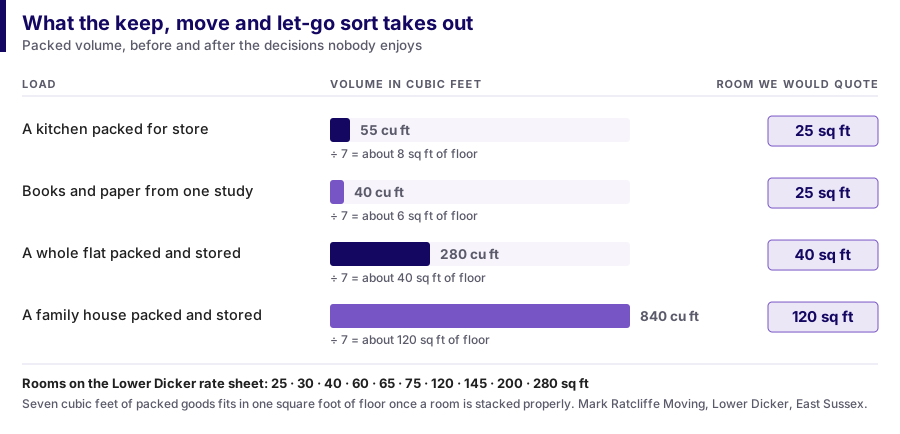
A straight move lets you defer every decision — it all goes on the lorry and you sort it out at the other end. A move with a storage leg does not, because every carton that goes into the room occupies space you are paying for, and space is the only lever you control.
So we run the survey as a three-way sort rather than a single inventory. Goods going into store. Goods going to the new address or the interim address with you. Goods leaving the property entirely. Doing that at survey stage, weeks before packing day, is worth more than any packing technique on this page, because the cheapest carton is the one nobody fills.
The third pile is usually bigger than people expect once they walk the house with someone who is not sentimental about it. Wardrobe overflow, the second sofa, the exercise bike, the box of cables. Our guidance on downsizing before a move covers how to work through it room by room, and the decision genuinely matters here because storage is charged on volume and duration, not on what any individual item is worth.
The interim pile deserves the same attention. If you are living somewhere small for a few months, the list of what you actually need is shorter than instinct suggests and longer than a single suitcase. We write it as its own inventory, pack it in its own cartons and keep it off the lorry that goes to the depot. That is easier than any retrieval from a sealed room, and it costs nothing extra.
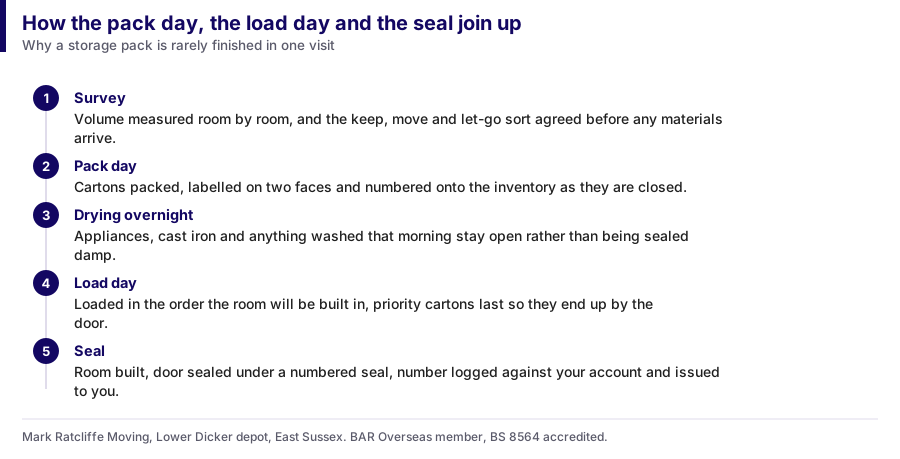
On a combined booking the sequence is fixed and it is worth knowing in advance, because the common mistake is assuming packing and loading happen on the same day. For anything above a small flat they should not.
Packing day comes first, usually the day before the load for a two or three-bedroom house. The crew works room by room, numbering as they go, and the written inventory builds during the day rather than being assembled afterwards. Anything flagged for early retrieval is kept aside. Anything on the exclusion list is set out in one place for you to deal with.
Load day is the crew, the vehicle and the pad-wrapping of the freestanding furniture, which happens inside the house and not at the depot. Cartons are loaded in reverse retrieval order, so the priority flags end up nearest the door of the room. What happens at the door on that morning is set out in detail on our collection and storage service page.
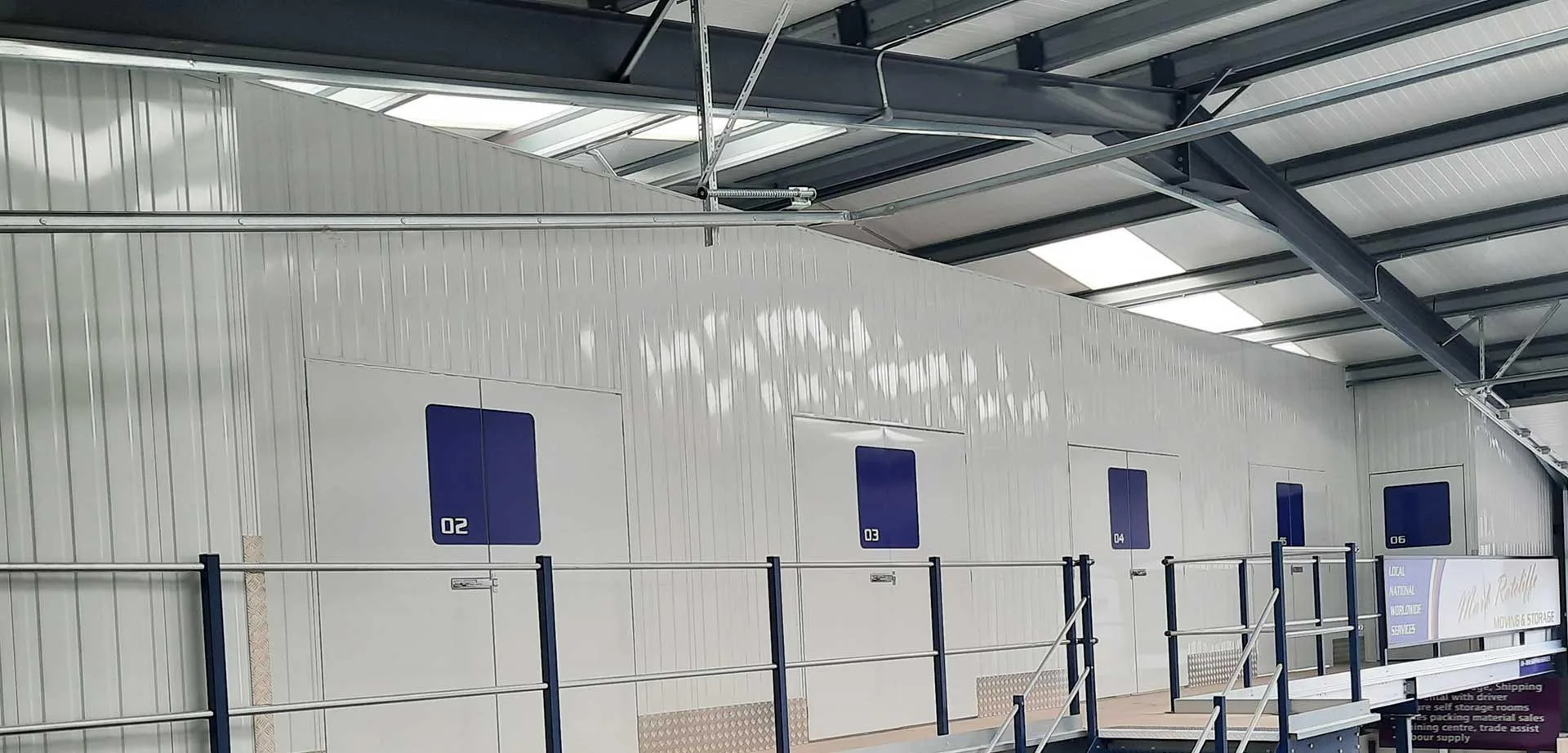
The room is sealed the same day against your reference, and you receive the inventory. The room itself — its size, its security and how access works — is described on our Prestige steel storage rooms at Lower Dicker page, and the case for sealing a load once and not handling it again is set out on our containerised storage in Sussex page.
On cost, the honest short version is that a combined booking is priced from three things: the volume you end up storing, how long it sits, and how much handling the job needs at each end. Packing changes the first of those in both directions — a professional pack is denser and takes less room, but a pack for storage uses heavier cartons and takes a little longer. We set out how the whole structure works, line by line, on our guide to what storage actually costs in Sussex, and you can size your own load first with our volume and cost calculator.
Redelivery is where a storage pack is marked. The crew that sealed the room brings it back out, and because the inventory was written once and has not passed through anyone else’s hands, the check at the far end is a real check rather than a count of boxes.
We open a sample of cartons with you before the lorry is loaded if the stay has been a long one, particularly anything with a handling flag and anything that was packed close to the drying limit. If something has gone wrong, that is the moment to find it — in the aisle, with the room still open and the inventory in hand, rather than in a hallway three days later.
The full unpack at the new address is the service most storage customers underestimate. After a long stay, the cartons come back in retrieval order rather than in the order a household would unpack them, and a load that has been in store almost always needs its contents reintroduced room by room rather than tipped out. That is what our unpacking service is for, including taking the flattened cartons away on the day.
Goods that were packed for store and are now going abroad are a separate conversation, because export standards are stricter again and the crating decisions change. Timber crates are the clearest example: any solid-wood case leaving the UK has to be heat-treated and marked under the ISPM-15 regime, which is set out in the GOV.UK wood packaging material rules, and a crate built to domestic storage standard will not clear on arrival. Our export packing and crating page covers the materials, and the scheduling problem of holding goods in the UK while a sailing or a visa lands is dealt with on our storage before shipping overseas page.
It is not always the right answer, and we will say so at survey rather than sell you a full pack you do not need.
If the stay is genuinely short — a week or two while a chain settles — the storage-grade specification buys you very little. A normal transit pack will be out of the room before any of the slow failure modes have time to happen. What matters in that scenario is speed and the retrieval list, not carton grade.
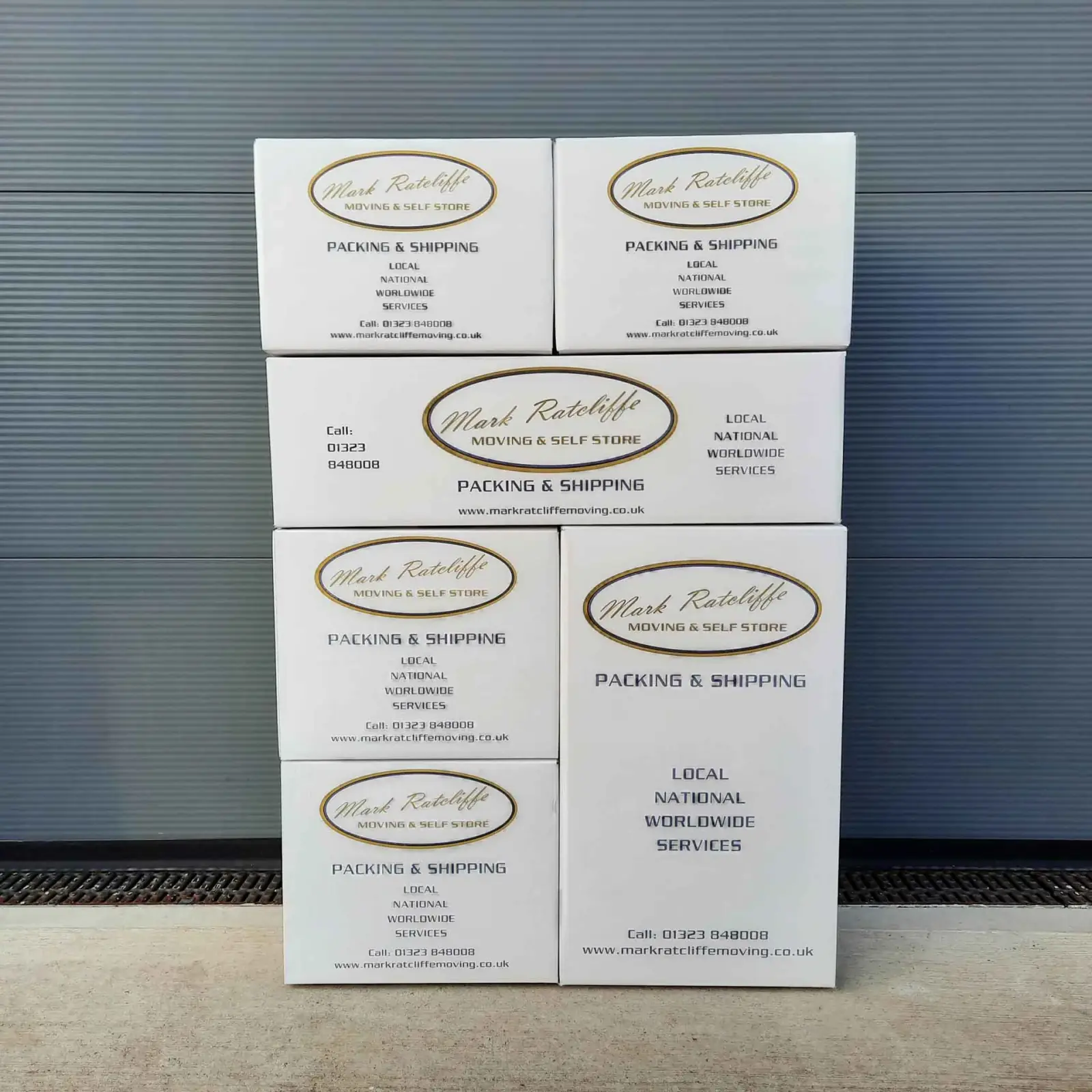
If you are a confident packer with time, the sensible split is usually that we pack the kitchen, the breakables and the loft and you do the wardrobes, the books and the soft goods. That is partial packing, divided by room and by the hours each room takes, and where the split is by item type rather than by room it is fragile-only packing instead. Be aware that owner-packed cartons are the ones that fail in store, so if you take that route, buy double-wall board and tape the seams properly — you can buy the same cartons we use from our packing materials shop or order them through packing materials in Eastbourne.
And if the whole house is going into store for a long period with nobody packing any of it, the full packing service plus the room is simply the cleanest version of this, with the storage specification applied throughout. Most of our Eastbourne removals customers with a genuine storage gap end up there.
What we would not recommend in any version is letting one firm pack and a second firm store. That is the arrangement that produces the retrieval disputes, because the inventory is written twice by two sets of hands and nobody owns the whole chain. Since 2017 we have run it the other way round, as one crew, one inventory and one contract from the first carton to the last.
Yes, and more than most people expect. The changes are in board grade, tape pattern, what touches the object and how it is labelled — double-wall cartons instead of single, an H-pattern seal instead of one strip, plain tissue instead of newsprint against china, and inventory numbers written on two faces. A transit pack is built for a few hours of movement; a storage pack is built for months of stillness.
For a small flat, usually. For a two or three-bedroom house we would normally pack the day before and load the following morning, because appliances need drying time and the labelling is more careful than on a direct move. We will tell you at survey which shape your job is.
Often, but check three things. Are they double-wall or single-wall, is the seam taped across the centre and both ends rather than one strip, and is there anything still slightly damp inside. Supermarket and fruit boxes we would repack, because they have been damp once already and produce boxes can carry insects.
Yes, if it was labelled for it. Tell us on packing day which items you might want early and those cartons are flagged, loaded last and kept by the door of the room. Without that, retrieving a named box means opening the room and working through a stack, which takes crew time you could have avoided.
The fridge-freezer must be emptied, defrosted and then left open to dry for a day, ideally two. The washing machine needs its transit bolts fitted and needs draining properly — filter, drain hose and the water still sitting in the drum. Residual water in a sealed room is what causes the smell people find at redelivery.
Because a sealed room is unattended and unventilated. Food attracts pests and affects every customer in the building, not only you. Aerosols and gas are pressurised through a summer temperature swing, and fuel, paint and solvents give off vapour with nowhere to go. We flag all of it at survey so you have time to deal with it rather than discovering it on packing morning.
Yes, if you book it. After a long stay the load comes back in retrieval order rather than household order, so a full unpack is genuinely worth more here than on a direct move. The crew opens what it sealed, checks against the original inventory and takes the flattened cartons away.
Tell us as early as you can, because export packing is a stricter specification again and some items are better crated at the original pack rather than opened and redone. We can pack to export standard from the start and hold the goods in store until the sailing or the paperwork lands.
From the blog

Planning to put furniture into storage? Learn how to properly prepare your items to prevent damage while in storage.
Cardboard boxes vs plastic crates – which should you use when moving house? We compare the pros, cons, and costs of both options.
Not sure where to start packing? This guide shows you exactly what to pack first when moving house to avoid stress and last-minute panic.
Tell us the dates, the property and roughly how long the goods need to sit, and we will survey the house once and quote the pack, the collection, the room and the redelivery as one job. The survey takes half an hour in person or on video, and you will get the exclusion list in writing while there is still time to do something about it.
Call 01323 848 008 or 07437 414 589, or email office@markratcliffemoving.co.uk. We are BAR Overseas Group members, covered by the Advance Payment Guarantee, accredited to BS 8564:2011, and rated 4.9 out of 5 across 120+ reviews.