
Removals and storage from one Sussex firm, on one inventory. We pack your home, move it, store what will not fit yet in sealed steel rooms at our Lower Dicker depot, and redeliver when you are ready — without your possessions being handled twice or quoted twice.

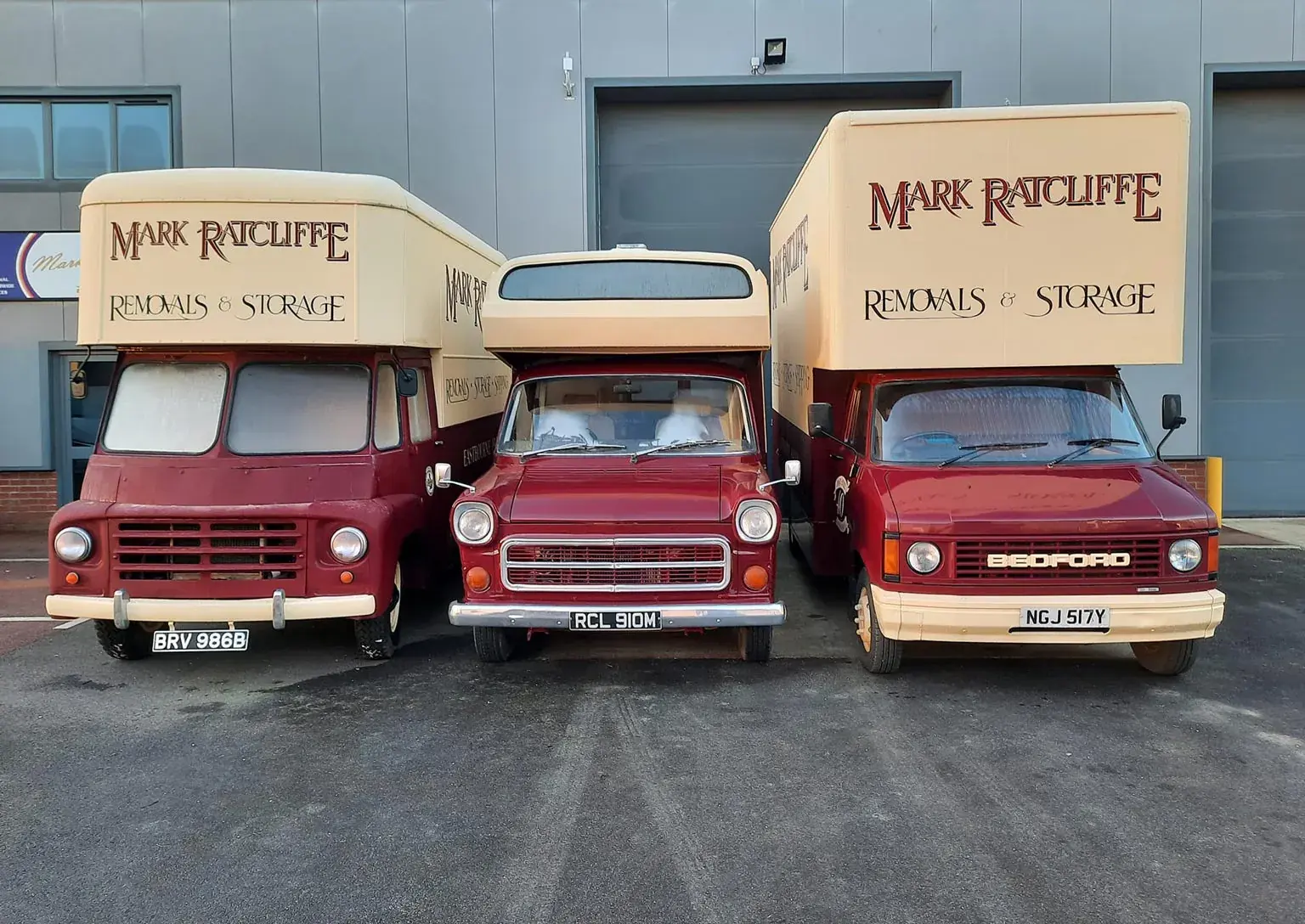
Removals and storage in Sussex is usually sold as two purchases: a remover for the day, and a room somewhere for whatever will not fit yet. We sell it as one job. The crew that wraps your wardrobe in the bedroom is the crew that carries it into a sealed room at our Lower Dicker depot near Hailsham, and one written inventory follows your goods in and back out again.
A move with a storage gap in the middle is not a removal plus a rental agreement. It is one chain of custody that happens to pause for a few weeks. Every point where that chain is cut and rejoined is a point where something gets scuffed, mislabelled or argued about.
One booking covers the lot:
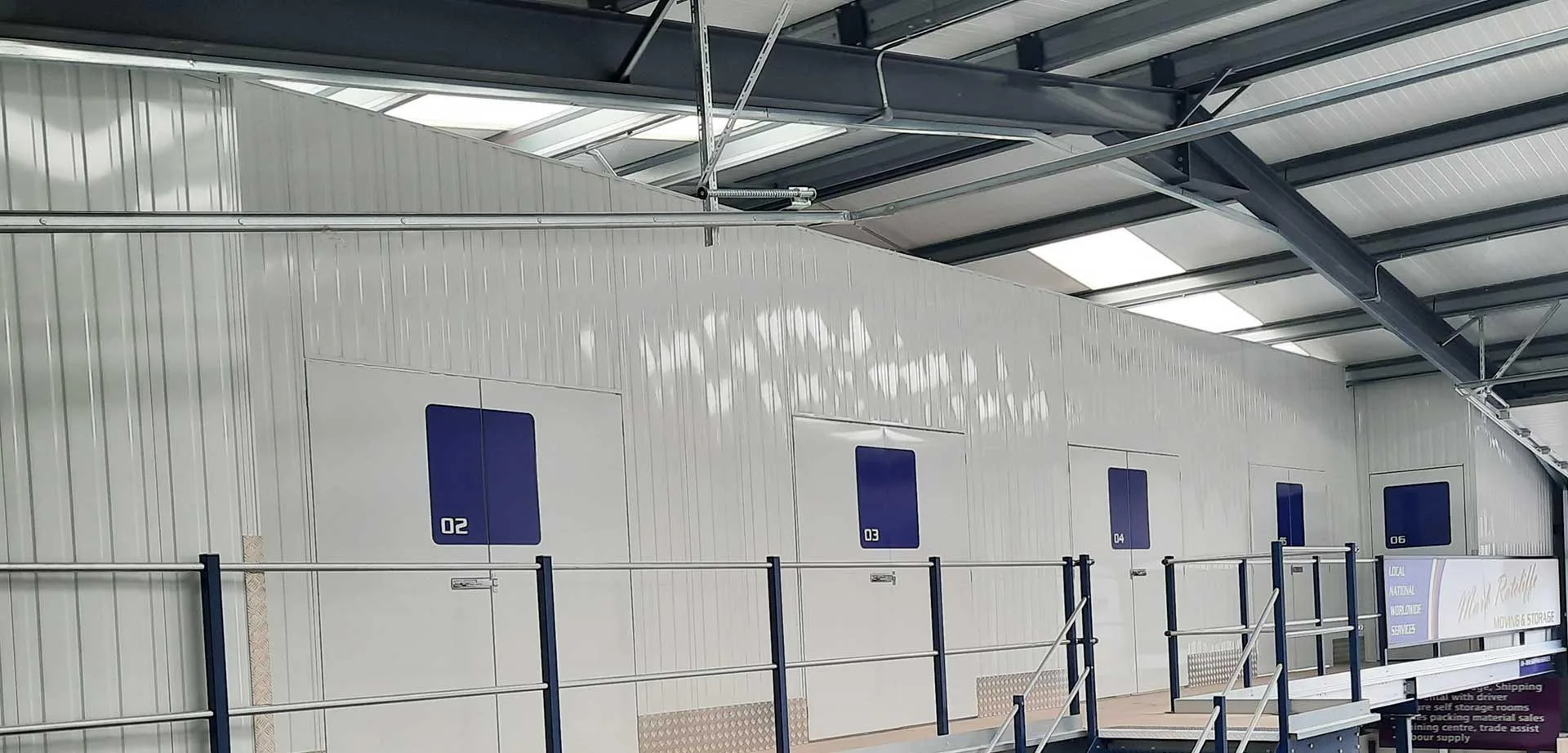
The room itself is not the point of this page. For the specification — sizes, security, ventilation, what the building is actually like — read about our Prestige steel storage rooms at Lower Dicker. To size the job first, work out your volume and storage days before you ring anyone, us included.
We get called in to rescue two-supplier jobs several times a year, and the failure has the same shape every time. The remover did their job. The storage operator did theirs. Nobody owned the four hours in between.
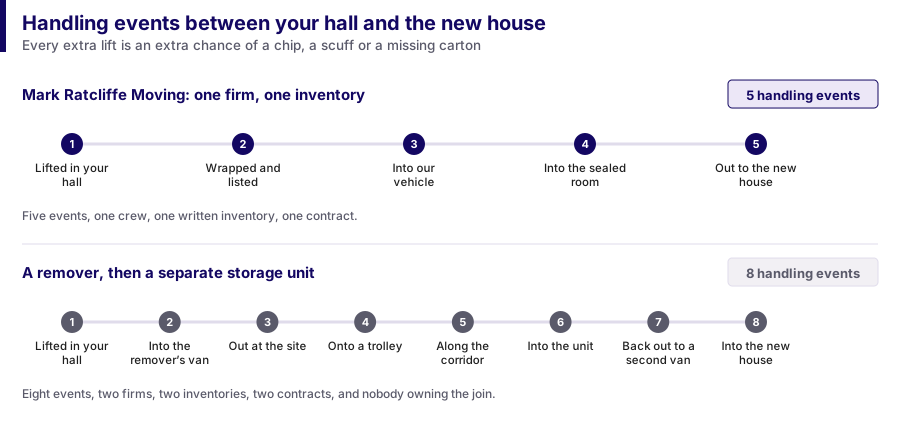
Goods get wrapped for a van journey, driven to a storage site, unloaded at the door, stacked on trolleys, wheeled down a shared corridor and pushed into a unit. Then the wrapping comes off, because the blankets belong to the remover and the remover wants them back. Weeks later it happens in reverse with a crew who have never seen the property, never seen the lane, and have no idea the sofa went in on its end for a reason.
Count the transfers. A split job handles your goods six to eight times between your old door and your new hallway. A single-firm job handles them four times, and everything in between is a sealed room nobody opens.
| Stage of a store-and-redeliver job | One firm, one inventory | Remover plus a separate storage contract |
|---|---|---|
| Survey and volume estimate | One survey sizes the move and the storage together | Two estimates, and neither supplier owns the total |
| Wrapping | Pad-wrapped in the room it stands in, left wrapped for the whole stay | Wrapped for transit, then usually unwrapped so the blankets go back |
| Arrival at the store | Vehicle pulls up to the room; goods go in once | Unloaded, trolleyed, corridor-carried, stacked |
| Inventory | One document, numbered at the point of wrapping, updated on any change | The remover’s list ends at the door; after that there is no list |
| Who holds the goods | One firm, one cover schedule, one set of terms | Depends which of the two contracts you are reading |
| Getting one item back early | Booked with the firm that put it there and knows where it is | Your own trip, your own lifting, your own hired vehicle |
| Redelivery | Same crew and vehicle, access already known from collection day | New booking, new crew, a property nobody has seen |
| If something is damaged | One claim, one route, one firm answering | Two suppliers, each reasonably pointing at the other |
None of that makes a split arrangement wrong. Plenty of people run one successfully. It does mean the cheaper pair of line items is carrying risk the single line is not.
Our storage sits at Unit J12, Swallow Business Park, Diamond Drive, Lower Dicker, East Sussex BN27 4EL, straight off the A22 just north of Hailsham. Crate storage runs alongside it at Croydon, CR0 4AA, and Crawley, RH10 9SP. Our Croydon depot at Coulsdon in Surrey, CR5 2HT, is a vehicle and crew base rather than a storage site. London, Norfolk, Wales, the Midlands and Scotland are collection runs we drive, not buildings we keep.
Distance from that one postcode governs more of the job than people expect. A short run means a loaded lorry can leave the depot, empty your house and be unloaded into a sealed room the same day, which keeps your goods out of an overnight hold. A longer run means an earlier start.
Road distances are approximate and measured by the routes our drivers use, not by straight-line mileage. Arrival windows assume a standard depot departure and normal traffic, not a bank holiday on the A27.
| Town | Approx. road miles from BN27 4EL | Typical crew arrival | Loaded back to store same day |
|---|---|---|---|
| Hailsham | 2 | 08:15 – 08:30 | Yes |
| Polegate | 4 | 08:15 – 08:35 | Yes |
| Eastbourne | 8 | 08:25 – 08:50 | Yes |
| Heathfield | 9 | 08:25 – 08:50 | Yes |
| Uckfield | 10 | 08:30 – 08:55 | Yes |
| Seaford | 11 | 08:30 – 09:00 | Yes |
| Lewes | 12 | 08:35 – 09:05 | Yes |
| Newhaven | 13 | 08:35 – 09:10 | Yes |
| Bexhill-on-Sea | 14 | 08:40 – 09:10 | Yes |
| Crowborough | 15 | 08:40 – 09:15 | Yes |
| Hastings | 20 | 08:50 – 09:25 | Yes |
| Haywards Heath | 20 | 08:50 – 09:25 | Yes |
| Brighton & Hove | 22 | 08:55 – 09:40 | Yes, traffic permitting |
| Royal Tunbridge Wells | 22 | 08:55 – 09:35 | Yes |
| Crawley | 30 | 09:10 – 09:50 | Yes, on an early start |
| Worthing | 31 | 09:10 – 09:55 | Yes, on an early start |
| Horsham | 32 | 09:15 – 10:00 | Yes, on an early start |
| Chichester | 48 | 09:40 – 10:30 | Usually, for a part load |
If your town is not listed it is almost certainly still covered — the table stops at eighteen rows, not at the edge of our patch. We move households throughout every Sussex, Surrey and Kent town we cover, and the local detail sits on the pages for removals in Eastbourne, removals in Hailsham, removals in Lewes, removals in Brighton and removals in Hastings.
The strongest argument against us is in the table above, so we will make it ourselves. Some Sussex removers run storage at three locations — Newhaven, Bexhill and Eastbourne is a common spread — and three doors are closer to more people than one door at Lower Dicker. If you are in Chichester, we are 48 miles away and a Newhaven operator is roughly thirty miles closer to you.
Here is what that distance honestly costs you, and what it does not. It costs travel time on collection day, which on a far-west job means an earlier start and occasionally a second vehicle. It rules out dropping in on a whim: a round trip from Chichester is the better part of a hundred miles, so the room has to be treated as sealed storage rather than a cupboard you dip into. It does not change how many times your goods are handled, what the inventory says, or when the lorry reaches you on redelivery day, because a booked vehicle 48 miles out simply leaves earlier.
What a network of sites solves is the network’s problem, not yours. Multiple buildings exist so space can be balanced between them, which means your load goes where there is room on the day, can be split across two rooms, and can be shifted to another site later to free capacity. Each of those is a handling event you did not book and will not see. Ask the questions below of anyone, ourselves included.
| Ask any multi-site storage operator | Why it matters over a long stay | Our answer at Lower Dicker |
|---|---|---|
| Which building will my goods actually be in? | Allocation is usually made on the day, by whichever site has space | Named on the paperwork before collection: BN27 4EL, and nowhere else |
| Can my load be split between rooms or sites? | A split load means two locations to co-ordinate and two chances of a part being missed | One load, one room, filled by the crew who packed it and photographed once sealed |
| Can you move my goods to another site mid-stay? | Capacity gets rebalanced between buildings; a transfer is handling you never authorised | There is nowhere to transfer goods to, so nothing moves until you ask for it back |
| Who unloads at the store, and does the wrapping come off? | On a two-supplier job the blankets go back with the remover and goods sit bare | Our blankets and our room, so wrapping stays on until the piece is placed in your new house |
| What is needed to release a single item? | Either a booked crew or your own car, your own lifting and your own afternoon | Part releases booked like any delivery date, with the inventory updated as items leave |
The honest limit: if you live west of Worthing and expect to visit your goods regularly, a store on your doorstep is the better buy and we will tell you so on the phone. If the goods are going in and staying in until a completion date, distance stops mattering and custody starts. The wider version of that test is set out in how to judge a storage operator before you book, and the questions we field most often are collected in our removals and storage FAQs.
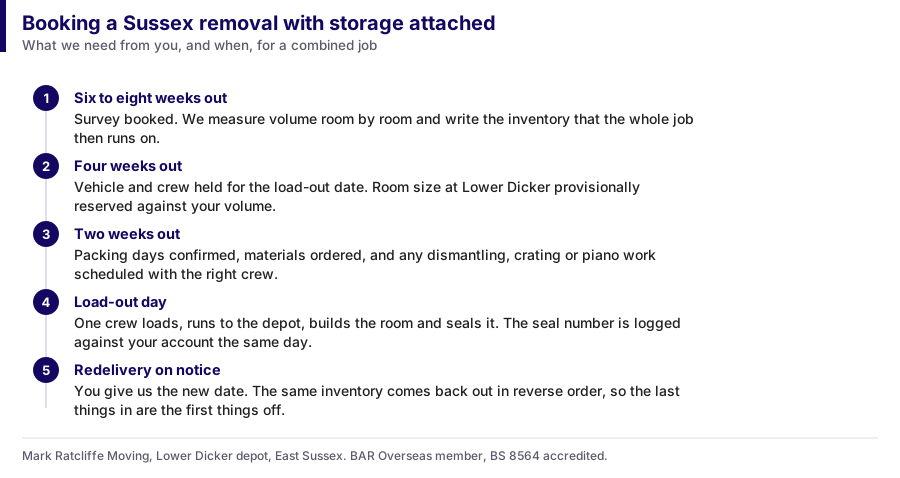
Nobody in this trade publishes lead times, which is odd, because it is the first thing a mover needs to know. A removal with a storage leg needs more notice than a straight removal, because it takes a vehicle, a crew and a room, and the room has to be free for a period rather than a day. These are the notice periods we ask for on the phone.
| When you are moving | What drives the pressure | Notice for a removal | Notice for a removal plus storage |
|---|---|---|---|
| January to March | Quietest stretch; completions spread out | 2 to 3 weeks | 3 weeks |
| April and May | Spring listings reaching completion | 3 weeks | 4 weeks |
| June | School-year moves; student tenancies ending | 4 weeks | 5 weeks |
| July to mid-September | Peak. August is the busiest month of our year | 5 to 6 weeks | 6 to 8 weeks |
| Late September to November | Second wave before the winter slowdown | 3 to 4 weeks | 4 to 5 weeks |
| December | Short working weeks; completions cluster before the break | 3 weeks | 4 weeks |
| Any Friday | Conveyancers overwhelmingly complete on Fridays | Add a week | Add a week |
| Last working day of a month | Month-end completion clustering, worst in summer | Add a week | Add a week |
The exception is the emergency. We hold capacity back for collapsed chains, because a family with a loaded lorry and nowhere to put it cannot wait six weeks. If your completion has just moved, ring the depot rather than filling in a form, or start a written removals and storage quote online.
The thing worth booking early is the survey, not the move. A survey costs nothing and gives you a written volume figure, which is the number you need before you can compare anyone’s quote against anyone else’s.
Every removals website in Sussex carries a row of badges and almost none explain what the badges commit the firm to. A badge you cannot cash in is decoration. Here is what ours oblige us to do, including the one that does not cover storage at all.
| Membership or standard | What it obliges us to do | What it gives you if something goes wrong |
|---|---|---|
| British Association of Removers | Trade under the association’s code of practice, issue written quotations and terms before work starts, and keep premises and vehicles open to inspection | A code you can hold us to in writing, and an independent body that can be told we have breached it |
| BAR Advance Payment Guarantee | Hold a current certificate and stand behind money you pay before the work is done, including a deposit against a future storage period | A last-resort payout if the member firm ceases trading mid-job. Capped at fifty thousand pounds against one member and a hundred thousand across multiple claims, claimable within six months, and limited to the scope printed on that certificate. Insolvency cover, not a remedy for a moved date |
| Independent dispute resolution | Accept an outside decision on a complaint we and you cannot settle between us | A free escalation route that is not us marking our own homework |
| BS 8564 (overseas moving services only) | Work to the British Standard for international moving services on the jobs it actually covers: survey, quotation, documentation and delivery on an overseas move. It has no domestic or storage scope and we do not claim it as a storage accreditation. What carries into a Sussex job is the office discipline the standard drilled into us — written survey, numbered inventory, condition recorded at each handover | On an overseas move, an audited process. On a domestic store, a documented trail rather than a certificate, so “it was already like that” is a question with an answer |
| BAR Overseas Group | Meet the association’s additional requirements for international work, including export documentation and agent networks | A verified chain at the far end when goods leave the country after a stay in store |
More on what the membership covers sits on our page about BAR member removals, the overseas standard and its limits under BS 8564 accredited removals, and the cover position for goods in our care in our terms, conditions and insurance details. Ask any provider the same three questions: which code binds you, who arbitrates if we disagree, and is my deposit protected if you stop trading.
Storage attaches to a move in a handful of recognisable shapes. Working out which one you are in tells you more than any brochure, because each has a different booking pattern, volume and exit.
Two patterns sit outside those six. Student storage runs to term dates rather than completion dates, so its calendar is fixed a year ahead. And a stay past six months stops behaving like a gap and starts behaving like an arrangement, which is why long-term storage in Sussex is handled separately, with condition reviews rather than just a door and a lock.
Continuity is easy to write and easy to fake, so here is the operational version in the order it happens.
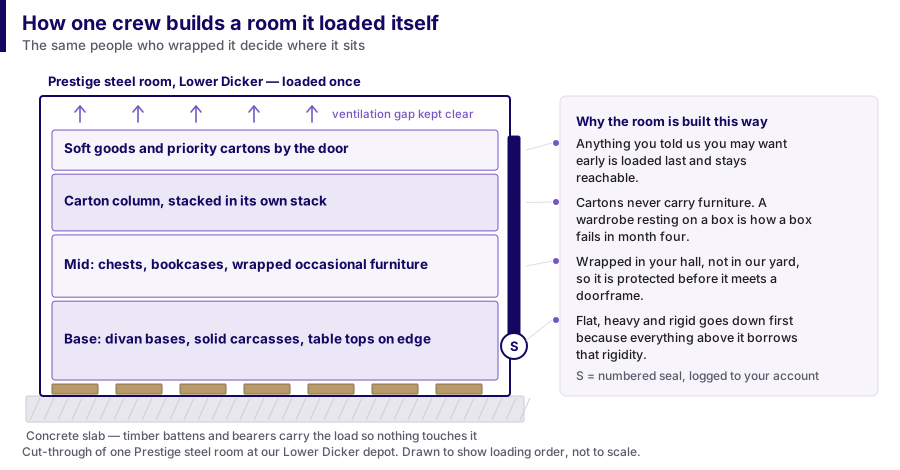
Wrapping happens where the piece stands. A chest of drawers is pad-wrapped in heavy quilted blankets in the bedroom, drawer fronts taped and corners protected, before it goes near a doorway. The inventory number is written at the moment it is wrapped, which is why our lists match the goods rather than approximating them.
That wrapping then stays on. Because the blankets are ours and the room is ours, nothing is stripped at the storage end to recover materials. Goods are unwrapped once, in their final position in the new house.
Loading is stack-safe and strapped, and the room is photographed once filled. That photograph earns its keep months later, when you ring to ask whether the garden bench went in and somebody can look rather than guess.
Crews are directly employed and trained at Lower Dicker, and a new porter works paired with a senior crew for six weeks before running anything alone. Labour hired by the day can load a van perfectly well. It cannot be taught to write an inventory line that still makes sense to a different pair of hands eleven months later, and on a job with a store in the middle that line is the whole point.
The format goods sit in while they wait is covered under containerised storage in Sussex, and the wrapping method under packing services in Sussex. Specialist items ride the same chain rather than a subcontractor’s, through piano moving, antiques moving and our white-glove service. For a single item or a very small load, man and van in Eastbourne is often the sensible booking instead.
We are rated 4.9 out of 5 from more than 120 reviews. That is a number, and numbers are easy to type, so here is some of the text behind it. The four below are reproduced word for word from our customer reviews page, with dates and what the job actually was. Two are storage jobs. The other two describe the wrapping method, because that is what decides the condition goods come out of a room in.
Used Mark Ratcliffe for our move from Newhaven to Brighton and then six months of storage at their Lower Dicker depot. Uniformed crew, immaculate vans, secure steel storage room — worth every penny. We collected six months later and everything came out exactly as it went in.
We downsized from a 4-bedroom house in Polegate to a 2-bedroom bungalow. The team helped us identify what was going to the bungalow, what was going to family, and what was going to storage for later. The whole transition was completed in two days with zero stress.
We had used a national firm for our previous move ten years ago and ended up with a broken dining chair and a chipped antique cabinet. This time we used Mark Ratcliffe on the recommendation of a neighbour. Everything pad-wrapped before it left the room. Zero damage. The ‘do not unwrap until placed’ approach genuinely makes the difference.
From the survey to the final box being unpacked, the Mark Ratcliffe team handled our Eastbourne-to-Lewes move with absolute care. Every piece of furniture was pad-wrapped and labelled — nothing arrived with a scratch. Our previous remover damaged our dining table in transit; the difference in approach is night and day.
The line we care about most is the one about collecting six months later and everything coming out as it went in. That is the only test a storage job ever gets, and it is passed or failed on the day the goods are wrapped, not on the day they come back.
A managed arrangement is not right for everyone, and pretending otherwise wastes your time and ours. These are the cases where we say so.
One more limitation worth naming, because competitors avoid it. Humidity in an uninsulated container on a yard can swing far more widely than the forty to fifty-five per cent a heated interior holds, and no operator can promise laboratory conditions. Climate-stable is an honest claim. Climate-perfect is not, and anything sold in those terms deserves a follow-up question about the actual range. For how a stay’s length changes the economics, read the short-term against long-term storage comparison.
By the time you hand over a deposit for a combined job, you should be holding five documents. The list works as a checklist against us and against anybody else you are considering.
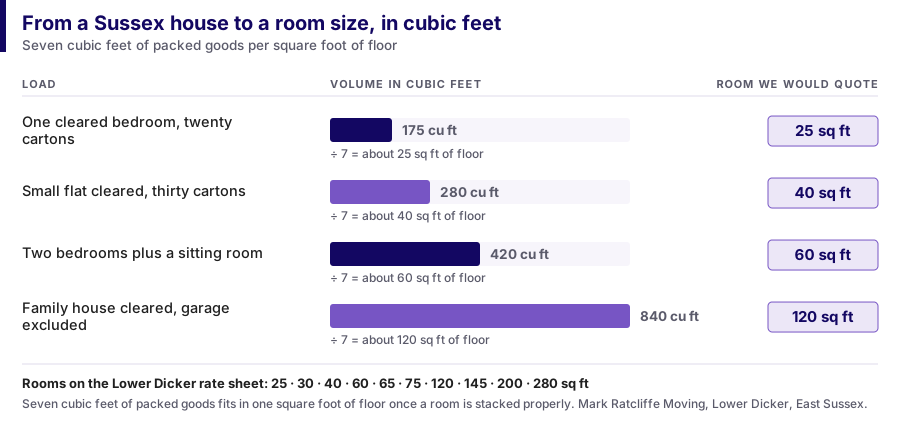
On cost, the structure is simpler than most quotes make it look. Three things move the figure: the volume you occupy, how long you occupy it, and how much handling and access the job needs at each end. Work out your own volume first so you are negotiating from a number rather than a guess, then read how a Sussex storage quote is constructed before comparing anybody.
Two habits save people the most money. Declutter before the survey rather than after, because you pay for the volume you present on the day. And be honest about access — a narrow lane, a third-floor flat or a parking suspension is cheap when it is planned and expensive when it is discovered at eight in the morning. If you want to know who you are dealing with, who we are and how the firm is run explains why a family business established in 2017 ended up building its own storage rather than renting somebody else’s.
Storage is quoted by the room, by the week, and separately from the removal itself — so you can see which half of the bill is which. These are the Sussex rates; Kent matches them on the room and differs only on the driving, and London runs on its own card. All of it includes VAT and £5,000 of cover.
| Room | Typically holds | Per week | Per week nett | Per 4 weeks | Collection or delivery, each way |
|---|---|---|---|---|---|
| 30 sq ft | One room, boxes | £18 | £15.00 | £72 | £240 |
| 50 sq ft | Studio or 1-bed flat | £27 | £22.50 | £108 | £390 |
| 75 sq ft | 2-bed flat | £36 | £30.00 | £144 | £550 |
| 100 sq ft | 2-bed house | £45 | £37.50 | £180 | £720 |
| 150 sq ft | 3-bed house | £63 | £52.50 | £252 | £990 |
| 200 sq ft | 4-bed house | £80 | £66.67 | £320 | £1,290 |
| 250 sq ft | 5-bed house or business stock | from £95 | from £79.17 | from £380 | Quoted on survey |
All prices include VAT (the nett column is what a VAT-registered business reclaims against). £5,000 of cover is included in every price. First 4 weeks half price when we collect for you.
The removal is quoted on volume, access and distance after a survey, and sits alongside this rather than inside it. If the storage is the part you are trying to size, how storage costs are actually built up works through the volume arithmetic room by room, and the calculator converts a home into cubic feet for you.
No. One booking covers the removal and the storage period under the same written terms, with one inventory and one invoice. That is the point of buying both from the same firm, and it is the reason there is no seam for a dispute to fall into if something goes wrong halfway through.
Normally yes. The crew that pad-wraps and loads at your property is the crew that takes the vehicle back to Lower Dicker and fills the room, and wherever the diary allows the same crew handles redelivery. Continuity is easier to promise when the depot, the vehicles and the crew all belong to the same firm.
It depends entirely on whether you need access. Three sites put a door closer to more people, but they also mean your load is allocated to whichever building has space, can be split between rooms, and can be transferred later when capacity is rebalanced. We have one building at Lower Dicker, so the address is known before collection and nothing moves until you ask for it back. If you live in the far west of Sussex and expect to visit regularly, a store near you is the better choice and we will say so.
Yes. Part deliveries out of store are routine, particularly for people moving into a smaller property or a rental while works finish. The inventory is updated when items leave, so the record of what is still in the room stays accurate rather than drifting.
Storage is held at our Lower Dicker depot in East Sussex, and we collect to it across Sussex, Surrey and Kent as standard, with longer collection runs into London, Norfolk, the Midlands, Wales and Scotland arranged as needed. The distance table above gives typical road miles and arrival times from the depot for the main towns.
You ring the depot and we re-point the dates. Because the removal and the storage sit on one booking, moving the date does not mean renegotiating with a second supplier, and your deposit stays against the job rather than being treated as a cancellation. The BAR Advance Payment Guarantee is a separate protection covering advance payments if a member firm ceases trading, and it is not what carries you through a delayed completion.
No, and we will not claim it does. BS 8564 is the British Standard for overseas moving services, so it governs how an international move is surveyed, documented and delivered. What carries across to a domestic job in store is the paperwork discipline it taught us: a written survey, a numbered inventory and condition recorded at each handover.
Yes. Additions are collected on a later run and added to the existing inventory rather than treated as a new account, provided the room has capacity. If it does not, we will tell you before the vehicle leaves rather than after.
Redelivery is booked like any other removal date, so it needs a vehicle and a crew rather than just a door being unlocked. Give as much notice as you can, especially in August and at month-end, and check the specific notice period written into your storage terms when you book.
From the blog
Storage between house moves costed by week and month, container storage vs self storage, and the point where storing costs more than replacing.

Planning to put furniture into storage? Learn how to properly prepare your items to prevent damage while in storage.

Protect yourself and your possessions. These are the 7 key questions every customer should ask before booking a removals company.
Tell us the address, the rough date and whether the gap is days or months, and we will arrange a free survey — in the house or by video — that sizes the removal and the storage together. You get one written quotation, one inventory and one point of contact for the whole job.
Call the Lower Dicker depot on 01323 848 008 or 07437 414 589, or email office@markratcliffemoving.co.uk. If your chain has just collapsed, phone rather than email — we keep capacity back for exactly that.