
Containerised vs. drive-up. Managed storage vs. a self-storage site. Climate-stable vs. unheated. What to ask before signing a storage contract.

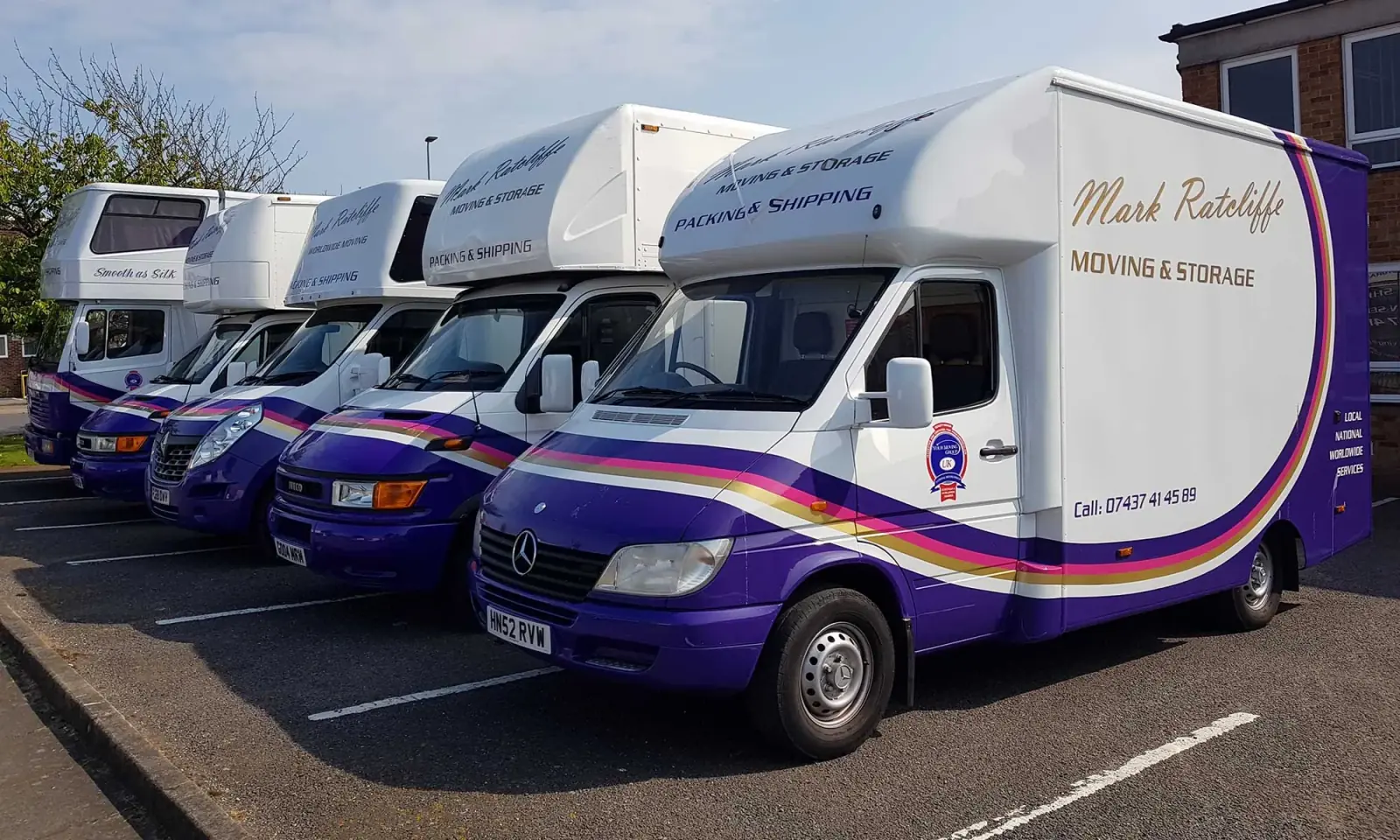
Self-storage is a category that looks identical from the outside but actually divides into half a dozen different formats with different costs, different security profiles and different access arrangements. Through years of work operating our own Lower Dicker storage facility — and after years of helping customers who used third-party storage between contracts — we have a clear view of how to pick the right type. One thing to establish at the outset, because it shapes every comparison that follows: what we run is managed storage rather than self storage. Our crew loads, pad-wraps and inventories your belongings, they sit in an individual steel storage room at Lower Dicker or in sealed crates at our Croydon and Crawley stores, and you come back to them by appointment during depot hours while a crew member brings them out to you. If you want to walk in and help yourself whenever you like, a self-storage site is the honest answer, and the sections below will help you choose a good one.
This guide walks through the formats, the questions to ask before signing, and the operational considerations that almost no comparison site mentions. The aim is to save you from either over-paying for storage you don't need or under-paying for storage that's the wrong fit.
The three main formats are containerised storage, drive-up self-storage, and strong-room storage. Containerised means your possessions go into a sealed wooden box (typically 8ft × 7ft × 5ft) which is stored in a warehouse. Drive-up self storage, the format the national chains sell, means a steel-walled unit in somebody else’s building that you rent and drive up to — they come in sizes from 25 sq ft upwards, in steps of roughly 25 sq ft, up to 250 sq ft and beyond. Strong-room storage is a secure warehouse room used by removal firms for short-term moves-in-storage between completions.
Containerised is the cheapest but the slowest to access — typically 24–48 hours' notice to retrieve anything. Drive-up is the most expensive per cubic foot, but the gate hours at a self-storage site are long and you come and go under your own steam. Strong-room is the cheapest for short-term (a few weeks between completion dates) but you can't usually access it yourself; the remover does it for you.
What we run at our Lower Dicker depot is managed storage. Your belongings are loaded, pad-wrapped and inventoried by our own crew into an individual steel storage room, and you get them back by appointment during depot hours, with a crew member bringing them out to you rather than you letting yourself in. The same arrangement covers our crate stores at Mill Lane Trading Estate in Croydon and Kelvin Way in Crawley, where the load travels in sealed containers and stays in them until we deliver it. Our own rooms start at 30 sq ft; there is nothing smaller, and the full ladder of sizes is set out below. A self-storage site sells the opposite arrangement — a unit you rent, fill and enter yourself — and if that is what you want, the rest of this guide is written to help you weigh the two against each other on cost and practicality.
The questions worth asking any storage provider before signing: Is it climate-stable? (not climate-controlled — that's expensive and unnecessary for most household contents; climate-stable means insulated and well-ventilated, which is enough for furniture, books and most electronics). What's the security setup? (CCTV, alarmed, individual unit locks, gated entry, on-site staff). What's the insurance position? (most facilities require you to insure your contents separately, or via their policy).
Climate-stable matters because British winters bring condensation into uninsulated steel containers, and condensation ruins photographs, paperwork, fabric and electronics. If you're storing for more than a couple of months, climate-stable is non-negotiable. Our depot is climate-stable by design — fully insulated, ventilated, monitored.
Security is the visible bit but it's not just about cameras. The questions that matter: is the perimeter fenced? Is there 24-hour CCTV with recording (not just monitoring)? Is the building alarmed? Who has keys to the building outside hours? Are individual units padlocked by the customer or by the facility?
This is the most common mistake — customers consistently book either too much or too little space. Our rooms come in seven sizes and nothing in between: 30, 50, 75, 100, 150, 200 and 250 sq ft or more. A 30 sq ft room takes one room of furniture and its boxes. A 50 sq ft room takes a studio or a one-bedroom flat, a 75 sq ft room a two-bedroom flat, a 100 sq ft room a two-bedroom house, a 150 sq ft room a three-bedroom house and a 200 sq ft room a four-bedroom house. A five-bedroom house, or business stock, starts at 250 sq ft.
Capacity is what you are actually buying, and a properly built stack gets about seven cubic feet out of every square foot of floor. That arithmetic is what the ladder is built on:
| Room size | Working capacity | Approx. cubic metres | What that holds in practice |
|---|---|---|---|
| 30 sq ft | 210 cu ft | 5.9 cu m | One room, boxes |
| 50 sq ft | 350 cu ft | 9.9 cu m | Studio or 1-bed flat |
| 75 sq ft | 525 cu ft | 14.9 cu m | 2-bed flat |
| 100 sq ft | 700 cu ft | 19.8 cu m | 2-bed house |
| 150 sq ft | 1,050 cu ft | 29.7 cu m | 3-bed house |
| 200 sq ft | 1,400 cu ft | 39.6 cu m | 4-bed house |
| 250 sq ft or more | 1,750 cu ft | 49.6 cu m | 5-bed house or business stock |
Strong-room storage is priced per container or per cubic foot, which means the volume question is the right one — how many cartons and pieces of furniture, not how many square feet. A three-bedroom house typically fits in three or four containers. We'll cost this at survey stage as part of the removal quote.
The way to estimate is to imagine the contents of the house stacked floor-to-ceiling in one room. Pad-wrapped furniture stacks more efficiently than people expect because the wrapping protects against compression. If you're not sure, ask the storage provider to walk you through their unit sizes in person — most facilities will show you sample units before you sign. If you would rather have the number before you call, our storage volume calculator builds the cubic-foot total room by room.
The mismatch we see most often is between access expectations and reality. Customers booking strong-room storage think they'll want monthly access; in practice they go twice in six months. Customers paying a self-storage operator for drive-up access think they'll go monthly; they go three times in the entire contract.
Be honest with yourself about access. If the storage is for items you'll genuinely use (children's toys for a half-built house, your gym kit during a renovation, business stock that turns over) then paying a self-storage operator for drive-up access is worth the extra cost. If it's furniture or boxes you're storing because the timing didn't work out, strong-room is cheaper and the access difference doesn't matter.
One operational point: if you're storing in a remover's strong-room between contract completions, the remover handles all the heavy lifting at both ends. Your job is just to decide what goes in and what gets delivered out. At a self-storage site you usually do the loading and unloading yourself, which means an extra van rental at both ends.
Storage contracts vary hugely. The questions worth confirming in writing: What's the minimum notice to vacate? (typically a calendar month at a major facility, often just two weeks at a smaller one). How is the price set? (typically by unit size, but some include 'free' moves in/out for the first month — read the small print). Are there exit costs? (some facilities charge a 'final clean' fee). Is the price guaranteed for the contract length, or does it review?
For a benchmark, here is what our own Sussex storage costs, so you have a real set of numbers to hold the quotes you collect against. Kent is charged at the same weekly rates; London is higher, and collection or delivery is quoted separately by distance.
| Room | Typically holds | Per week | Per 4 weeks |
|---|---|---|---|
| 30 sq ft | One room, boxes | £18 | £72 |
| 50 sq ft | Studio or 1-bed flat | £27 | £108 |
| 75 sq ft | 2-bed flat | £36 | £144 |
| 100 sq ft | 2-bed house | £45 | £180 |
| 150 sq ft | 3-bed house | £63 | £252 |
| 200 sq ft | 4-bed house | £80 | £320 |
| 250 sq ft | 5-bed house or business stock | from £95 | from £380 |
All prices include VAT. £5,000 of cover is included in every price. First 4 weeks half price when we collect for you.
Every region, including the collection and delivery charges, is set out on our page on what storage costs in Sussex.
Insurance is the biggest variable. Most storage facilities won't insure your contents; you do that separately, either via their suggested broker or your own home contents policy (some policies extend to off-site storage; many do not). Confirm in writing what's covered and what isn't. Our depot insurance arrangements are explained in the terms and insurance details.
Final point: storage is a long game. The cheapest provider for the first three months is sometimes the most expensive at month twelve because of price escalators. Read the contract end-to-end before signing. If you'd like an independent view, talk to us — we've sub-let from most of the major storage operators across Sussex over the years and we know which contracts are honest.
If the conclusion you reach is that you would rather not do the loading and driving at all, our collection and storage service is the alternative, and containerised storage explains how the two models differ.
Free in-home or video survey, written fixed-price quote, BAR-protected deposit. Sussex’s family-run independent remover.
Three mistakes we see most often when customers shop for storage. First, buying on price alone without checking climate. The cheapest unit in a non-insulated steel-walled facility costs the same as a climate-stable equivalent over twelve months once you factor in damage to contents. Climate-stable is non-negotiable for anything over two months.
Second, over-buying space. The instinct is to round up; the reality is that pad-wrapped furniture stacks more efficiently than people expect. Most three-bedroom households fit in a 150 sq ft room, not a 200 sq ft one. Ask the facility to walk you through their unit sizes in person before signing. Our Lower Dicker depot demonstrates each size on request.
Third, missing the contract exit terms. Many storage facilities charge a final clean fee, have minimum-stay penalties, or escalate the price after the first six months. Read the contract end-to-end, get exit costs in writing, and confirm the notice period. If it is the money you are weighing up, our guide to storage between house moves and what it costs per month works the weekly and monthly rates through in full, and the what-you-can-store guide covers the practical rules.
We've been a family-run Sussex remover — the same name on the lorry as the name on the paperwork. Mark personally surveys the high-value and overseas moves; our crews are directly employed (not casual day labour) and trained at our own staff training centre, one of only a handful of UK removers with that facility on site.
Standard inclusions on every full removal: pad-wrap protection for every freestanding piece of furniture, removal-grade cartons, a written and itemised fixed-price quote with no surprises on the day, and the British Association of Removers' Advance Payment Guarantee protecting every deposit. The result, over the years and hundreds of moves, is a 4.9/5 review average across 120+ independent Google reviews.
Booking the survey takes ten minutes. Whether it's a one-bedroom flat across Eastbourne or a country house to overseas, the process is the same: in-home or video survey, written quote within 48 hours, deposit-protected booking, and a calm move day.
A strong room is a secure warehouse room a remover fills and holds for you: cheaper per cubic foot, retrieved for you by the crew, and visited by appointment. Drive-up self storage at one of the chains costs more, but you walk in and help yourself during the operator's gate hours. Strong-room suits short-term between-contract moves; a self-storage site suits someone who wants to come and go alone. Our own storage is the managed kind — steel rooms at Lower Dicker, crates at Croydon and Crawley, access by appointment during depot hours.
Climate-controlled is rarely worth the cost; climate-stable (insulated, ventilated) is enough for most household contents. Avoid uninsulated steel-walled units for stays over two months — condensation ruins fabric, photos and electronics.
Our rooms run 30, 50, 75, 100, 150, 200 and 250 sq ft or more: 30 sq ft for one room of furniture and boxes, 50 for a studio or one-bed flat, 75 for a two-bed flat, 100 for a two-bed house, 150 for a three-bed house and 200 for a four-bed house. Volume, not floor area, is the variable; ask to be shown a sample room before you sign.
Most storage facilities don't insure your contents — you do that separately. Check whether your home contents policy extends to off-site storage; many don't. Get insurance confirmed in writing before move-in.
Yes — strong-room storage at our Lower Dicker depot is one of the most common services we provide. We hold the load, deliver to your new property when the completion date arrives, no shuttling required from you.