
Most customers ask about price. The questions that actually predict the move quality are different. Here are the seven we wish every customer asked.
If you ask any removals company “how much” they’ll give you a number. The number is the easy bit. The harder bit — and the bit that actually determines whether your move goes well — is the seven questions below. We’d ask these of every quote we received, including our own, before booking a Sussex removals firm.
This isn’t a sales pitch (or if it is, it’s a transparent one). The questions are the ones the industry generally doesn’t want customers to ask because the answers vary so much. The choosing-a-removal-company guide has a longer version of this with more detail; this one is the ‘phone in hand’ short list.
The British Association of Removers (BAR) is the industry trade body in the UK. Member firms are audited annually, sign up to a code of practice, and operate under the BAR Advance Payment Guarantee — which protects customer deposits if the worst happens to the firm during the contract. Non-member firms have none of these protections.
Membership isn’t a guarantee of quality but it’s a meaningful filter. The audit cost and the conduct standards keep out the lower end of the market. Most reputable Sussex removers are BAR members; the ones who aren’t usually have a reason they don’t want to be.
How to verify: the BAR website lists current members by postcode. Don’t take the remover’s word for it — go to bar.co.uk and search. Confirm the membership number matches. Our company history page includes our BAR details and audit dates.
Three insurance categories matter for a remover: goods-in-transit insurance (covers your belongings during the move), public liability insurance (covers if the crew damages your property), and yard insurance (covers your belongings while in their depot or storage). All three should be at meaningful limits.
Ask specifically: what’s the per-item limit on goods-in-transit? Single items over £2,500 need declaring separately on most policies. What’s the total cover for the move? A typical 3-bed home is around £100,000 of contents at replacement value; if the per-move limit is £25,000, you’re underinsured. What’s excluded? Self-packed cartons, cash, jewellery, irreplaceable documents are common exclusions.
Get the answer in writing before booking. Our terms and insurance details page covers the full picture for our cover. Other reputable firms will have similar documentation; an unwillingness to share it is itself an answer.
This question separates the professional firms from the broker model. Directly employed crew are on the firm’s payroll, trained by the firm, accountable to the firm, and consistent move-to-move. Sub-contracted crew are agency labour or day workers, varying by job, trained by whoever happened to be there last week.
The damage rate, the timekeeping, the customer-service experience and the actual furniture-handling competence all correlate strongly with the directly-employed model. National lead-generation sites that sub-let work to whichever local firm has capacity that day operate the broker model by definition; whether your specific move is with their employed crew or a sub-contracted one is impossible to predict.
Ask directly: will the people I’ll meet at the survey be the same people who move me? For a directly-employed firm, the answer is yes. For a broker, the answer is some version of “it depends on the day”. The rogue-trader guide covers the broker model in more depth.
Pad-wrap is the industry-best method for protecting furniture in transit (see how our pad-wrap service works). Not every remover does it; many use cheaper alternatives like shrink-wrap (cling film), thin throws, or no protection at all.
Ask specifically: do you wrap before the piece leaves the room? Wrapping in the lorry doesn’t protect the piece during the carry-out, which is where most damage happens. What materials do you use? Industry-weight quilted blankets, washed between jobs, are the standard. Hardware-store blankets and supermarket throws aren’t. Is it included or extra? For a professional firm it’s standard on every full removal.
A useful follow-up: ask to see a blanket from their van. A firm that does pad-wrap as standard has clean, heavy, professionally-laundered blankets and is happy to demonstrate. A firm that doesn’t will have a few thin throws used as makeweights, or none at all. The blanket in the van tells you more than the brochure on the kitchen table.
Most reputable removers issue fixed-price written quotes after an in-home or video survey. The price doesn’t move on the day unless the customer adds work that wasn’t in the original scope (“can you also move the loft contents?” — that gets quoted on the spot). Estimated quotes — “it’ll be around X” — are red flags.
Ask specifically: is this a quote or an estimate? The legal definitions differ. A quote is binding; an estimate is not. What triggers a price change? Legitimate triggers (significant extra work added) vs. illegitimate ones (the crew finds the lorry needs longer than expected because the surveyor underestimated). Is the quote itemised? You should see line items for crew, lorry, fuel, pad-wrap, materials, insurance, any specialist handling.
For full transparency on our pricing approach, the 2026 cost of moving guide walks through what each line costs. The survey form generates a written, itemised, fixed-price quote within 48 hours.
Most reputable removers take a 25% deposit on booking, with the balance payable on the day of completion. The deposit should be protected under the BAR Advance Payment Guarantee — meaning if the firm fails between booking and move day, the deposit is refunded by the BAR scheme. Non-BAR firms don’t have this protection, and the deposit is at risk.
Ask: what percentage deposit do you require, and when is the balance due? 25% on booking, balance on completion day is the standard. Anything higher than 50% upfront is unusual. Is the deposit refundable if I cancel? Most contracts have a sliding cancellation scale based on how far ahead of the move date. Is the deposit BAR APG-protected? For BAR firms, yes; otherwise no.
Confirm the protection in writing. The APG certificate number should be on the contract or available on request. The terms and insurance page has the full deposit structure for our cover.
Independent reviews tell you more than the firm’s own marketing. Google Reviews, Trustpilot and Which? are the major UK platforms. Look for the volume (a firm with 5 reviews tells you little; 100+ is meaningful), the recency (last 12 months should be plentiful), and the response pattern from the firm itself (do they respond to bad reviews professionally, or ignore them).
Better: ask for a customer reference from a recent move. Most reputable firms have customers willing to do a brief reference call. The conversation is far more revealing than the written review — a 10-minute phone call with someone who moved 2 months ago tells you exactly what to expect.
For our own moves, the reviews page has the full Google and Trustpilot record. We’ll also share customer references on request — particularly useful for unusual moves (international, large country properties, business moves). Talk to us at the survey and we’ll put you in touch with a recent customer with a similar profile.
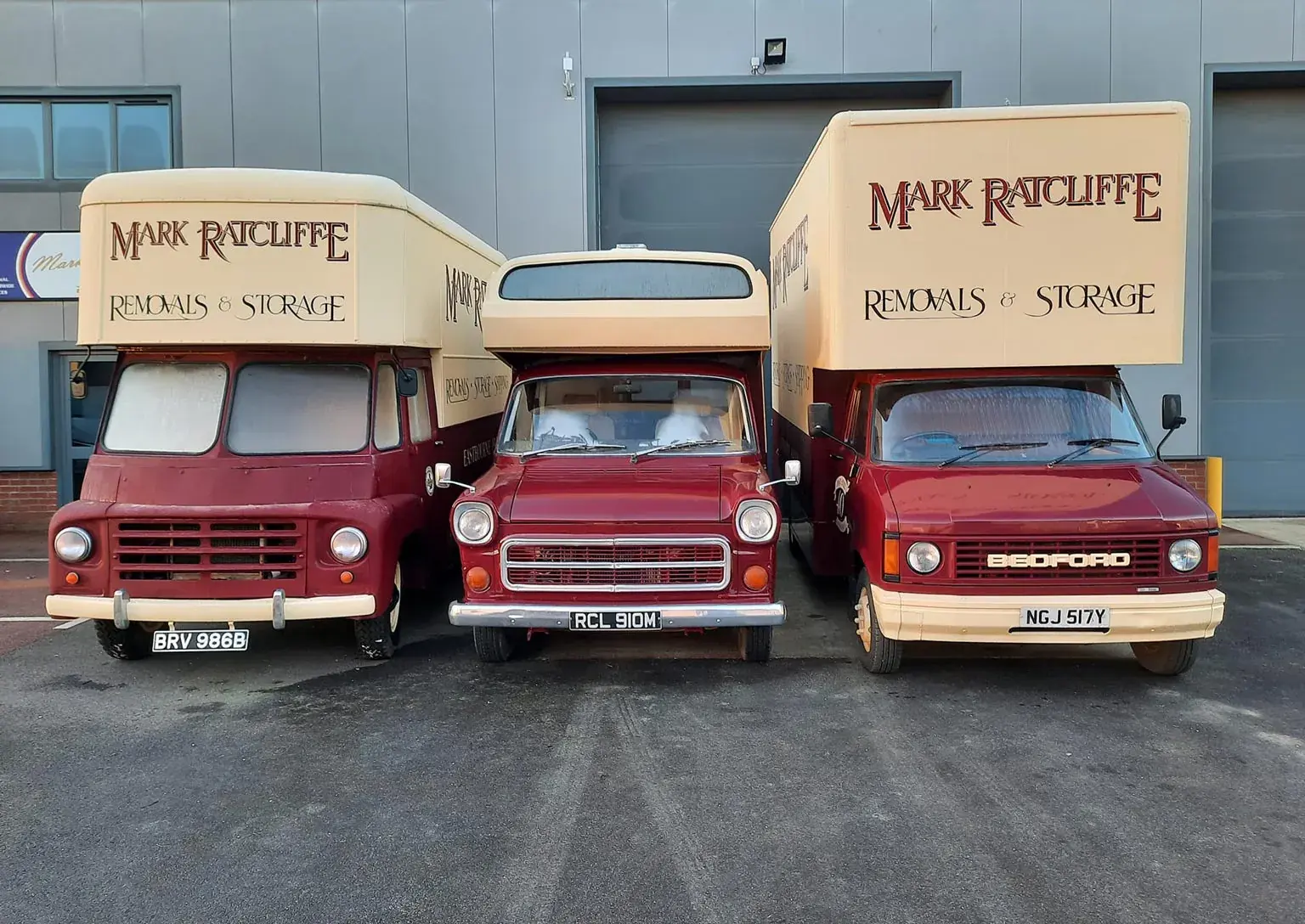
We've been a family-run Sussex remover — the same name on the lorry as the name on the paperwork. Mark personally surveys the high-value and overseas moves; our crews are directly employed (not casual day labour) and trained at our own staff training centre, one of only a handful of UK removers with that facility on site.
Standard inclusions on every full removal: pad-wrap protection for every freestanding piece of furniture, removal-grade cartons, a written and itemised fixed-price quote with no surprises on the day, and the British Association of Removers' Advance Payment Guarantee protecting every deposit. The result, over the years and hundreds of moves, is a 4.9/5 review average across 120+ independent Google reviews.
Booking the survey takes ten minutes. Whether it's a one-bedroom flat across Eastbourne or a country house to overseas, the process is the same: in-home or video survey, written quote within 48 hours, deposit-protected booking, and a calm move day.
Free in-home or video survey, written fixed-price quote, BAR-protected deposit. Sussex’s family-run independent remover.
Important. It's not a guarantee of quality but it's a meaningful filter — audited annually, code of practice, APG deposit protection. Most reputable Sussex firms are members; the ones who aren't usually have a reason.
A quote is a binding price; an estimate is a guess. Insist on a fixed-price quote in writing after an in-home or video survey. 'Around £X' over the phone is not a quote.
The BAR website at bar.co.uk lists current members. Don't take the remover's word for it — search and confirm the membership number matches.
Usually yes for predictability. Directly-employed crews are trained and accountable; sub-contracted day labour varies wildly job-to-job. Ask the question directly at survey.
25% on booking, balance on completion day. Anything higher than 50% upfront is unusual. The deposit should be BAR APG-protected for BAR firms.