
Less stuff means a cheaper move, a calmer first week and a more comfortable new home. Here is how to make the cuts that actually stick.

Every removal customer we’ve ever surveyed has more stuff than they expected. The loft, the garage, the under-stairs cupboard, the spare bedroom — these are the silent accumulators of a household. Moving is the natural moment to thin them out, and the customers who do it well arrive at the new property with a lighter inventory, a lower removal cost, and a calmer first week. This guide is the practical method we’ve seen work across years of Sussex family-home moves.
The principle is simple: start six weeks ahead, work room-by-room, and use the four-pile method (keep, donate, sell, dispose). The detail below covers the categories that decluttering customers consistently struggle with most — sentimental items, clothing, books, and paperwork — plus the practical logistics of charity-shop runs, online selling, and tip visits.
The most common downsizing mistake is leaving it until the last fortnight. Six weeks ahead is the sweet spot: enough time to work through each room without rushing, enough time to find buyers for items worth selling, and enough time to do multiple charity-shop runs without making the new house feel impossible. Two weeks is too little; eight weeks is the perfect amount but rare.
The order: start with the rooms you use least — the loft, the garage, the spare bedroom, the under-stairs cupboard. Move to the medium-use rooms next (the living room, the dining room, the home office). Finish with the rooms you use every day (the kitchen, the bathrooms, the bedrooms). This order means the disruption peaks late in the process, not early when you still need the house to function.
Allow two hours per session and tackle one room at a time. Don’t flit between rooms; that produces piles of half-sorted stuff in every room. The packing-order guide covers the parallel packing schedule that runs alongside the decluttering — both work better when they’re sequenced consistently.
For every item, decide on one of four piles. Keep goes back where it came from (and will be packed for the move). Donate goes to a charity shop or directly to someone who needs it. Sell goes to eBay, Facebook Marketplace, Gumtree or a local auction. Dispose goes to the council tip or the household recycling collection.
The decision criterion for each item: have I used this in the last 12 months, and would I buy it again today? If both answers are no, the item goes to donate, sell or dispose. The 12-month rule cuts through the “but I might need it” objection — if you didn’t need it in the last year, you probably won’t need it in the next year.
Don’t over-engineer the sell pile. Many things people imagine they’ll sell on eBay end up sitting in a box for months. Be honest about your time and motivation. For each “sell” item, ask: am I genuinely going to photograph this, list it, answer messages and post it within four weeks? If the answer is no, move it to donate. Charity shops always need stock; eBay always needs sellers.
Sentimental items are where most downsizing efforts stall. Family photographs, children’s artwork, letters, grandfather’s wartime memorabilia, the kids’ first toys. The 12-month rule doesn’t apply here because the value isn’t functional. The honest question is different: am I keeping this for myself, or am I keeping it because I feel I should?
The solution is rarely “throw it away”. The solution is usually “keep less of it”. A box of 20 of your child’s drawings is more meaningful than two boxes of 200. A small album of family photographs is more meaningful than three crates of unsorted prints. The decluttering act is selecting the best, not eliminating the category.
For physical sentimental items you genuinely can’t bear to part with but don’t want to display, the answer is professional digitisation (for photos, letters, documents) or careful storage in our climate-stable Lower Dicker depot. Storage costs are real but typically less than the regret of having thrown something away. The storage-length guide covers the cost considerations.
The average UK adult wears about 30% of the clothes in their wardrobe regularly. The other 70% is split between “keep for sentimental reasons”, “keep in case I lose weight / change jobs / go to that hypothetical wedding”, and “forgotten about entirely”. A downsizing move is the right moment to thin all three.
The test: turn every hanger backwards in your wardrobe today. Every time you wear an item, hang it back facing forwards. After six weeks, the items still backwards are the candidates for the donate pile. This is harder than it sounds because the “I might wear it” objection is strong. Be honest.
For very high-value items (designer pieces, vintage couture) the sell pile is worth the effort — specialist consignment shops in Brighton and London give better returns than eBay. For mid-value items, eBay or local Facebook Marketplace works. For everything else, the local charity shop. Most Sussex charity shops are particularly happy to take winter coats and children’s clothing. The wardrobe-packing guide covers what to do with the keep pile.
Books are the category where decluttering instincts diverge most sharply. Some people happily donate hundreds of books and never miss them; others can’t bear to part with any. The middle ground is usually right: keep the ones you’ve genuinely re-read or refer to, plus the ones with sentimental value, and donate the rest to charity shops or to friends.
Paperwork is the same. Old bank statements, utility bills, tax returns going back decades, children’s school certificates, expired insurance documents. Most can be safely shredded or digitised. The HMRC retention requirements are 5–7 years for most personal records; anything older can usually go. Bank statements are available online for current accounts; paper copies aren’t needed.
For digital decluttering (the wardrobe of the modern age), do this before the move too — export old emails, organise photos, back up everything to a cloud service. Moving home is the right moment to also tidy the digital house. Less paperwork to move is straightforward; less digital clutter is even better.
For donation: most charity shops accept clean, sellable items by appointment or doorstep collection. Local Sussex charities — St Wilfrid’s Hospice, Demelza, the British Heart Foundation — have established collection services for furniture and larger items. For smaller items, drop-offs at the local high-street charity shop work fine; pack into labelled bags for easy unloading.
For selling: eBay for collectibles and named-brand items, Facebook Marketplace for local furniture and household goods, Gumtree for cars and bikes, and specialist auction houses for antiques (Brighton and Eastbourne both have auction houses worth knowing about). For very valuable single items, talk to us at antiques moving before listing — sometimes the better answer is to move and revalue.
For disposal: the council recycling centre (the tip) takes most household waste for free. Hazardous materials (paint, batteries, fluorescent tubes) go through specific recycling streams. Heavy furniture for disposal can be collected by the council (small charge) or by private services. We can recommend a house clearance service if you’ve inherited a property full of contents to deal with.
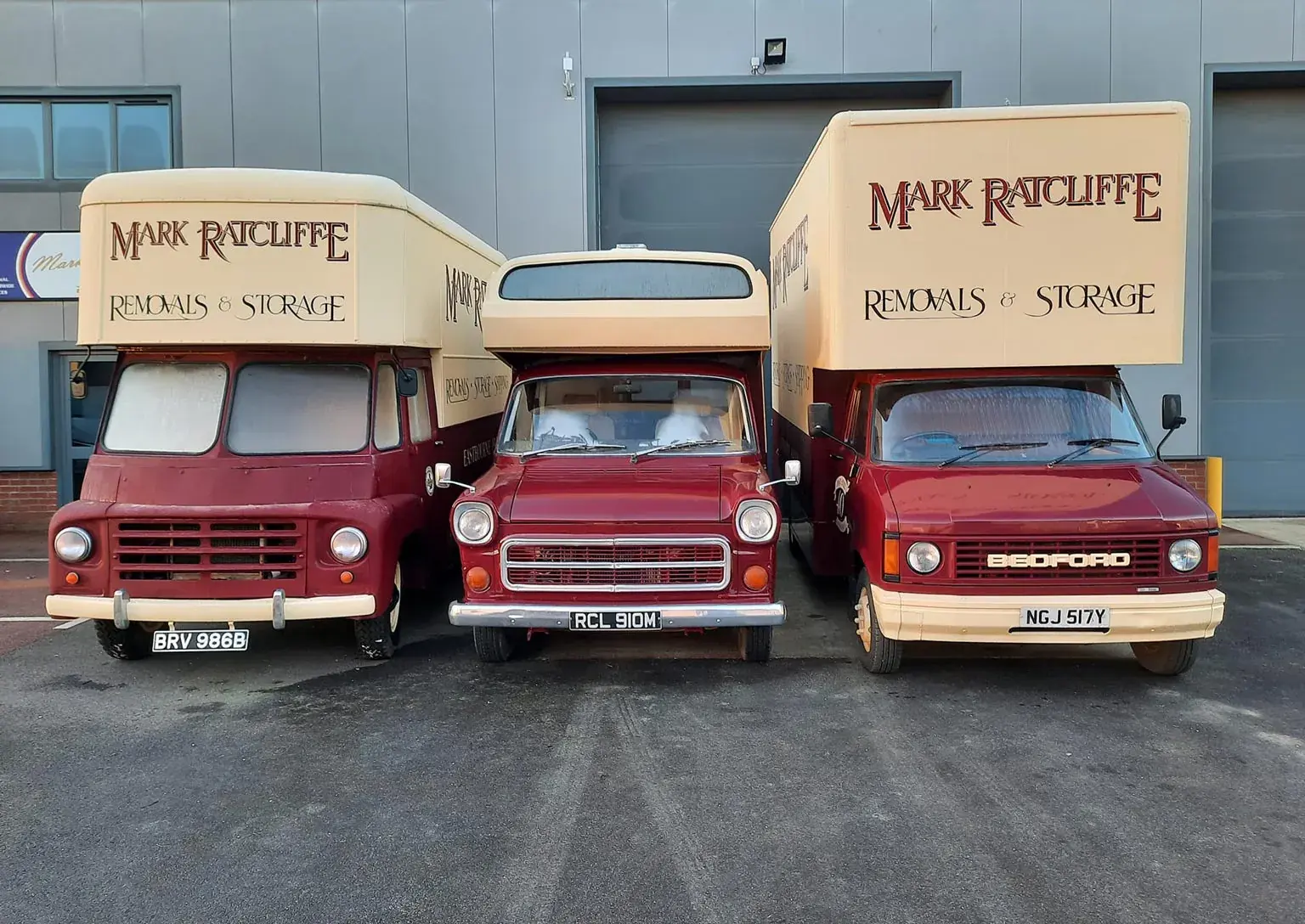
We've been a family-run Sussex remover — the same name on the lorry as the name on the paperwork. Mark personally surveys the high-value and overseas moves; our crews are directly employed (not casual day labour) and trained at our own staff training centre, one of only a handful of UK removers with that facility on site.
Standard inclusions on every full removal: pad-wrap protection for every freestanding piece of furniture, removal-grade cartons, a written and itemised fixed-price quote with no surprises on the day, and the British Association of Removers' Advance Payment Guarantee protecting every deposit. The result, over the years and hundreds of moves, is a 4.9/5 review average across 120+ independent Google reviews.
Booking the survey takes ten minutes. Whether it's a one-bedroom flat across Eastbourne or a country house to overseas, the process is the same: in-home or video survey, written quote within 48 hours, deposit-protected booking, and a calm move day.
Downsizing usually leaves a pile nobody is ready to part with. Our collection and storage service takes it into store while the decision is made.
Free in-home or video survey, written fixed-price quote, BAR-protected deposit. Sussex’s family-run independent remover.
Six weeks ahead is the sweet spot. Two weeks is too little; eight weeks is ideal but rare. Start with the rooms you use least (loft, garage, spare bedroom) and work towards the rooms you use most.
Have I used this in the last 12 months, and would I buy it again today? If both answers are no, the item moves to donate, sell or dispose. The 12-month rule cuts through the 'but I might need it' objection.
Keep less of the category, not none. A box of 20 of your child's drawings is more meaningful than two boxes of 200. For items you can't bear to part with but don't want to display, digitise (for photos, letters) or use long-term storage.
Only if you're genuinely going to photograph, list and post within four weeks. Many 'sell' piles end up sitting unsold for months. Be honest about your time; charity shops always need stock.
Local charity shops collect for free for sellable items. The council tip takes most household waste at no charge. For inherited property full of contents, our house-clearance service handles the entire job.