
Tudor oak, French polish, marquetry, marble and the specific protocols that get them across the country intact.

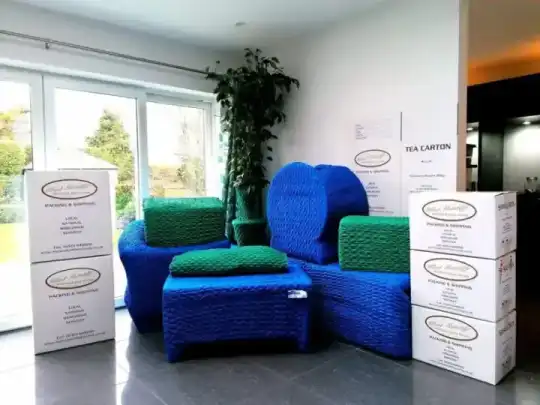
Antiques and valuable furniture demand a different standard of removal than ordinary household contents. The differences aren’t mystical — they’re practical: more careful wrapping, slower handling, specific protection for veneer and marquetry, custom crating for fragile pieces, and crews trained to recognise what they’re handling. From years of antiques moving across Sussex we have a clear and tested approach.
This guide covers what counts as antique, the specific handling methods we use, the insurance considerations, and the survey process. For valuable single pieces or whole collections, our white-glove service is the relevant tier. For mixed inventories with some antiques alongside modern furniture, standard pad-wrap plus declared-value insurance is usually sufficient.
The standard antiques definition is “more than 100 years old”, but for removal purposes the more useful definition is “valuable, irreplaceable or fragile”. A solid oak Victorian wardrobe is technically antique but moves like ordinary furniture. A French marquetry escritoire from the same era is far more delicate and needs specialist handling regardless of age.
For survey purposes we treat the following as antique-handling items: anything with marquetry, anything with original gilt or gold leaf, anything with veneer (especially walnut, satinwood or rosewood), anything with marble or stone tops, anything mounted on splayed legs that can splay further, anything in glass-fronted display cabinets, and anything the customer specifically values at over £2,500.
Within that category, the handling escalates with value. Items at £2,500–£10,000 get pad-wrap plus declared-value insurance. Items at £10,000–£50,000 typically get white-glove handling. Items above £50,000 usually need a specialist art-and-antiques carrier with climate-controlled transport. We’ll talk through the right tier at survey based on what you’re moving.
Standard pad-wrap is fine for many antiques. For more delicate pieces we add internal padding (acid-free tissue between drawers and against veneer surfaces), corner-board over vulnerable corners and edges, and soft-cotton cloth between the blanket and the finish for items with French polish or lacquer (the blanket weave can mark these finishes over a long journey).
For items with original gilt work or applied decoration, we use a tissue-then-cotton-then-blanket layering. The tissue protects against the cotton; the cotton protects against the blanket fibres; the blanket provides the impact cushioning. This sounds excessive until you see a piece arrive after a long journey with no marks at all where ordinary pad-wrap would have left a faint pattern.
For marquetry and inlay work, the rule is no tape on the surface ever. Tape lifts veneer; even ‘painter’s tape’ can lift original 18th-century shellac. All restraint is achieved through webbing straps over the pad-wrap, never adhesive directly on the wood. Mention any tape-applied previous protection at survey so we can replace it before transit.
Glass-fronted antiques (display cabinets, bookcases, china cabinets) are among the highest-risk items in any move. The rule we follow: glass faces glass with padding between, never glass against wood or any other hard surface. The compressive forces in a lorry are vertical; glass surfaces face-to-face cushion each other; glass against wood concentrates force on the glass.
Original Georgian or Regency mirrors and looking-glasses get specific handling. The wooden frame and the glass are surveyed separately at the start — sometimes the glass is original and irreplaceable, sometimes the glass is a later replacement. Original glass needs custom crating; replacement glass is replaceable. Talk to us at survey about which is which.
For valuable mirrors over £5,000, the standard transit method is bespoke crating with vertical orientation and soft internal padding. For collections of mirrors (a sideboard mirror set, for example), each mirror is crated individually. The crates are reusable and we collect them after the move.
Marble and stone-topped furniture has two operational problems: weight and fragility. A typical marble dining table top weighs 80–120kg and can chip or crack if dropped, twisted or stacked improperly. The standard rule: marble travels separately from its base, padded vertically, never flat.
For removal, we lift the marble from the base with two crew members minimum, wrap it in heavy bubble plus pad-wrap, and stack it vertically against an interior lorry wall with foam between it and any neighbour. The base of the table is wrapped separately as ordinary furniture. At the new property they’re reassembled in the destination room.
For stone fireplaces, garden statuary and outdoor stone ornaments, the principles are the same but the weight is often greater. We use specialist lifting equipment for items over 100kg. For pieces over 250kg we sometimes need a four-person crew or specialist sling equipment — both flagged at survey. The moving heavy items guide covers the operational details for the heaviest pieces.
Standard goods-in-transit insurance covers transit damage at typical per-item limits (£2,500 is a common ceiling). For antiques above this limit, items need declaring specifically on the contract before move day. Declared-value coverage is available up to most reasonable amounts; for genuinely high-value pieces (above £25,000), a separate specialist policy is usually the right approach. If you want the commercial detail behind that — agreed value, pre-move valuations and the questions that vet an antiques remover — our guide to antique moving insurance and choosing a specialist works through it.
Photograph everything before the move. Wide shots of each piece, close-ups of any existing chips or marks, close-ups of any signatures, maker’s marks or labels. These photos are invaluable in any post-move insurance discussion and they’re also useful to the unpacking crew (you, in a fortnight’s time) to know where each piece was originally.
For full collections — family silver, an art collection, a wine cellar — we recommend a written inventory before the move. We provide this as part of the white-glove service; for self-managed inventories the structure is straightforward (item, photograph, declared value, location at start, location at end). Insurance discussions go significantly better with a written inventory.
Antique surveys take longer than standard surveys — typically 60–90 minutes for a property with significant antique content. The surveyor photographs each high-value piece, notes the protection requirements, and discusses any access challenges (narrow stairs, doorways, vehicle constraints — common in listed buildings). The quote follows within 48 hours and itemises the antique-specific work.
The crew assigned to antique-heavy moves is our most experienced team. Trained at our own staff training centre, specifically on antique handling, and selected for jobs where the inventory requires it. This isn’t a marketing claim; it’s an operational reality — the same crew that handles a routine 3-bed move isn’t necessarily the right team for a country house with significant period content.
Booking lead times for antique moves are similar to standard moves — 6–10 weeks for end-of-month dates in the May-to-September peak. For very high-value moves (large country houses, art collections), book 12+ weeks ahead because the survey scheduling and crew assignment is more complex. Talk to us early at survey stage.
We've been a family-run Sussex remover — the same name on the lorry as the name on the paperwork. Mark personally surveys the high-value and overseas moves; our crews are directly employed (not casual day labour) and trained at our own staff training centre, one of only a handful of UK removers with that facility on site.
Standard inclusions on every full removal: pad-wrap protection for every freestanding piece of furniture, removal-grade cartons, a written and itemised fixed-price quote with no surprises on the day, and the British Association of Removers' Advance Payment Guarantee protecting every deposit. The result, over the years and hundreds of moves, is a 4.9/5 review average across 120+ independent Google reviews.
If you’re moving a collection that has any single piece you genuinely worry about, talk to us at survey stage rather than after move day. We’ve handle high-value antique moves across the South East regularly and we’ll give an honest view of what protection your specific collection needs.
For uncategorisable items — one-off pieces with no obvious parallel — the survey is the only reliable way to plan. We’d rather quote conservatively after seeing a piece than guess from a description.
Booking the survey takes ten minutes. Whether it's a one-bedroom flat across Eastbourne or a country house to overseas, the process is the same: in-home or video survey, written quote within 48 hours, deposit-protected booking, and a calm move day.
Free in-home or video survey, written fixed-price quote, BAR-protected deposit. Sussex’s family-run independent remover.
Practically: anything valuable, irreplaceable or fragile — marquetry, gilt work, veneer, marble or stone tops, glass-fronted cabinets, anything you specifically value at over £2,500. The legal '100 years old' definition is less useful than these handling-relevant categories.
Yes — additional protection materials, longer survey, sometimes custom crating, slower handling. We quote each line transparently at survey rather than adding a single 'antiques surcharge'.
Usually no — most home policies exclude items in transit. The removal firm's goods-in-transit insurance covers transit damage. For items above standard per-item limits (typically £2,500), declare them on the contract.
Pianos go via our piano-moving service with specialist trolleys and strapping. Stone fireplaces, garden statuary and large marble pieces use lifting equipment and four-person crews where weight requires it.
Yes — our Lower Dicker depot has climate-stable strong-room storage suitable for high-value contents. For genuinely valuable items, the climate-stable conditions are non-negotiable; uninsulated storage causes damp damage over months.