
Door-to-door moves to mainland Europe from anywhere in Britain. Regular collection runs through London, Sussex, Norfolk, Wales, the Midlands and Scotland, one family firm from the first survey to the last box unpacked.

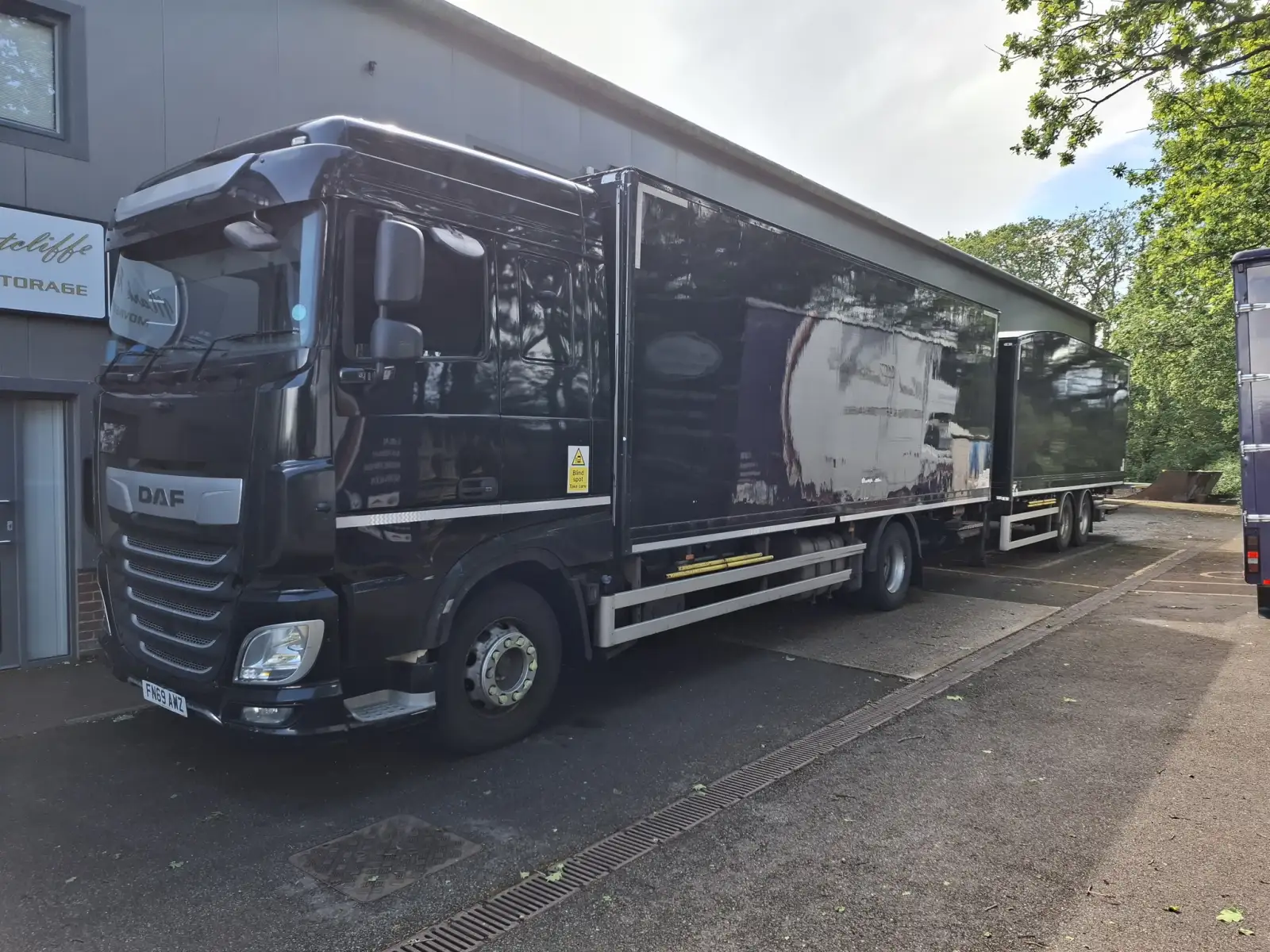
European removals from the UK are the core of our overseas work, and the people who book them rarely live next door to our yard. A typical week has us packing a flat in Hackney for Lyon, a farmhouse in Norfolk for the Dordogne and a family home outside Birmingham for Munich. Wherever you are in mainland Britain, we come to you, wrap and load the house ourselves, and drive it to the new front door on the Continent. You deal with one firm and one surveyor from the first conversation to the last carton being flattened, and nobody hands your sofa to a stranger at a sorting shed halfway.
We are a family business, started in 2017, and we built our European service around a plain idea: a move abroad should feel as organised as a move across town, just with more paperwork and a longer drive. That means a proper survey, a written fixed quote, packing done to export standard, and a customs file that is finished before the lorry sets off rather than improvised at the border.
Our vehicles work to a pattern. We run regular collection routes through London, Sussex, Norfolk, Wales, the Midlands and Scotland, and a household in Leeds, Bristol or Cambridge simply joins whichever run passes closest. These are routes, not branches: the crew who arrive in Cardiff or Glasgow are our own people, driving our own vehicles, and they bring the same wrapping materials and the same inventory sheets they would use on a Sussex job.
Once a load is collected it comes back to our main depot at Lower Dicker in East Sussex. Our second depot, at Coulsdon in Croydon, is a removals depot for our crews and vehicles rather than a store; London customers who need their goods held before shipping use our crate store in Croydon. That is where European consignments are checked against their inventories, consolidated and sealed before they head for the Channel. For a full household travelling in its own vehicle, the depot step can be skipped altogether and the lorry goes straight from your drive to the port. For a smaller move it is the step that makes the whole thing affordable, because your furniture can share a trailer with other households bound for the same part of Europe.
The practical upshot for a customer in Manchester or Newcastle is that the collection date is set by our route calendar and your own timetable together. If you need to hand over the keys on a particular Friday, tell us at the survey and we will build the collection around it; if the destination property is not ready yet, the goods can wait with us until it is. If you are closer to home — in Brighton, Eastbourne, Hastings or anywhere else in the county — our local page on European removals from Eastbourne and Sussex covers the service from our doorstep. For moves beyond Europe entirely, see our international removals from the UK.
These are the routes we run most, each with its own page covering the customs position, the published transit window and the delivery problems that particular country tends to throw up. Pick your destination for the detail.
Our busiest European route, with a fixed weekly departure to the capital.
Short crossings and quick transits — and canal-house hoists in Amsterdam.
Outside the EU customs union, so the paperwork sets the pace.
Every European quote we give comes down to one early decision: does your move have a vehicle to itself, or does it travel as a part-load (the trade also calls it groupage) alongside other consignments heading the same way? Neither is the “right” answer. They suit different moves, and a good surveyor should tell you honestly which one fits yours.
A sole-use vehicle is loaded at your address and driven to the new one without any other household aboard. Nothing is unloaded or reshuffled en route, the delivery date is fixed around you, and the timing sits at the short end of the published window. It suits a full family home, a move with a firm start date at the other end, or a load with a lot of fragile or high-value pieces you would rather nobody else handled.
A part-load puts your consignment on a shared trailer. You pay for the cubic metres your goods occupy rather than for a whole lorry, which makes a real difference to a one- or two-bedroom move, a student starting a year in Milan or a couple sending the pieces they cannot bear to sell. The cost of that saving is flexibility: the trailer leaves on a scheduled departure once it has enough compatible freight, so you work to its date rather than choosing your own.
For customers far from Sussex, a part-load also involves one extra handling step, because the goods come to our depot first to be consolidated. We plan for that with blanket wrapping, labelled cartons and a numbered inventory, so every item can be checked in and out. We will set the two options side by side at the survey, with dates, and let you choose. Published prices for every route, shared and dedicated, are on our European removals rate card.
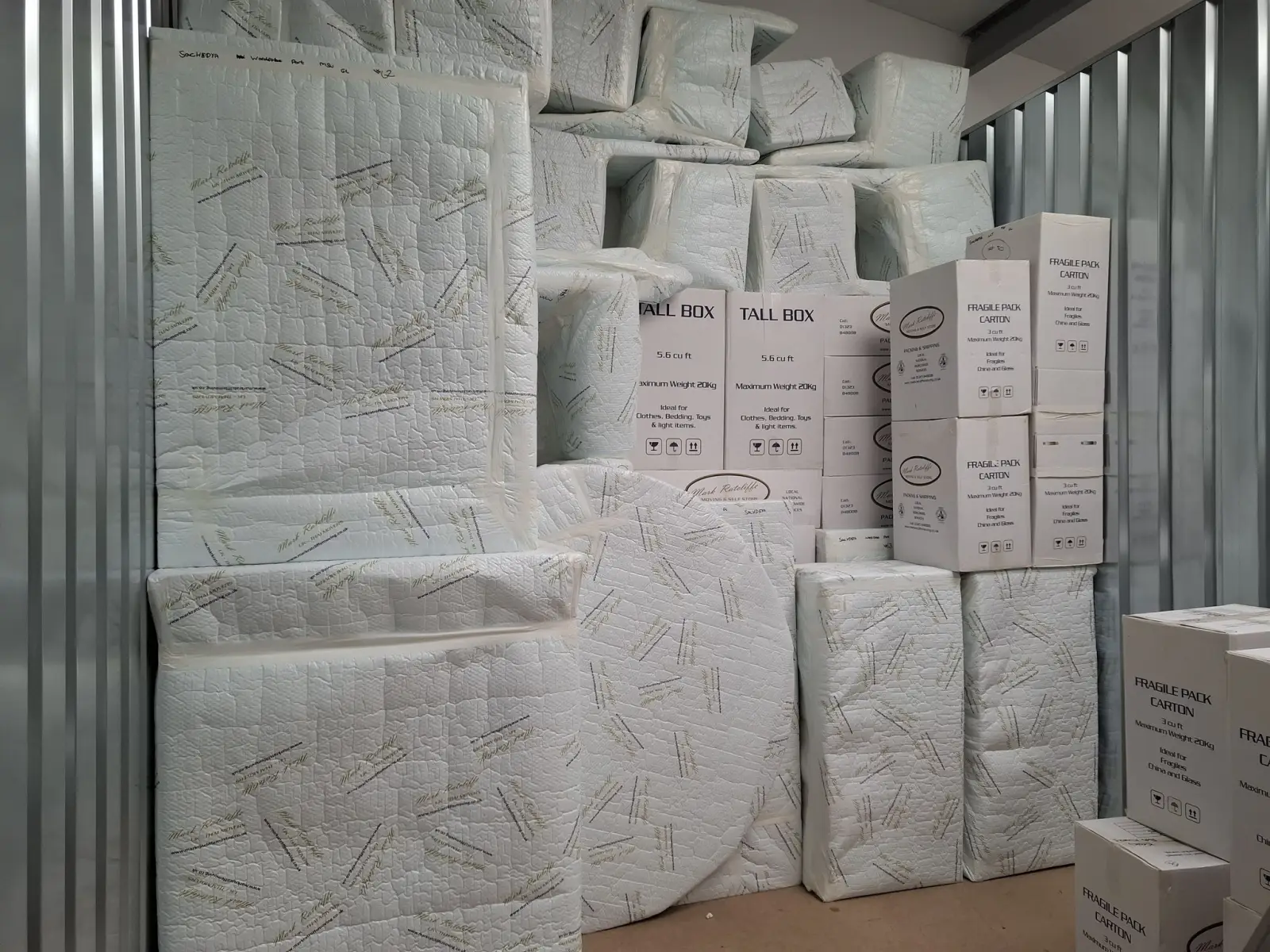
Since January 2021 a household moving from Britain to the EU is exporting goods from one customs territory and importing them into another. That sounds daunting, but for a genuine house move the rules are on your side. The EU’s transfer-of-residence relief — the ToR1 claim — lets you bring your used personal belongings in without paying import duty or VAT, provided you are really moving your normal home there. In broad terms the relief expects that you have lived outside the EU for at least twelve months, that you have owned and used the goods for at least six months, and that you bring them in within a year of taking up residence. Vehicles, alcohol and tobacco are treated separately.
What turns those rules into a smooth clearance is the paperwork. We build the file with you: a numbered, valued inventory that matches what is actually in the vehicle, copies of your passport, proof of your new address or residence status, and evidence that you are leaving the UK. Each country then adds its own requirement. France will want the destination address and residence evidence; Spain generally asks for your NIE; Portugal for your NIF. Our pages on moving house to France, relocating to Spain and our Portugal service spell out the local detail.
Switzerland is the exception. It is not in the EU or its customs union, so ToR1 does not apply there. Swiss customs have their own relief for removal goods, with their own conditions and their own forms, and they check them carefully — a shipment that turns up before your Swiss registration is in place can sit in bond while the paperwork catches up. Our guide to moving to Switzerland explains the sequence we follow. Inside the EU, the customs story for Germany, Austria, Italy and the Benelux countries is the same ToR1 route, with local registration as the thing to sort early.
The windows below are measured from the day we collect to the day we deliver, and they match the figures published on each country page. A dedicated vehicle normally lands in the first half of the range; a part-load waits for its scheduled departure and tends towards the far end. Collecting from Scotland or the north of England does not change the window much, because our collection run is built into the calendar before the European leg begins.
| Country | Typical destinations | Collection to delivery |
|---|---|---|
| Belgium | Brussels, Antwerp, Ghent, Bruges | 5–8 days |
| The Netherlands | Amsterdam, Rotterdam, The Hague, Utrecht | 5–8 days |
| Germany | Berlin, Munich, Hamburg, Frankfurt | 5–8 days |
| Luxembourg | Luxembourg City and the south | 6–9 days |
| France, including Paris | Paris, Normandy, Brittany, the south-west, Provence | 7–10 days |
| Italy | Milan, Turin, Tuscany, Rome, Puglia | 8–12 days |
| Spain | The Costas, Andalucía, Madrid, Catalonia | 10–14 days |
| Portugal | The Algarve, Lisbon, Porto, the Silver Coast | 10–14 days |
| Austria | Vienna, Salzburg, Innsbruck | 10–14 days |
| Switzerland | Zurich, Geneva, Basel, Bern, Lausanne | 10–14 days |
Distance explains most of the spread — Lisbon is a multi-day drive under the drivers’ hours rules, while Brussels is not — but not all of it. Austria and Switzerland sit at the top of the table largely because of Alpine roads and, for the Swiss, a customs entry that has to be right first time. For Paris there is a weekly departure to the French capital, which takes the guesswork out of part-load timing. The other things that move a date are the season and access at the far end: a narrow Italian old town or an Amsterdam canal house may need a smaller shuttle vehicle or an external hoist, and we plan for that at the survey.
We are a family-run firm, founded in 2017, and European work is something we do every week rather than a sideline we subcontract. Our surveyor looks at every job before it is priced, either in your home or by video call if you are at the other end of the country, and the quote you receive is fixed and itemised: packing, crossing, customs preparation and delivery all written down, so there is nothing to discover later. The crew who wrap your furniture are the crew who load it.
We belong to the British Association of Removers and its Overseas Group, which holds members to a code of practice for moves abroad, and we are accredited to BS 8564, the British Standard for international removals. Every move is fully insured, and we can explain the level of cover before you book. If your European move sits inside a wider plan — a year in Brussels before a posting further afield, say — the same team handles it.
There is more about who we are on our about Mark Ratcliffe Moving page, and you can read what previous customers say in our independent customer reviews. Moves heading to the Low Countries are covered in detail on our pages for moves to Belgium, moves to the Netherlands and relocating to Luxembourg. When you are ready, call 01323 848 008 or send the form above, and we will arrange a survey wherever in the UK you happen to be.
Yes. Most of our European customers are not in Sussex. We run regular collection routes through London, Sussex, Norfolk, Wales, the Midlands and Scotland, and homes elsewhere in mainland Britain join the nearest run. Our own crew collects, wraps and loads, wherever you are.
On a part-load, yes: goods come back to our Lower Dicker depot in East Sussex to be checked against the inventory and consolidated with other consignments heading the same way. A sole-use vehicle normally goes straight from your home to the Channel crossing.
Often it is. You pay for the space your goods take up rather than for a whole vehicle, which suits a flat, a few rooms or a handful of prized pieces. The trade-off is that you work to a scheduled departure date. For a full house or a fixed deadline, your own vehicle is usually the better fit.
Your passport, evidence of your new address or residence status, and a numbered, valued inventory, which we prepare with you. For a permanent move this supports a transfer-of-residence (ToR1) claim so your belongings enter free of duty and VAT. Some countries add a local requirement, such as an NIE in Spain or a NIF in Portugal.
Yes. Switzerland is outside the EU and its customs union, so ToR1 does not apply. Swiss customs have their own relief for removal goods and check it carefully, so we prepare the Swiss file in advance and time the delivery around your residence registration.
As early as you can once you have a rough date, and earlier still for spring and summer, when the European routes are busiest. Booking early lets us match your collection to one of our regular UK runs and leaves time to finish the customs file before departure.
Call us for a free, no-obligation quote, or use our online form. Whether it is a shared part-load or a whole house, we have handled the route before and we will handle yours with care.