
Door-to-door international removals from anywhere in Britain. We collect nationwide, pack to export standard, consolidate at our Lower Dicker depot and ship by sea, air or road — with the customs file for your destination prepared before anything leaves the country.

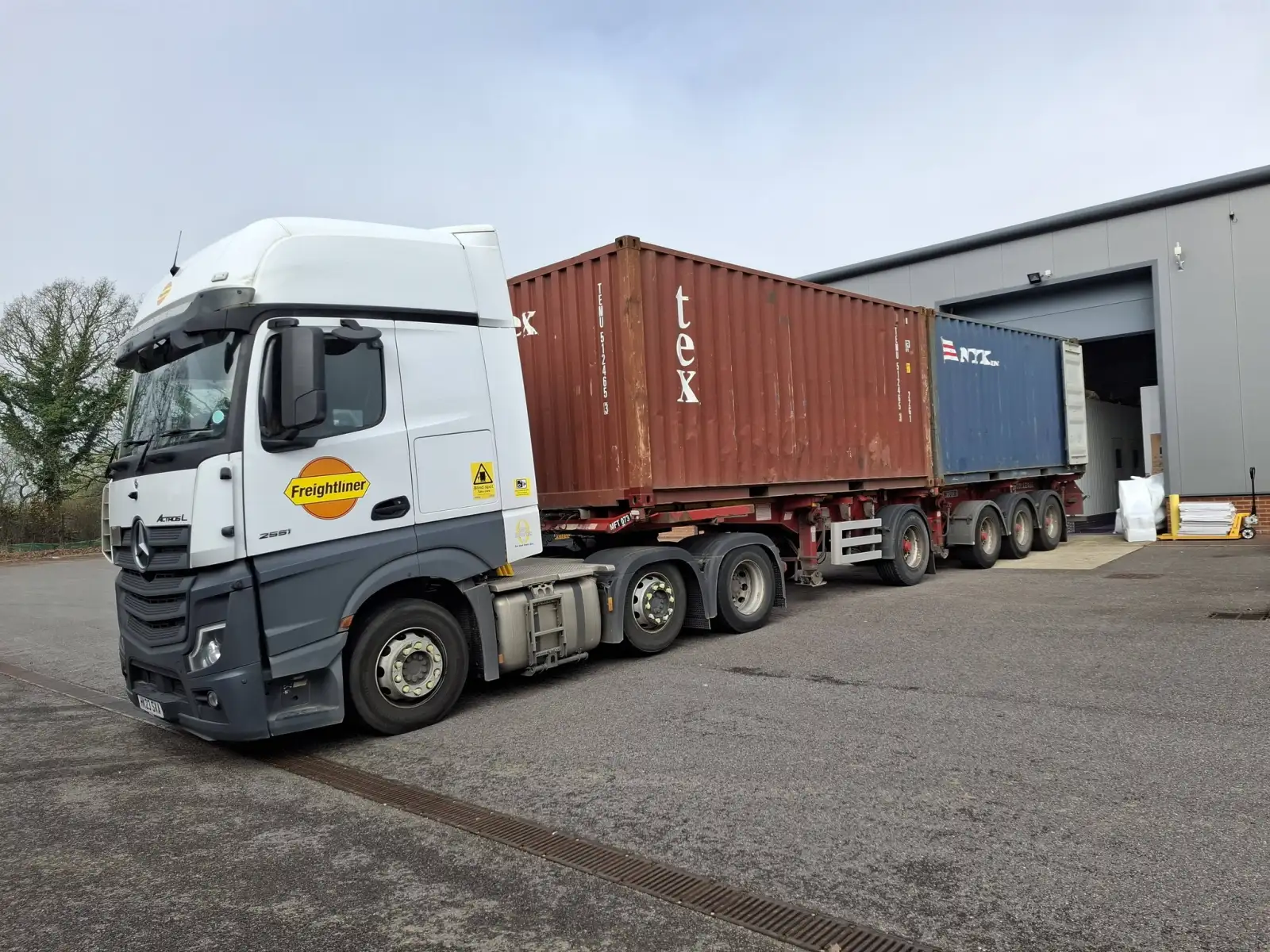
International removals from the UK are rarely about the voyage. The ship, the plane or the lorry is the predictable part. What decides whether a move abroad goes well is everything either side of it: how the furniture is packed for weeks in a steel box, whether the customs file matches the visa in your passport, and who is standing at the other end when the container door opens. We are a family-run removals firm, founded in 2017, and we plan that whole chain for households in every part of Britain, whether the move starts in a city flat or a rural farmhouse.
Most overseas movers in the UK are either a local firm that occasionally ships a container or a freight forwarder who never sets foot in your house. We sit in between. Our vehicles run regular collection routes through London, Sussex, Norfolk, Wales, the Midlands and Scotland, and a household anywhere along or near those routes can be collected on a planned date rather than waiting for a one-off trip to be arranged. Those are collection runs, not branches: the goods come back to our depot at Lower Dicker in East Sussex, where they are checked against the inventory, export-wrapped where needed and consolidated for the right sailing, flight or road departure. Our second depot, at Coulsdon in Croydon, is a removals depot for our crews and vehicles rather than a store; London customers who need their goods held before shipping use our crate store in Croydon.
For a larger household the order changes. A sole-use container can be loaded at your door in Leeds, Bristol or Edinburgh, sealed on your drive and hauled straight to the port, so your furniture is only handled once in Britain. Either way the paperwork, the inventory and the booking sit with one team, and the person who surveyed your home is the person you ring when the ship is late. If you live locally, our page on international removals from Eastbourne and Sussex covers the service from our doorstep.
These are the regions we move people to most often, each with its own guide covering ports, transit, customs and the delivery problems particular to that place. Start with the country guide, then read the city page for the detail that matters at your new address — a condominium lift in Bangkok, a Manhattan co-op board or a steep Cape Town driveway.
Door to door by road, on full loads or shared part-loads, with post-Brexit paperwork done for you.
Our specialist long-haul route, cleared and delivered through our own Bangkok partner depot.
Sea freight into Jebel Ali or Khalifa Port, or air for the essentials, cleared against your residency visa.
Containers to the East Coast, the Gulf and the West Coast via Panama, with ISF and personal-effects forms filed.
The longest voyages we run, packed and cleaned to survive the strictest biosecurity checks in the world.
Sea freight to Cape Town, Durban and Port Elizabeth, then by road inland to Gauteng and the Free State.
Sole-use container (FCL). A full container load means a 20-foot or 40-foot container carrying nothing but your household. It is sealed after loading and not opened again until customs at the destination, which makes it the most secure and the most predictable option. It suits a full house, anyone with a firm arrival date, and anything valuable or awkward that should not be moved about in a shared box.
Shared container (LCL). Less than container load, often called groupage, puts your consignment alongside others heading to the same region. You pay for the space you use, which is why it is the sensible choice for a flat, a few rooms or a carefully edited shipment. The trade-off is time: the container sails when it is full, so the country pages add weeks for consolidation, and there is an extra handling stage at each end.
Air freight. Flying is quick but priced on weight as well as volume, so it works for a few boxes of essentials — work clothes, a laptop, the children’s things — rather than furniture. A common plan is a small air consignment that arrives within days and a sea shipment that follows with the rest.
Road freight. For mainland Europe, and for Switzerland, a removal vehicle driving door to door is almost always better than shipping. There is no port handling, the same crew can load and deliver, and the journey is measured in days. Our European removals page explains full loads and part-loads by road.
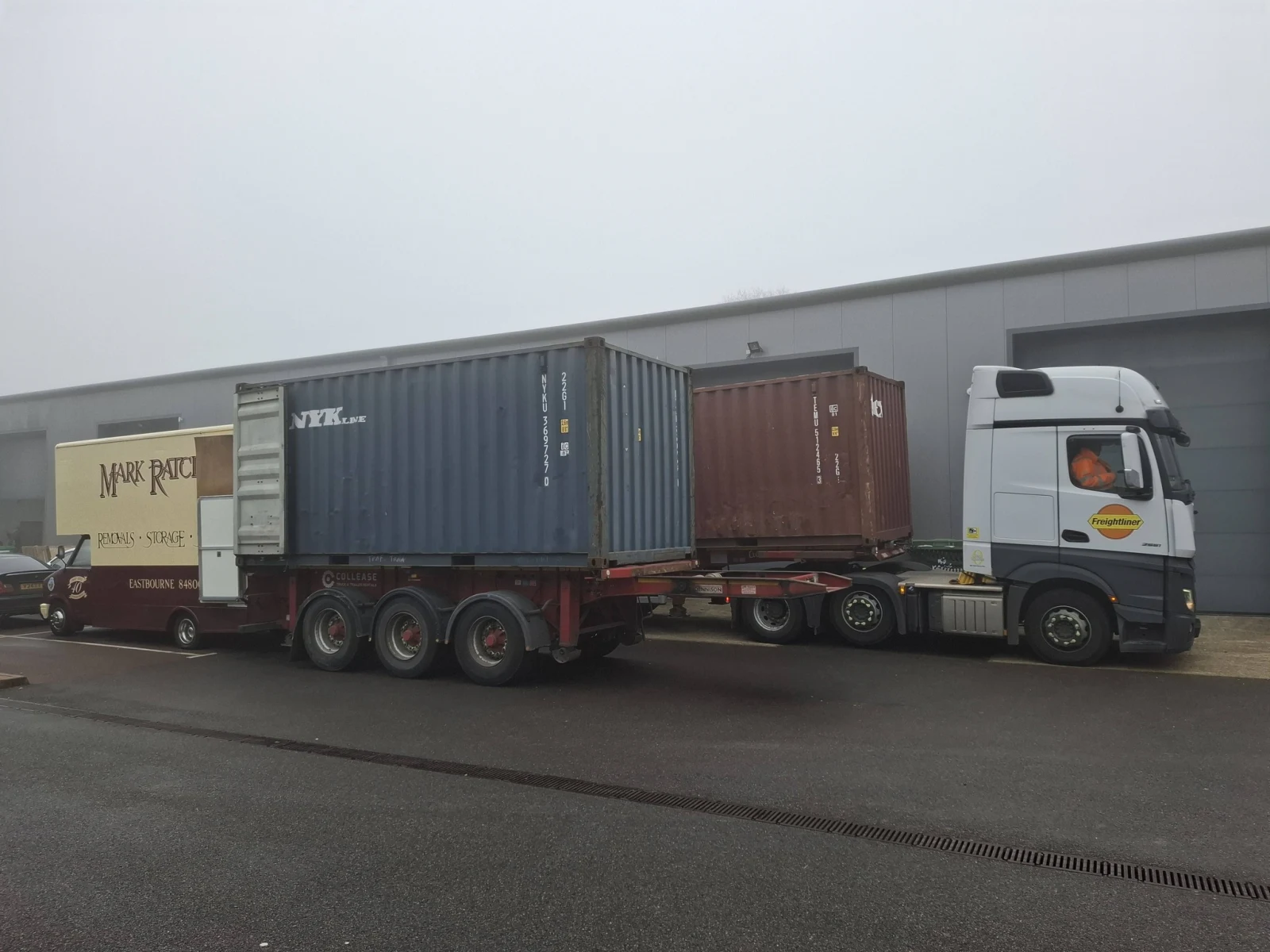
Every destination wants the same starting point: a numbered inventory of what is in each carton and piece, with a declared value for insurance and customs. We build that with you at the packing stage so it matches what actually goes on the vehicle, because a mismatch between the list and the load is the quickest way to have a container held for inspection.
After that, the rules diverge. Most countries let a genuine new resident bring used household goods in free of duty, but each sets its own conditions on residency status, how long you have owned the items and when they must arrive. The European Union applies transfer-of-residence relief. Thailand grants its relief to residents on the right visa and work permit, and our Bangkok partner depot lodges the entry for you. The UAE will not release a shipment until you hold a residency visa and Emirates ID. The United States needs an Importer Security Filing before the ship sails and Form 3299 for free entry; Canada uses Form B4. South Africa expects a residency permit and a rebate application under SARS Form P1.160. Australia and New Zealand care less about the forms and a great deal about soil, timber and anything that has been outdoors.
Restricted items differ too. Alcohol, medicines, drones, plants, food and firearms are treated differently in every country, and a few things that are unremarkable in Britain are simply not allowed. Your surveyor gives you the list for your destination, and the country guides for shipping to Thailand, moving to the UAE, relocating to North America, emigrating to Australia or New Zealand and moving to South Africa each set out the local rules in full.
These are the door-to-door windows published on each destination guide, not best-case sailing times. They assume the paperwork is ready; a residency visa that arrives late adds time at the port however fast the ship was.
| Destination and method | Typical time |
|---|---|
| France — by road | 7–10 days |
| Spain — by road | 10–14 days |
| Portugal — by road | 10–14 days |
| Switzerland — by road | 10–14 days |
| Thailand — sea freight | 10–14 weeks |
| Thailand — air freight | 1–2 weeks |
| UAE — sea freight, Felixstowe to Jebel Ali or Khalifa Port | 4–6 weeks, plus 1–2 weeks for customs and delivery |
| UAE — air freight | 7–14 days |
| New York and the North-East | 3–5 weeks |
| California and the West Coast, via the Panama Canal | 4–6 weeks |
| Toronto and Vancouver | 5–7 weeks |
| Perth and Western Australia | 5–7 weeks |
| Sydney and New South Wales | 6–9 weeks |
| Auckland, Wellington and New Zealand | 8–10 weeks |
| Cape Town and the Western Cape | 4–6 weeks |
| Johannesburg and Gauteng, inland via port | 6–9 weeks |
A shared container adds consolidation time on top: the UAE guide allows a further 2–4 weeks, and Australian ports such as Adelaide and Hobart add 2–3 weeks for transhipment. Australian quarantine inspection and local delivery add another 1–2 weeks after the ship docks.
We started Mark Ratcliffe Moving in 2017 and it is still a family business: the name on the lorry is the name on the paperwork, and Mark or a senior surveyor looks at every overseas job before it is quoted. Surveys happen in person across East Sussex, West Sussex and Kent, and by video call for homes further afield, which works well for a flat in Glasgow or a house in Cardiff. You receive a fixed, itemised quote that separates the packing, the freight, the destination customs work and the final delivery, so you can see where the money goes and compare like with like.
We are members of the British Association of Removers Overseas Group and work to BS 8564, the standard for international removals. Our crews carry out the export packing and crating themselves, build purpose-made boxes through our custom crate service for mirrors, art and marble, and can take on the full packing service if you would rather not fill a single carton. When the sale completes before the visa comes through, storage before shipping overseas keeps everything export-wrapped at Lower Dicker until the sailing is booked. We are fully insured, and marine transit cover on the declared value is arranged for the voyage.
You can read what earlier customers wrote in our customer reviews, learn who we are on the about Mark Ratcliffe Moving page, or call 01323 848 008 to talk your move through. If Thailand is on your list, our Thai moving services team is a good place to start.
Yes. We collect from anywhere in England, Scotland and Wales. Regular collection runs cover London, Sussex, Norfolk, Wales, the Midlands and Scotland, and a sole-use container can be loaded at any UK address and taken straight to the port. Part-loads come back to our Lower Dicker depot to be consolidated.
Yes. We survey in person across East Sussex, West Sussex and Kent, and by video call everywhere else. A video survey walks every room with you, gives us the volume we need to plan the container, and leads to the same fixed, itemised written quote.
A sole-use container suits a full house, a fixed arrival date or valuable pieces, because it is sealed at loading and opened only at destination. A shared container suits a smaller shipment and a flexible timetable, since you pay only for your space but wait for the container to fill. We can quote both so you can compare.
Usually not, if you are genuinely moving your home and meet the destination’s residency conditions. Most countries offer duty relief on used personal effects, but the rules on visas, ownership periods and timing differ, and alcohol, tobacco and vehicles are normally excluded. Each destination guide explains its own scheme.
We can hold your belongings, already export-packed and inventoried, in storage at our Lower Dicker depot and ship them when the dates line up. That avoids paying for bonded storage at a foreign port while you wait for paperwork.
Yes. We are fully insured, and marine and air transit cover is arranged on the declared value of your goods for the whole journey. The valued inventory we prepare with you at packing is the basis for that cover.
Call us for a free, no-obligation quote, or use our online form. Whether it is a shared part-load or a whole house, we have handled the route before and we will handle yours with care.