
Closed Friday, open Monday. Here is how a business-relocation specialist plans an office move so the team is working again before the kettle is on.

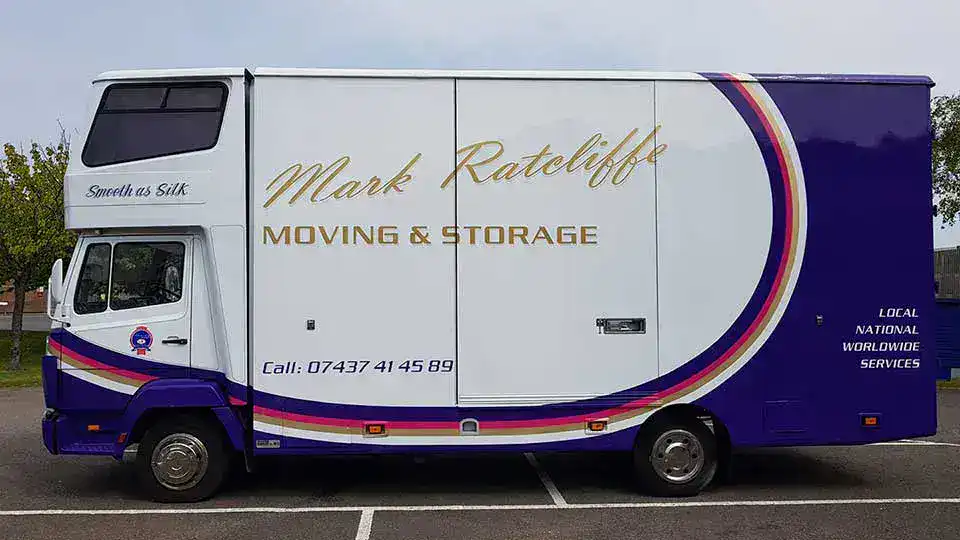
An office move is fundamentally different from a house move. The business has to keep running; the IT needs to be up immediately; the team can’t be without desks for more than a working day; and the cost of downtime usually dwarfs the cost of the removal itself. From years of office relocations across Sussex we have a clear and tested approach.
The principle is straightforward: plan early, run the move over a weekend or after-hours window, prioritise the IT and the immediate workstations, and have a clear day-1 desk-allocation plan. The detail below covers each phase. For the dedicated service page, see office removals Eastbourne; this guide covers the practical planning side.
The single biggest predictor of an office-move success is the planning lead time. Twelve weeks is the sweet spot for a 20-100 person office. Less than that is doable but cramped; more than that is sometimes necessary for larger operations (200+ desks, multiple sites, complex IT infrastructure).
The first four weeks: lease signed at the new property, IT survey of both buildings, broadband and phone-line orders placed (Openreach engineer appointments routinely run 4–6 weeks out in East Sussex), interior fit-out scheduled if needed. The next four weeks: furniture inventory, desk allocation plan, employee communications, packing materials ordered. The final four weeks: pack the non-essential areas, finalise the IT plan, confirm the move-day timeline with us.
Book the survey in week 1 of the plan. The surveyor measures both properties, photographs access points, counts desks and furniture by type, and discusses the move-day schedule. The written quote follows within 48 hours and itemises by phase — packing, transit, unloading, setup at the new property.
The standard office-move pattern is Friday-evening-through-Monday-morning. The business closes Friday at normal close, our crew arrives Friday at 5pm and works through to early morning Saturday packing and loading. Saturday is the lorry transit and the new-property setup; Sunday is for final placement, IT installation and testing; Monday morning the team arrives at functional workstations.
For smaller offices (under 15 people), the move can sometimes happen in a single evening — closed at 5pm, fully moved by midnight, open at the new property by 8am the next morning. For larger offices (100+ desks), a full weekend is the minimum; some moves run across a long bank-holiday weekend.
The Friday evening start matters because it gives the business a full weekend buffer if anything overruns. The Monday open is the deadline; the work happens earlier. We’ve never missed a Monday morning office reopening across the moves we’ve done; the planning buffer is the reason. If the out-of-hours window is the part you need to get right, our companion guide to weekend and out-of-hours office moves sets out the shift pattern hour by hour, the goods-lift and access-pass arrangements, and what buying a weekend rather than a weekday changes on the quote.
The IT is the highest-stakes single category in any office move. Servers, networking equipment, phones, workstations, printers, and the cabling that connects them. If the IT isn’t working Monday morning, the business isn’t working.
The IT plan starts six weeks ahead. The new property is surveyed for cable runs, network sockets, server-room conditions, and power supply. The internal IT team or external IT consultant maps each workstation to its new location with specific port allocations. Cable management plans are drawn up. The disconnection and reconnection schedule is agreed.
On move day, the IT runs ahead of the desk layout. Servers and networking equipment are moved first (sometimes overnight on the Thursday before the main move to give a full day to verify connectivity). Workstations follow on Friday/Saturday. By Sunday afternoon every workstation should be powered, networked, and showing the login screen. Talk to us at survey about coordinating with your IT team.
The team arriving Monday morning shouldn’t need to ask where they’re sitting. Each desk should be labelled with the team member’s name. Each office, meeting room and quiet space should be signposted. The toilets, the kitchen, the printer, the post pigeonholes — all signposted clearly for the first week.
Before move day, share a floor plan with the team showing their new desk locations. The first morning is much calmer when everyone knows where they’re heading. For larger teams, an informal welcome event in the new kitchen on the first Monday morning is worth the small cost — coffee, pastries, a moment to acknowledge the change.
Personal items on desks — family photos, plants, mugs, headphones — should be packed by each individual on Friday afternoon. Provide labelled storage boxes a week ahead and ask each team member to pack their own. This is the practical and respectful approach; the alternative (our crew packing personal belongings) is operationally slower and culturally awkward.
Many office moves involve some furniture replacement — new desks for a growing team, ergonomic chairs replacing the older fleet, new meeting-room kit. Coordinate the new furniture deliveries with the move day. New furniture typically arrives Friday afternoon or Saturday morning; old furniture is removed at the same time.
Items going into storage rather than the new property — sometimes an office reduces in size or moves to a smaller layout — go to our Lower Dicker depot directly from the old property. Long-term commercial storage works the same as residential: climate-stable individual steel storage rooms at Lower Dicker, or crate storage at our Croydon (CR0 4AA) and Crawley (RH10 9SP) stores, with access to stored goods booked by appointment during depot hours.
For specialist office equipment — safes, secure document storage, large printers, server racks — the same protocols apply as in the heavy items guide. The crew assigned to office moves includes specialists trained on commercial equipment.
The first week at the new property is when small issues surface. A meeting-room phone that won’t connect. A printer that needs new IP-address mapping. A team member whose desk is in the wrong place because of a last-minute swap. Build in a project manager for the first week whose job is to log and resolve these issues quickly.
The IT issues usually concentrate in week 1 day 2–3. By then the volume of usage has hit the new network and any latent issues show up. Schedule the IT team to be on-site or fully available for the first three working days. For complex networks (multiple servers, VPNs, specialist software), week 1 is the testing period.
By the end of week 1, the new office should feel normal. Snags filed and either resolved or scheduled; signage adjusted based on usage patterns; meeting rooms booked normally; the team operating without daily reference to the move. The longest-tail item is usually the post and parcel re-direction — set up Royal Mail business re-direct for 12 months and confirm the new address with all major suppliers and customers in week 1.
We've been a family-run Sussex remover — the same name on the lorry as the name on the paperwork. Mark personally surveys the high-value and overseas moves; our crews are directly employed (not casual day labour) and trained at our own staff training centre, one of only a handful of UK removers with that facility on site.
Standard inclusions on every full removal: pad-wrap protection for every freestanding piece of furniture, removal-grade cartons, a written and itemised fixed-price quote with no surprises on the day, and the British Association of Removers' Advance Payment Guarantee protecting every deposit. The result, over the years and hundreds of moves, is a 4.9/5 review average across 120+ independent Google reviews.
Booking the survey takes ten minutes. Whether it's a one-bedroom flat across Eastbourne or a country house to overseas, the process is the same: in-home or video survey, written quote within 48 hours, deposit-protected booking, and a calm move day.
Free in-home or video survey, written fixed-price quote, BAR-protected deposit. Sussex’s family-run independent remover.
Office relocations reward early planning more than any other type of move we do. The 12-week sweet spot covers IT lead times, licence transfers (where relevant), broadband and phone-line orders, and the coordination between the building works, the IT installations and the physical move itself. Talk to us early at survey — even before the new lease is signed — and we’ll help structure the timeline so Monday morning at the new place is calm rather than chaotic.
Smaller offices (under 15 people) can move in a single evening. 20–100 person offices typically take a weekend (Friday evening through Monday morning). Larger 100+ desk operations run across a long weekend or staged across two weekends.
Twelve weeks ahead is the sweet spot. Less than eight weeks is doable but cramped; more is needed for larger operations or complex IT infrastructure.
We coordinate with your IT team but don't typically handle disconnection of server-room equipment. We move the physical hardware; your IT team handles configuration and cabling. We're happy to introduce IT specialist firms if you don't have one.
The move-day window is closed-to-the-business. Most moves run Friday evening through Sunday so Monday-morning reopening works. For 24/7 operations we sometimes use a phased approach — half the office moves one weekend, the other half the following weekend.
Office moves are typically priced by floor area and inventory rather than house bedrooms. A 20-person office is roughly equivalent to a large 5-bed residential move. Talk to us at survey for a detailed itemised quote.