
State, independent, primary, secondary. The schools, the catchments, the application deadlines, and where families typically settle.
We’re a family-run Eastbourne remover, not an educational consultant, so this guide is written from the perspective of years of moving families into Eastbourne and listening to what they tell us afterwards about how schools worked out. It’s practical rather than exhaustive, and where possible we point you at the school’s own admissions information rather than restating it inaccurately.
Eastbourne’s school landscape divides into three groups: state primaries (large network, mostly catchment-based), state secondaries (smaller number, several oversubscribed), and the independent sector (one of the strongest in the South East). The right choice depends on the family’s priorities and the address you’re considering. Below is the rough lay of the land.
Eastbourne’s main state secondary schools are Cavendish School, Causeway School, Catmose College, Bishop Bell C of E School, and Willingdon Community School. Each has its own character. Cavendish, in the centre of town, is the largest and one of the most oversubscribed; catchment varies year-on-year but typically covers the central and seafront areas of Eastbourne. Causeway, west of the town, tends to draw from West Eastbourne and Willingdon.
Bishop Bell, the C of E secondary, has a faith-based admissions component. Willingdon serves the northern suburbs and the Hailsham-side villages. Catmose has a strong record but a tight catchment. East Sussex County Council operates the admissions process; the catchment rules use distance plus other criteria including siblings already at the school and looked-after-children priority.
The application deadline is October 31st for the September intake the following year. Out-of-catchment applications are accepted but compete against in-catchment applications, which usually means a place isn’t available unless the school is undersubscribed. If a specific secondary school is part of why you’re moving, get the address verified inside the catchment before committing to the property.
Two of the South East’s strongest independent schools sit in Eastbourne: Eastbourne College in the centre of town near the seafront, and Bede’s School in Upper Dicker (technically Wealden, a 15-minute drive from Eastbourne). Both are full HMC member schools with strong academic, sporting and creative records.
Eastbourne College is co-educational, day and boarding, around 700 pupils. The campus is unusual for being genuinely embedded in the town — pupils walk along the seafront on the way to and from school. Bede’s is day and boarding, around 800 pupils across senior school and the prep, with strong music, sport and theatre programmes. Bede’s tends to attract more boarders; Eastbourne College’s day-pupil population is larger.
Fees are at the lower end of the HMC range for both schools — typically 20–30% below equivalent London independents. This is consistent with what we hear from London-arriving families weighing the financial picture (the London-to-Sussex guide covers the wider cost differential). Both schools have entrance tests at 11 (year 7), 13 (year 9) and 16 (year 12).
Eastbourne has a large network of state primaries — Bourne, Stafford, Stone Cross, Roselands, Ocklynge, Tollgate, Motcombe, Pashley Down, plus several church primaries and the Steiner-style St Andrew’s. Catchments are tight; most primaries draw almost entirely from their immediate streets.
The independent prep schools — St Andrew’s Prep (linked to Eastbourne College), Wakefield House, Battle Abbey Prep, and the Bede’s Prep at Duke’s Mews — feed into the corresponding senior schools. If you’re planning the independent route from year 7, the prep route is the conventional path.
For early years (nursery and reception), East Sussex County Council’s 30-hours free childcare scheme operates from age 3 and many primaries have on-site nurseries. Private nurseries are plentiful in the town. The Eastbourne area guide covers the neighbourhood breakdown for picking the right primary catchment.
For Cavendish School families: central Eastbourne, the seafront, Old Town — most addresses fall within the historical catchment. For Causeway: West Eastbourne (Hampden Park, Roselands border, Willingdon). For Willingdon: the northern suburbs including Willingdon itself and the Polegate/Hailsham-side fringes. For Catmose: the inner residential streets close to the school. For Bishop Bell: faith-based admissions, location less important than the C of E criteria.
For Eastbourne College or Bede’s: address is mostly irrelevant — both schools take day pupils from across Eastbourne and the surrounding villages, plus boarders nationwide. Many families pick the neighbourhood for other reasons (Meads for proximity to the College, the inland suburbs for the village-feel) rather than for school catchment.
For families with primary-age children, the catchment is much tighter and the choice of street matters. Bourne and Stafford typically draw from the streets immediately around them. Roselands and Stone Cross primary similarly. Use the school’s last-year admissions distance as the rough guide — the council publishes this annually.
The key dates: 15 January for primary admissions for the September intake the same year. 31 October for secondary admissions for the September intake the following year. Late applications are accepted but go to the back of the queue for oversubscribed schools. Independent schools have their own deadlines, typically 6–12 months ahead of intake, with entrance assessments in the autumn term before intake.
If your move date is uncertain because of a chain or because the new house isn’t yet purchased, you can apply on the basis of the new address as long as you have a verifiable completion date. The council will accept conditional applications and confirm once the move is final. Don’t apply on an old address and try to switch later — that almost always loses the priority.
For mid-year transfers (between January and July, or between September and December), apply directly to the schools rather than through the council coordinated process. Mid-year places only open if a current pupil leaves; the most-oversubscribed schools rarely have mid-year places. Plan around the academic-year boundaries where possible. The school-holiday moving guide walks through the timing considerations.
For year-12 entry, the main state options are Cavendish’s sixth form, the East Sussex College Eastbourne campus (formerly Sussex Downs College), and Catmose College sixth. Independent options include Eastbourne College sixth and Bede’s sixth, both with strong academic records and good university destinations.
The College campus offers a much wider vocational and BTEC range than the school sixths — useful for pupils heading into apprenticeships, the creative industries, or specific career paths. The Eastbourne College and Bede’s sixths skew strongly toward A-level and university routes, with most leavers going to Russell Group universities.
If your move involves a year-12 transfer, talk to the receiving sixth form directly about subject availability. Some niche A-level combinations (further maths plus three other sciences, for example, or specific language pairings) may only be available at one or two schools in the town. Confirm before move day.
One last note worth making for arriving families: the Eastbourne school environment overall has a calmer, smaller-school feel than many London catchments. Class sizes are generally lower, the staff turnover is lower, and the parent community tends to know each other across multiple year groups. Most families settle into the school side of the move quickly. For more on picking the right neighbourhood to match the school choice, the Eastbourne area guide covers the catchments by district.
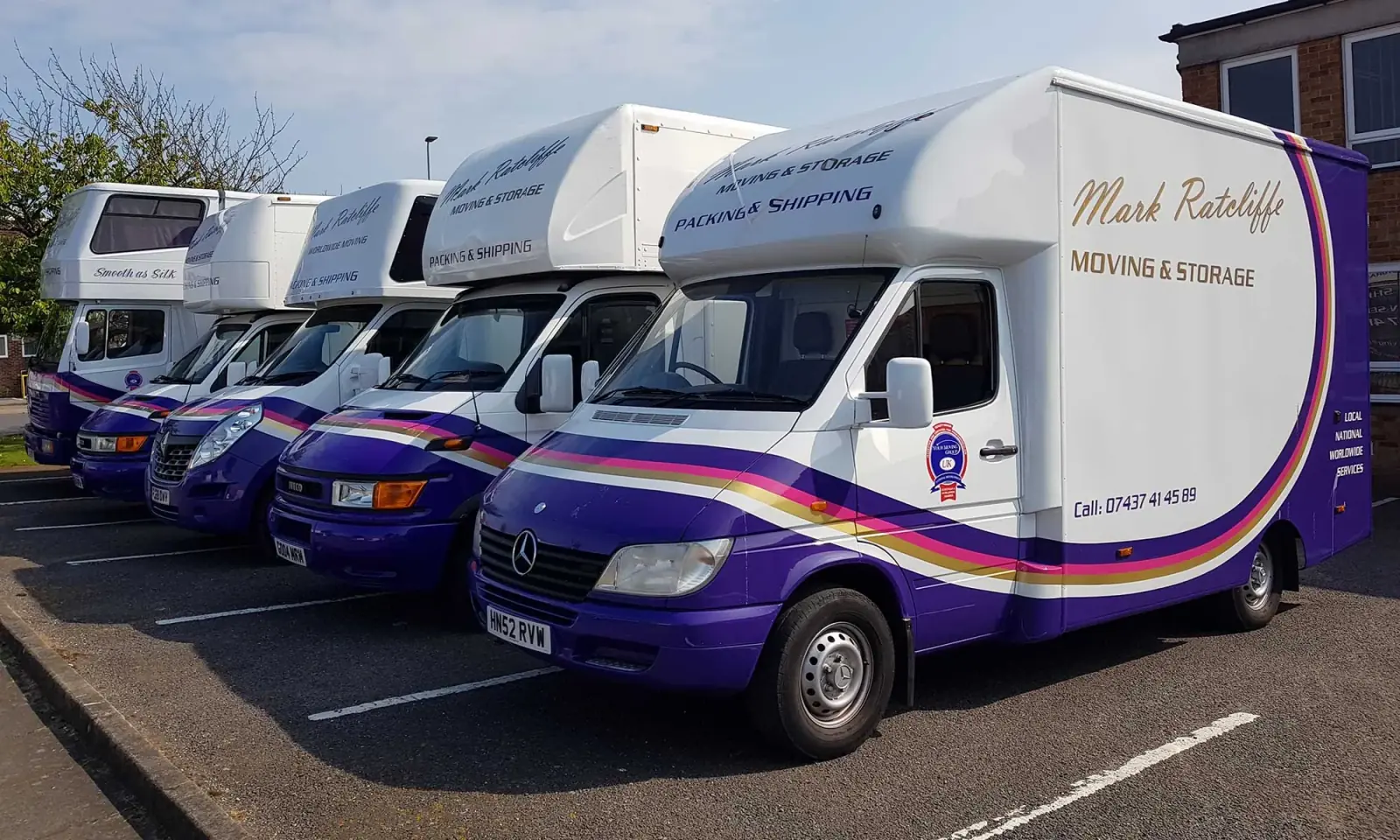
We've been a family-run Sussex remover — the same name on the lorry as the name on the paperwork. Mark personally surveys the high-value and overseas moves; our crews are directly employed (not casual day labour) and trained at our own staff training centre, one of only a handful of UK removers with that facility on site.
Standard inclusions on every full removal: pad-wrap protection for every freestanding piece of furniture, removal-grade cartons, a written and itemised fixed-price quote with no surprises on the day, and the British Association of Removers' Advance Payment Guarantee protecting every deposit. The result, over the years and hundreds of moves, is a 4.9/5 review average across 120+ independent Google reviews.
Booking the survey takes ten minutes. Whether it's a one-bedroom flat across Eastbourne or a country house to overseas, the process is the same: in-home or video survey, written quote within 48 hours, deposit-protected booking, and a calm move day.
Free in-home or video survey, written fixed-price quote, BAR-protected deposit. Sussex’s family-run independent remover.
Primary: 15 January for September intake the same year. Secondary: 31 October for September intake the following year. Independent schools have their own deadlines and entrance assessments typically 6–12 months ahead of intake.
Yes, on a conditional basis — the council accepts applications based on a verifiable completion date. Don't apply on the old address and try to switch later; that usually loses the catchment priority.
Cavendish has historically been the most oversubscribed; Causeway and Willingdon are also competitive in their catchment areas. Bishop Bell uses faith-based criteria so the standard distance rules don't apply in the same way.
No — Eastbourne College and Bede's fees are typically 20–30% below equivalent London independents. This is one of the consistent draws for London-arriving families.
Apply directly to the receiving sixth form rather than through the council process. Confirm subject availability for niche A-level combinations before move day — not every school offers every combination.