
Net-zero isn't a marketing claim. Here is how the maths actually works, what the residual footprint of a typical move is, and how to offset it credibly.

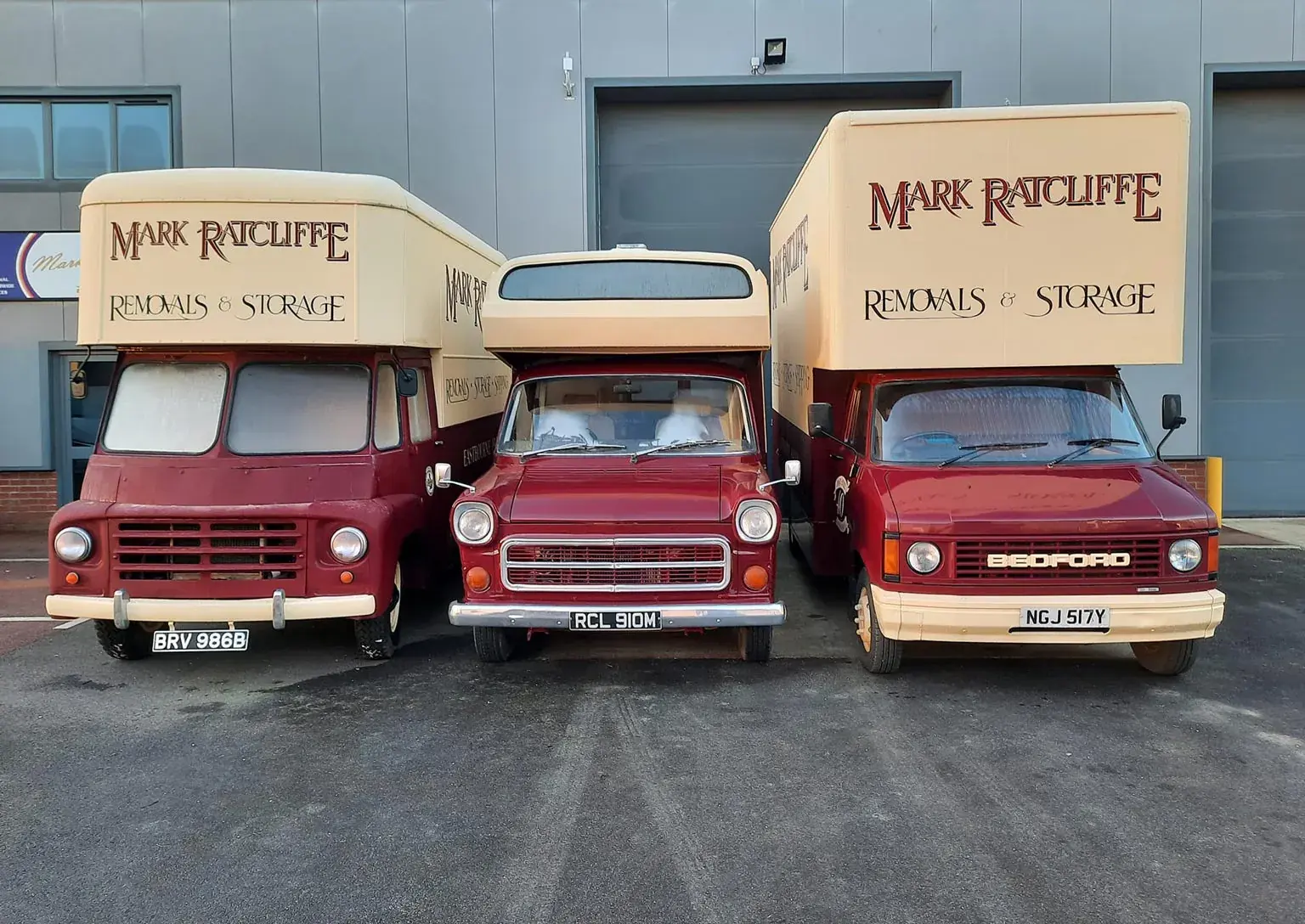
Carbon-neutral and net-zero are terms used loosely across most service industries. For a house move, the honest accounting takes a few steps: measure the actual footprint, reduce what can be reduced through better practices, and offset the residual through a credible scheme. We’re a Sussex removals firm, not a climate consultancy, but the maths is straightforward and worth walking through.
This guide covers the typical footprint of a Sussex move, the reduction options (covered in more detail in our eco-friendly moving guide), and the offset routes that actually deliver on their claims. The aim is to set realistic expectations rather than to oversell. If the vocabulary itself is what you are stuck on, our explainer on carbon neutral versus net zero claims sets out what each term commits a company to.
A typical 3-bed Sussex local move (under 50 miles) generates roughly 60–120 kg CO2-equivalent. The components: lorry diesel (40–80 kg), materials embedded carbon (10–25 kg), depot overheads (5–15 kg). This is the “Scope 1” direct footprint of the operation.
Longer-distance moves scale with the diesel component. A 200-mile move (London-to-Sussex, for example) runs at 200–350 kg CO2-eq. International moves are an order of magnitude higher because of the shipping involved — a 20-foot container to Australia generates around 1.5–2.5 tonnes CO2-eq depending on the route.
For context, the typical UK household generates roughly 4–7 tonnes CO2-eq per year just on home energy. So a single local move is about a week’s worth of household energy emissions. A long-distance move is a fortnight’s worth. An international move is the equivalent of 3–5 months of household emissions.
The reduction levers in order of impact: distance (the biggest single variable; choosing local over long-distance is a 4–6x reduction), full lorry loading (50% fuller load = roughly proportional reduction in per-cubic-metre carbon), materials choice (reusable crates vs single-use cartons saves 5–10 kg per move), and route efficiency (direct routing vs detours saves 5–15% on the diesel).
For customers, the practical decisions: declutter so the lorry is full of useful contents rather than wasted space (the downsizing guide covers this); choose reusable materials where practical (the sustainable removals guide covers the options); and book your move at a date that allows efficient routing if possible.
For us as the firm: maintained efficient lorries, route planning, full loads, reusable blanket-based pad-wrap, depot energy management. None of these are revolutionary but in combination they reduce the per-move footprint by roughly 25–35% versus an unoptimised baseline. If you would rather work through it as a calendar than a principle, our six-week eco-friendly moving plan puts the customer-side actions in the order the weeks want them.
Carbon offsetting has a deserved reputation for being uneven. Some schemes are gold-standard verified with measurable additional impact (tree-planting projects with independent monitoring, verified renewable-energy projects, methane capture from landfills). Some are essentially marketing exercises with weak verification.
The categories that have stronger credibility: Verified Carbon Standard (VCS), Gold Standard, and Climate, Community and Biodiversity (CCB) Standards. These have independent verification, additionality requirements (the project wouldn’t have happened without the offset funding), and ongoing monitoring. The categories with weaker credibility: unverified tree-planting schemes, “forest preservation” offsets where the threat to the forest is overstated, and offsets that double-count emissions reductions.
For a typical 200 kg CO2-eq move, the offset cost via a gold-standard scheme is roughly £5–£15. For an international move at 2 tonnes, £50–£150. The cost is modest relative to the move price; the question is whether the customer wants the offset done and which scheme to use. The mechanics of that purchase — registries, certification bodies and the cost per tonne — are covered in our guide to carbon offsetting a house move.
Tree-planting is the most popular offset category and one of the most varied in quality. A credible tree-planting offset: trees are planted in a verified location with a credible long-term management plan, the carbon sequestration is measured against a baseline scenario, and the trees have to remain standing for a meaningful period (30–100 years) to count.
The UK Woodland Carbon Code (WCC) is a credible domestic scheme — projects are independently verified, the trees are UK-based, and the sequestration is monitored over 30+ years. The international schemes (Eden Reforestation Projects, Trees for the Future) have similar verification standards in their well-managed projects.
We don’t run a tree-planting scheme ourselves; we don’t have the credible verification infrastructure to claim it. For customers who want trees as part of their move offset, we’d recommend the WCC for UK-based and Gold Standard or Eden Reforestation for international. We’ll discuss the right option at survey.
For customers wanting the most credible offset, the route is: calculate the move’s CO2-eq footprint (we’ll provide this on the quote if requested), purchase verified offsets through a Gold Standard or VCS-certified provider, and keep the certificate as proof of offsetting.
Major providers in this space: Climate Care (UK), Gold Standard Marketplace (international), and the Verra registry. The cost per tonne varies by project type but typically runs £10–£25 per tonne CO2-eq for high-quality verified offsets. For a typical Sussex move at 100 kg CO2-eq, that’s £1–£2.50.
For customers who want the offsetting included in the move quote, we’ll arrange it through a verified provider and add it as a line item. The certificate comes back to you after the move. Talk to us at survey if you’d like the move treated as net-zero.
Carbon-neutral isn’t a magic label that erases environmental impact. Offsets help with the measurable CO2-eq footprint but don’t address other environmental aspects (local air quality near depots, materials extraction for blanket and lorry components, end-of-life disposal of materials). The honest framing: offsetting addresses the climate-specific footprint, not the broader environmental impact.
For customers who want the most honest sustainable move, the priority order is: reduce first (declutter, choose local, reusable materials), then offset what remains. Offset-only without reduction is the “avoid then offset” principle backwards.
For households committed to a low-carbon life, the move itself is a small fraction of annual emissions. The bigger levers are home energy (heating, electricity), transport (car miles, flights), and food (meat consumption). The eco-friendly moving guide covers the move-specific practices; longer-term household sustainability is a wider conversation. On the materials side specifically, our guide to eco-friendly packing materials and recycling covers what genuinely recycles and what does not.
We've been a family-run Sussex remover — the same name on the lorry as the name on the paperwork. Mark personally surveys the high-value and overseas moves; our crews are directly employed (not casual day labour) and trained at our own staff training centre, one of only a handful of UK removers with that facility on site.
Standard inclusions on every full removal: pad-wrap protection for every freestanding piece of furniture, removal-grade cartons, a written and itemised fixed-price quote with no surprises on the day, and the British Association of Removers' Advance Payment Guarantee protecting every deposit. The result, over the years and hundreds of moves, is a 4.9/5 review average across 120+ independent Google reviews.
Booking the survey takes ten minutes. Whether it's a one-bedroom flat across Eastbourne or a country house to overseas, the process is the same: in-home or video survey, written quote within 48 hours, deposit-protected booking, and a calm move day.
Free in-home or video survey, written fixed-price quote, BAR-protected deposit. Sussex’s family-run independent remover.
Carbon-neutral isn’t a label we apply to every move automatically. It’s an opt-in that customers request, and we cost the verified offsets honestly on the quote. For households genuinely committed to net-zero on the move’s footprint, the maths and the paperwork are entirely doable. Talk to us at survey if this matters to your move — the residual carbon after sensible reduction is usually small enough that the offset cost is modest.
If you’re weighing this move and want a second view, the free survey takes ten minutes and we’ll come back within 48 hours with a fixed-price quote and a clear plan for your specific situation. Years of Sussex moves behind every survey.
One operational reality worth flagging: for genuinely international moves (containerised shipping to Australia, for example), the residual carbon footprint is meaningfully larger than the domestic equivalent and the offset cost reflects this. For these moves we work the carbon discussion into the wider conversation about timing, route and consolidation. International customers committed to net-zero typically also reduce the shipment volume aggressively (only what genuinely needs to come) which reduces the offset cost proportionally. For the operator’s side of the equation — fleet, load consolidation and depot energy — see what makes a removals company sustainable.
Roughly 60–120 kg CO2-eq for a 3-bed local move (under 50 miles). 200–350 kg for a long-distance UK move. 1.5–2.5 tonnes for international shipping in a 20-foot container.
For a typical Sussex move, £1–£2.50 in gold-standard verified offsets. For an international move at 2 tonnes, £20–£50. Modest relative to the overall move cost.
Verified Carbon Standard (VCS), Gold Standard, Climate Community and Biodiversity (CCB). For UK-based: the Woodland Carbon Code. Avoid unverified or vague schemes.
Yes — calculate the move's CO2-eq footprint, purchase verified offsets through a Gold Standard or VCS provider, certificate comes back to you after the move. Add it as a quote line item.
Offsetting handles the climate-specific footprint. Reducing first (decluttering, choosing local, reusable materials) is the more impactful approach. The 'reduce first, then offset' principle is the honest order.