
The operator’s side of a green move: emissions standards, load consolidation, reusable blankets, crate hire and what to ask your remover.

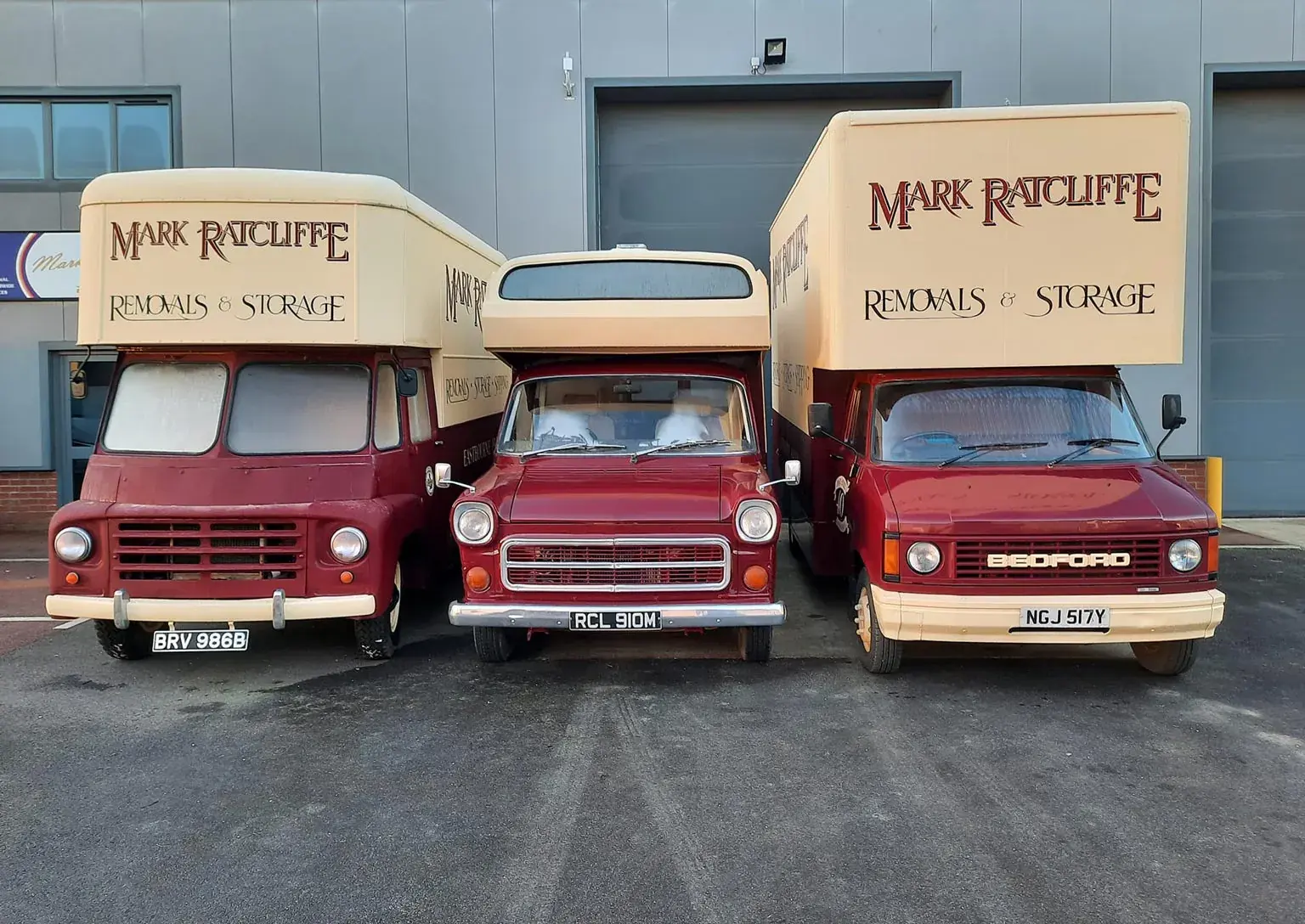
A sustainable removals company is not made sustainable by what its customers do. It is made sustainable by decisions taken inside the business: which lorries it buys, how full they run, how many miles they cover empty, whether furniture protection is washed and reused or bought and binned, and what the depot costs to keep the lights on. This page is about that side of the job — the operator’s half, which customers rarely see and which decides most of the footprint.
We run our own vehicles and our own crews from a depot at Lower Dicker in East Sussex, so the detail below is a description of a real operation rather than a wish list. It should also give you a workable set of questions for any eco friendly removal company you are comparing us against.
Break a removals business into its parts and the picture is lopsided. Vehicle fuel dominates. Everything else — the depot, the office, the packing materials, the vans running surveys — adds up to a modest share next to diesel burned by lorries covering real distance with real weight aboard.
That matters because it tells you where to look when a firm advertises its green credentials. Recycled letterhead and a paperless office are pleasant and almost irrelevant. Fleet, load factor and mileage are where the numbers live, and they are also the hardest and most expensive things to change, which is precisely why they are the least often mentioned.
There is a second-order effect worth knowing about. A move done badly generates its own emissions: an undersized lorry means a second trip, poor protection means damage and replacement, a missed slot means a re-run. Doing the job properly the first time is a carbon measure that never appears in anyone’s sustainability policy.
The Euro standard on a lorry’s engine is the single most useful fact about it. Euro 6 is the current standard for heavy vehicles and the reason older lorries are being pushed off the road in low-emission zones. It targets nitrogen oxides and particulates rather than carbon dioxide, so it is an air-quality measure first, but in practice a Euro 6 fleet is a newer, better-maintained, more efficient fleet.
Ask a remover what emissions standard its vehicles meet and whether they can enter a Clean Air Zone or the London ULEZ without a charge. A firm running compliant vehicles will answer instantly, because it has to know for every London job it quotes. A firm running older lorries will hedge, and the charge will be sitting somewhere in your price whether it is itemised or not.
Then there is how the vehicle is driven and kept. Tyre pressures, service intervals, gearbox use, idling on the driveway while the crew works — a lorry left running for an hour outside a house burns fuel to no purpose and irritates the neighbours. Crews trained to switch off and to drive for economy make a difference that no amount of policy language substitutes for.
Here is the number nobody advertises. A removals lorry that drives to Cornwall with a full load and comes home empty has burned fuel for two journeys and been paid for one. Those return miles are called empty running, and across the road-freight industry they account for a substantial share of all lorry mileage. In removals they are worse than average, because household moves are one-way by definition.
Everything a good operator does about routing is really about this. Backloads — picking up a job travelling the other way to fill the return leg. Part-load scheduling, where two or three smaller consignments heading in the same direction share a vehicle. Sequencing deliveries so the lorry works its way home rather than making a spoke out and back for each customer.
For the customer, the visible sign of a firm that manages this is flexibility on dates. A remover offering a small saving for a flexible collection window is usually doing so because it is trying to pair your job with another. Taking that offer is one of the few chances a household has to influence the fleet side of the footprint directly, and it is the reason our man and van service is priced differently from a dedicated lorry.
Consolidation is the other half of the same problem. A lorry burns broadly the same fuel whether it is half full or full, so carbon per cubic metre falls sharply as the load goes up. This is why sizing the vehicle correctly at survey is a genuine environmental decision and not just a commercial one: an oversized lorry wastes fuel carrying air, an undersized one triggers a second run.
On long-distance work the practice is called groupage — several households’ goods travelling together in one vehicle, each collected and delivered on a schedule that suits the route rather than the individual. It is slower and cheaper, and it is substantially better per cubic metre than a dedicated vehicle running for one family.
The overseas equivalent is the shared container. A full container to one household is quick and expensive; a shared load waits for the space to fill but divides the sea leg between several consignments. Since the shipping leg dominates the footprint of an overseas move, this is the biggest single lever available. Our international removals service uses consolidated container freight through FIDI-network partners as the default rather than the exception.
Furniture protection is where an operator’s habits are most visible on the day. Two approaches exist. The first is pad-wrap: heavy quilted blankets tied round each piece, taken back at the end, laundered at the depot and used again. The second is plastic film wound round furniture on site and cut off at the far end into a bin bag.
Film is popular with operators for a plain reason: it needs no return logistics and no laundry. Nothing comes back, nothing gets counted, nothing gets washed. A blanket inventory is an asset that has to be tracked, loaded, retrieved from the far end of the job, and cleaned between households. That is a real operational cost, which is exactly why the cheapest quotes tend to arrive with a roll of film.
The environmental arithmetic is not close. A typical three-bedroom move wrapped in film generates something in the order of 8–15kg of plastic that goes straight to waste; the same move pad-wrapped generates none, at the cost of laundering blankets that will do the job again hundreds of times. There is a quality argument too — film traps moisture against polished surfaces and does nothing to cushion an impact — which is covered in our full pad-wrap protection guide. Ask any remover which of the two they use as standard, and whether it is included or an extra.
Reusable plastic crates look like the obvious answer and the operational reality is more mixed. A crate does hundreds of moves, so its footprint per use is small. But crates have to be delivered before the job, collected afterwards, cleaned, stacked and stored, and each of those steps is a vehicle movement or a square metre of warehouse. Hire them for a fortnight for a household that packs slowly and the crates sit idle in a hallway while the depot has none.
Cardboard has the opposite profile: no return logistics, no idle stock, and a shorter life. A removal-grade double-wall carton is not a single-use item, though — handled properly it will do several moves before the flaps give out, which is why a firm that collects cartons back and reinspects them is doing something meaningfully different from one that leaves them with you.
Our practical position: crates suit short, dense, well-organised moves, especially office removals where everything is packed and unpacked inside two days. Cardboard suits households packing over weeks. We supply either, we collect cartons back free of charge within our normal delivery range, and second-hand cartons that still have life in them go out again through the Lower Dicker packaging shop. The genuinely wasteful option is neither of these — it is buying new cartons for a single move and putting them in the recycling on the same afternoon.
A removals depot is a large shed that has to be lit, secured and kept dry, and a storage warehouse has to stay that way all year whether it is full or not. Lighting controls, insulation and how the loading bays are managed decide most of what it consumes. It is unglamorous work — sensors, roof insulation, keeping shutters shut in winter — and it is the part of a green policy that is easiest to verify by simply looking at the building.
Storage adds a second question worth asking: how are goods stored? Containerised storage, where a household’s goods are packed once into sealed timber containers and stacked, needs no repackaging and no reshuffling. Loose racked storage tends to mean handling goods again on the way in and again on the way out, which costs labour, wrapping and damage. Our Sussex storage is containerised for exactly those reasons.
The last piece is siting. Our depot sits on the A22 at Lower Dicker, which is a boring commercial fact with a real consequence: fewer town-centre miles on almost every job we run in East Sussex, and a straight run to the M25 for London work. Our second base at Coulsdon in Croydon does the same job at the northern end. Where a firm parks its lorries quietly shapes its mileage.
These are the questions we would ask if we were buying rather than selling. One: what emissions standard are your lorries, and are they ULEZ and Clean Air Zone compliant? Two: are the crews employed or agency? Trained crews damage less and reload less. Three: do you pad-wrap as standard or use plastic film, and is it included?
Four: what happens to my cartons after the move — do you collect and reuse them? Five: will my job share a vehicle, and is there a saving if I am flexible on dates? Six: for overseas, is this a dedicated or a shared container? Seven: if goods go into storage, are they containerised or handled loose?
Eight: do you subcontract any leg of this job, and to whom? Nine: what have you actually changed in the last two years? The last one is the most revealing, because a firm doing this properly will have a specific and slightly boring answer — a vehicle replaced, a lighting system changed, a materials supplier swapped — rather than a paragraph of values.
We are a family-run Sussex remover — the same name on the lorry as the name on the paperwork. Mark personally surveys the high-value and overseas moves; our crews are directly employed (not casual day labour) and trained at our own staff training centre, one of only a handful of UK removers with that facility on site.
Standard inclusions on every full removal: pad-wrap protection for every freestanding piece of furniture, removal-grade cartons, a written and itemised fixed-price quote with no surprises on the day, and the British Association of Removers' Advance Payment Guarantee protecting every deposit. The result, over the years and hundreds of moves, is a 4.9/5 review average across 120+ independent Google reviews.
Booking the survey takes ten minutes. Whether it's a one-bedroom flat across Eastbourne or a country house to overseas, the process is the same: in-home or video survey, written quote within 48 hours, deposit-protected booking, and a calm move day.
Free in-home or video survey, written fixed-price quote, BAR-protected deposit. Sussex’s family-run independent remover.
An honest page has to include the gaps. Electric heavy goods vehicles exist but the range and payload penalty makes them awkward for a trade that drives long distances with heavy loads and no charging infrastructure at either end of the job. HVO renewable diesel is a credible drop-in alternative for existing lorries and its availability at the pump, and its price, are the constraints rather than the technology.
Container shipping is largely outside any UK remover’s control. We can choose consolidation and we can choose reputable partners, but the fuel a vessel burns is decided several links up the chain. Anyone claiming an overseas move is emissions-free has not thought about who is actually moving the box.
And the largest variable of all sits with the customer before we are even called: how far you are moving and how much you are taking. Nothing an operator does competes with that. If you’re weighing this move and want a second view, the free survey takes ten minutes and we’ll come back within 48 hours with a fixed-price quote and a clear plan for your specific situation.
The waste a removals firm produces is not the waste customers see. Cartons returned too soft to reuse go to card recycling in bulk rather than through household bins. Broken timber from storage containers and crating work is segregated for wood recycling. Used stretch film, where it is unavoidable on pallets and mattresses, is one of the harder plastics to recycle and is worth minimising rather than sorting. Waste oil, filters and old tyres from the workshop go through licensed routes because the law requires it.
Then there is what customers leave behind, which is a bigger stream than people expect: the contents of lofts, sheds and garages that turn out not to be coming. A firm doing this properly separates the reusable from the genuinely finished rather than tipping the lot, which is what our house clearance service exists to do. If a remover offers to “take away anything you don’t want” with no questions asked and no charge, it is worth asking where it goes.
Almost entirely the fleet and how it is loaded. Emissions standard of the lorries, how many miles they run empty, whether jobs are consolidated onto shared vehicles, and whether the crew are trained to size the load correctly first time. Paperless offices and recycled letterheads are pleasant but sit nowhere near the same order of magnitude.
It is the miles a lorry covers with nothing in the back, usually on the way home from a one-way house move. Fuel is burned for a journey that carries nothing. Removers reduce it with backloads and part-load scheduling, which is why flexibility on your collection date is one of the few levers a customer genuinely controls.
Crates make sense for short, dense moves packed and unpacked within a couple of days, particularly office jobs. Cardboard suits households packing over several weeks, since hired crates sitting idle in a hallway tie up stock and add delivery and collection trips. A removal-grade carton that is collected back and reused several times is not a single-use item.
Electric heavy goods vehicles exist but range, payload and the absence of charging at either end of a long one-way job make them impractical for most removals work today. HVO renewable diesel is the more realistic near-term substitute for existing lorries, limited mainly by price and where you can buy it.
Ask what has physically changed in the operation in the last two years and expect a specific answer — a vehicle replaced, a materials supplier swapped, a lighting or storage change. Then ask about the emissions standard of the vehicles, whether crews are employed or agency, and what happens to your cartons after the move.