
How offset schemes actually work, what Gold Standard and Verra certify, and what a tonne of carbon costs when you buy it properly.

If you want to carbon offset a house move, the useful question is not whether to do it but what you are actually buying. An offset is a tradable credit representing one tonne of carbon dioxide either kept out of the atmosphere or taken back out of it, issued by a project, listed on a registry, and cancelled — “retired” — when someone claims it. This page is about that machinery: who certifies it, which project types do what, and what a tonne costs.
We are a Sussex removals firm rather than a broker, and we have no scheme of our own to sell you. What we do have is the practical experience of arranging offsets as a line on a quote and reading the paperwork that comes back, which is where most of the useful detail sits.
A project — a woodland, a wind farm, a landfill gas capture plant — is assessed against a methodology that predicts what would have happened without it. The difference between that prediction and what the project actually delivers becomes credits, one per tonne of carbon dioxide equivalent. The credits are issued into a registry with a serial number and sit there until someone buys them.
When you buy, one of two things happens. Either the credits are transferred to you, in which case they are still live and could in principle be sold on, or they are retired: cancelled in the registry against your name so nobody can claim them again. Retirement is the step that matters. An unretired credit is an asset, not an offset, and a receipt for a payment is not the same document as a retirement record.
The retirement record is what you should end up holding. It names the project, the vintage year the credits were issued for, the serial range, the tonnage and the beneficiary. Most providers issue it as a PDF within a day or so of purchase. If a provider cannot produce one, you have made a donation, which may be a fine thing to do but is not offsetting and should not be described as such.
Additionality asks a single question: would this carbon saving have happened anyway? If the answer is yes, the credit represents nothing. A wind farm built because the economics already worked, a forest that was never going to be felled, a factory upgrade required by law — none of these become additional because someone later sold credits against them.
It sounds like a technicality and it is the whole game. The counterfactual is a prediction about a world that did not happen, which means it can be drawn generously. A project that assumes an aggressive rate of deforestation without the project will generate far more credits than one that assumes a modest rate, from exactly the same trees. This is why the credibility of the methodology, and of the body that approved it, does more work than the appeal of the project photograph.
The practical version for a buyer: prefer project types where the counterfactual is easy to argue and hard to inflate. Capturing methane that would otherwise vent, or planting on land that was demonstrably bare pasture, are more defensible than avoided-deforestation claims that rest on what somebody might have done to a forest.
Carbon stored in a tree is borrowed, not banked. A woodland that burns, is felled, or dies in drought releases what it absorbed, and the credit sold against it has quietly become worthless. This is permanence risk, and it is the reason forestry credits and engineered removals are not really the same product even when they carry the same tonnage on the certificate.
Serious standards manage this with a buffer pool: a share of every project’s credits is withheld and never sold, acting as insurance across the whole portfolio. If a project in the pool fails, credits are cancelled from the buffer to cover the loss. It is a sensible mechanism and worth asking about, because a scheme with no buffer arrangement is carrying the risk on your certificate rather than its own balance sheet.
Leakage is the third problem. If a project protects one patch of forest and the logging simply moves next door, the atmosphere has gained nothing. Good methodologies deduct an allowance for it; weak ones ignore it. Together these three tests — additionality, permanence and leakage — separate credits that mean something from credits that merely exist.
Verra runs the Verified Carbon Standard, the largest voluntary registry in the world. Its strength is breadth: methodologies for almost every project type, a public registry you can search, and serial numbers that let a buyer trace a credit. Its weakness has historically been the same breadth — the range of methodologies means quality varies between project types more than between certifiers.
Gold Standard was set up with a narrower remit and applies sustainable-development criteria on top of the carbon accounting, so projects have to show social or health benefits as well as tonnes. Its marketplace is smaller and its credits typically price higher, which is the trade-off you are choosing.
The Woodland Carbon Code is the UK domestic scheme for tree planting, with independent validation and verification, a registry, and long monitoring periods measured in decades rather than years. Credits start as Pending Issuance Units — a forward promise of sequestration that has not happened yet — and convert to Woodland Carbon Units as the trees actually grow. That distinction is worth knowing before you buy, because pending units and issued units are not equivalent.
There is also CCB, the Climate, Community and Biodiversity Standards, which is not an alternative registry so much as an additional label applied to projects that meet social and biodiversity criteria. Seeing it alongside a Verra registration is a good sign rather than a substitute for one.
Tree planting and forestry is the category buyers instinctively like, and the one with the most caveats. It is a genuine removal, it delivers habitat and amenity alongside carbon, and it is slow: a newly planted broadleaf woodland takes decades to absorb what the certificate promises. Permanence risk is real and the monitoring period tells you how seriously the scheme takes it.
Renewable energy projects — wind, solar, small hydro — are avoidance rather than removal: they displace generation that would otherwise have burned something. They deliver immediately, with no permanence risk, but additionality has become harder to argue as renewables have become the cheapest option to build in most markets. Credits from newer grid-scale renewables in wealthy countries are the ones most often questioned.
Cookstove and clean water projects replace inefficient wood or charcoal burning in households, cutting fuel use and indoor smoke at the same time. The co-benefits are unusually strong, which is why they cluster under Gold Standard. The accounting is harder, because it depends on estimates of how much fuel a household would have burned and whether the stoves stay in use, so methodology quality matters more here than almost anywhere else.
Methane capture at landfill sites and farms sits at the practical end. Methane is a far more potent greenhouse gas than carbon dioxide over a short horizon, the gas is measurable at the flare, and the counterfactual — it vents — is easy to establish. Unglamorous and generally sound.
Engineered removal, including biochar and direct air capture, is the newest category. It genuinely takes carbon out and stores it durably, and it costs a great deal more per tonne than anything above. For a household move it is unlikely to be proportionate, but it is worth knowing why the price gap exists.
You cannot buy a sensible number of credits without a tonnage, and offsets are sold by the tonne while a house move is measured in tens of kilogrammes. A typical three-bedroom Sussex local move sits at roughly 60–120 kg CO2-eq — a tenth of a tonne, give or take. A two-hundred-mile UK move runs at 200–350 kg. A twenty-foot container shipped to Australia is a different order of magnitude at 1.5–2.5 tonnes, because the sea leg dominates everything else.
That has a practical consequence. For a local move you are buying a fraction of a credit, and most retail platforms sell in fixed increments — so you will usually end up retiring a whole tonne and over-covering the move. That is not a problem, but it does mean the minimum purchase, rather than the calculation, often decides what you spend.
For overseas jobs the tonnage lives in the shipping leg, so the offset should be sized against the container rather than the pack-and-load days at your house. Our international moves guide covers how those shipments are consolidated, which is also the biggest single lever on the number you are offsetting. We will put a CO2-eq figure on a quote if you ask at survey; it is not a standard line, but it comes from the same distance, volume and vehicle data we already collect.
Retail prices for verified credits are wide because the product is not uniform. High-quality VCS or Gold Standard credits typically run £10–£25 per tonne CO2-eq. UK Woodland Carbon Code units are usually higher, in the £20–£40 range, reflecting domestic planting costs and long monitoring commitments. Engineered removals sit far above both, which is why they rarely appear on household platforms.
Four things drive the spread. Project type, because a tonne removed and stored for a century is not the same product as a tonne avoided last year. Vintage, because older credits from earlier issuance years trade at a discount and are the ones most often sold cheaply. Co-benefits, because health, employment and biodiversity outcomes are priced in. And retail margin, because a consumer platform buying wholesale and selling one tonne at a time has real costs on top of the credit.
Applied to a move, the arithmetic is undramatic. A typical Sussex move at around 100 kg costs roughly £1–£4 to cover; an international move at two tonnes lands somewhere around £20–£80 depending on the scheme. When you see credits offered at a pound or two a tonne, that is not a bargain so much as a signal — usually old vintages or methodologies that would struggle on the additionality test above.
Every credible framework puts offsetting last for the same reason: a credit is a claim about somewhere else, while a reduction is a fact about here. If your move is over-packed, routed badly and shipped in a half-empty container, buying credits does not undo any of that. It buys a matching tonnage from a project that would have run anyway or might yet fail.
There is a practical argument as well as a principled one. Reduction shrinks the number you are offsetting, so it lowers the cost of the credit and improves the quote at the same time. Decluttering removes volume, volume decides vehicle size, and vehicle size decides fuel. Our downsizing guide is the least glamorous carbon measure on this website and comfortably the most effective.
So the order is: cut the volume, choose reusable protection and materials, consolidate the load, then offset whatever genuinely remains. If you want the terminology behind the claim you are about to make, our page on carbon neutral versus net zero explains what each phrase commits you to.
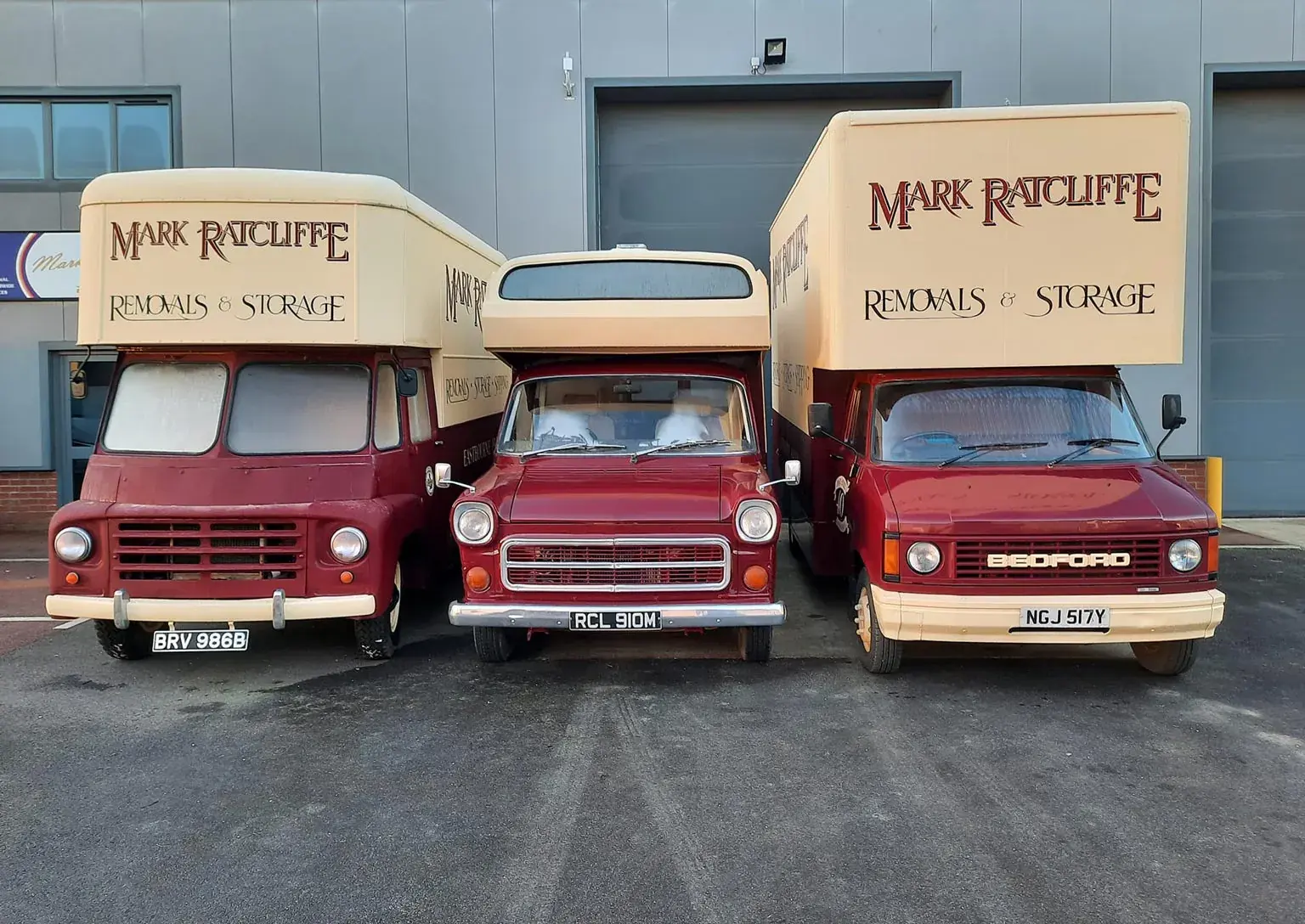
We are a family-run Sussex remover — the same name on the lorry as the name on the paperwork. Mark personally surveys the high-value and overseas moves; our crews are directly employed (not casual day labour) and trained at our own staff training centre, one of only a handful of UK removers with that facility on site.
Standard inclusions on every full removal: pad-wrap protection for every freestanding piece of furniture, removal-grade cartons, a written and itemised fixed-price quote with no surprises on the day, and the British Association of Removers' Advance Payment Guarantee protecting every deposit. The result, over the years and hundreds of moves, is a 4.9/5 review average across 120+ independent Google reviews.
Booking the survey takes ten minutes. Whether it's a one-bedroom flat across Eastbourne or a country house to overseas, the process is the same: in-home or video survey, written quote within 48 hours, deposit-protected booking, and a calm move day.
Free in-home or video survey, written fixed-price quote, BAR-protected deposit. Sussex’s family-run independent remover.
Buy from a provider that names the registry and the project rather than a category. Check that the credits will be retired in your name, not transferred. Look at the vintage year and be wary of anything a decade old at an unusually low price. Ask whether the scheme runs a buffer pool, and for forestry credits, ask what the monitoring period is.
Then keep the retirement record with your moving paperwork. It is the only document that proves anything happened, and for a business move it is the one your finance team will ask for when the sustainability report comes round. If you are moving as a company, our office removals service can have the offset quoted as a separate line so the figure and the certificate line up with the invoice.
For your specific move, the free survey takes ten minutes and we’ll come back within 48 hours with an honest plan that fits your situation and priorities. Our Google reviews average 4.9 out of 5 across more than 120 independent ratings, and that is the standard we are trying to protect on every job.
One credit can only be claimed once. If a project sells the same tonne to two buyers, or if the country hosting the project also counts the saving towards its own national target, the atmosphere gets one reduction and two claims. That is double counting, and it is the reason the registry serial number is not bureaucratic detail but the entire safeguard. A public registry entry showing your retirement, with a serial range attached, is what makes the claim exclusive to you.
This is also why an offset bought outside a registry — a donation to a planting charity, a company’s own internal scheme, a “we plant a tree for every booking” promise — cannot be counted as an offset even when the tree is real and the intention is good. Nothing was issued, so nothing can be retired, so nothing stops the same tree being counted by someone else. Plant the tree by all means; just do not put it in the carbon column.
Additionality is the test of whether the carbon saving would have happened without the money from the credit. If the wind farm was going to be built anyway, or the forest was never at risk, the credit represents no real reduction. It matters because the saving is measured against a predicted alternative future, and a generous prediction produces far more credits from exactly the same project.
Verra runs the Verified Carbon Standard, the largest voluntary registry, covering a very wide range of project types. Gold Standard is smaller and requires projects to demonstrate sustainable-development benefits such as health or employment outcomes alongside the carbon, which tends to place its credits at a higher price.
Verified VCS or Gold Standard credits generally run £10–£25 per tonne CO2-eq, and UK Woodland Carbon Code units £20–£40. Price varies with project type, the vintage year of the credit, the co-benefits attached and the retail platform's margin. Credits priced at a pound or two a tonne usually indicate old vintages or weak methodologies.
It is the registry record showing your credits have been cancelled so nobody else can claim them. It names the project, the vintage, the serial range and the tonnage. Yes, you need it — without a retirement record you have bought a transfer or made a donation, and neither is an offset.
They do different jobs. Trees are a genuine removal but slow and exposed to fire, felling and disease, so permanence and monitoring periods matter. Renewables act immediately with no permanence risk, but additionality is harder to argue now that they are frequently the cheapest option to build anyway.