
Steep medieval streets, fierce local character, a 70-minute London commute, and some of the tightest move-day logistics in Sussex. Here is how we plan it.

Lewes is one of the most distinctive small towns in southern England — East Sussex’s county town, with a medieval street pattern, a strong independent retail scene, a famously fierce local culture (the Bonfire Night celebrations alone are worth a separate guide), and one of the fastest train commutes to London on the southern network. We run Lewes removals as a near-daily route and this guide covers what we’d tell anyone moving in.
The town divides into three main areas with very different move-day characters — the steep medieval centre, the riverside flats, and the suburban edges. The operational complications come mostly from the topology: steep streets, narrow medieval lanes, and parking that ranges from straightforward to genuinely problematic. Detail follows.
The medieval centre — the High Street, Castle Precincts, the Twitten lanes — is the postcard Lewes. Period townhouses on steep streets, listed buildings everywhere, narrow lanes, almost everything is permit-controlled or zone-restricted. Operationally the hardest part of the town to move into; visually the most rewarding.
Cliffe and the riverside are the lower-altitude areas around the Ouse, with a mix of Victorian terraces, modern conversions, and some genuinely flat-access addresses for the first time in the town. Cliffe High Street is the original commercial spine and still busy on weekdays.
The suburbs — Wallands Park, Nevill, the western estates — are post-war and 1960s housing on broader streets with much easier lorry access. These are where most of the family-home moves happen and where our crews work fastest.
Lewes is built on the steep approach to the South Downs and the topology shapes everything. The High Street is one of the steepest urban streets in southern England; the Twitten lanes climbing off it are even steeper. A 7.5-tonne lorry fully loaded approaches a 1-in-5 gradient slowly; the crew expects this and the survey will spot any properties where the approach needs a smaller van shuttle.
For properties at the top of the High Street (Castle Banks, St Anne’s, the Cliffe-side terraces), the access challenge is the carry from the lorry to the door rather than the drive itself. We sometimes use a smaller van to ferry between a legal parking spot and the door — same logic as the listed-building moves.
For the medieval-centre flats and townhouses, the survey usually identifies the access pattern and the right crew configuration. We send 4-person crews for steep-approach properties rather than the 3-person standard. Mention any unusual access at survey — we’ve worked the town for years and have crews who know it.
Most of central Lewes is permit-controlled. The medieval-centre streets are also conservation-area-designated. Apply for a parking suspension through Lewes District Council at least ten working days before move day; costs are typically £50–£100.
For the medieval High Street and the Twitten lanes, sometimes the parking suspension can’t be granted because the street is too narrow to safely host a 7.5-tonne lorry. In those cases we shuttle: a smaller van from a legal parking point at the bottom or the top of the hill to the front door. We’ll plan this at survey, no surprises on the day.
For weekend moves — particularly Saturdays during the Lewes Farmers’ Market or in early November around Bonfire Night — the parking situation in the town centre worsens. We try to avoid Bonfire Night week for non-essential moves; the road closures and visitor traffic make logistics genuinely difficult.
Lewes’s state secondary is Priory School, well-regarded and the natural local option. The catchment is tight; most families inside the town are inside the catchment. Independent options include Lewes Old Grammar School (LOGS), Steyning Grammar School (just over the West Sussex border), and Bede’s and Brighton College within a 25-minute drive.
For primary schools, the town has a network of well-regarded primaries including Western Road, Wallands Community Primary, Southover, and St Pancras Catholic. Catchments are typically distance-based; East Sussex County Council’s admissions process operates on the standard deadlines (see the Eastbourne schools guide for parallel context).
For families considering both Lewes and Brighton, the school decision is meaningfully different. Lewes’s catchments are simpler (distance-based); Brighton uses a lottery-with-priority system. The Brighton area guide covers Brighton’s admissions detail.
Lewes to London Victoria is around 70 minutes direct, half-hourly through the day. This is the fastest mainline-station commute on the East Sussex coast and a meaningful part of the town’s appeal. Compared to Eastbourne (90 minutes) and Hastings (90 minutes on the Charing Cross line), the time saving is real.
Property prices reflect the commute advantage. A 3-bed Victorian terrace in central Lewes in 2026 sits in the £500–£700k range; equivalent in Eastbourne is £380–£500k. The Lewes premium is around 25–35% across most property types, partly driven by London commuters, partly by the limited housing supply (the town is geographically constrained).
The lifestyle premium is harder to quantify but real. Lewes has a strong arts community (the Lewes Festival, Glyndebourne nearby, the independent Depot cinema), good independent retail, a working brewery (Harveys), and one of the better small-town restaurant scenes in southern England. For households prioritising character over space, the Lewes case is strong.
A typical 3-bed Lewes move is a single-day job with one crew, leaving our Lower Dicker depot at first light and finishing the unload mid-to-late afternoon. The Lower-Dicker-to-Lewes route is around 30 minutes; we’re usually one of the closest BAR-registered firms to the town.
Booking timing: 6–10 weeks ahead for end-of-month dates in the May-to-September peak, longer if your move involves a medieval-centre property (the parking-suspension paperwork takes the longer end of the window). Mid-week mid-month dates in November to February are easier to book and slightly cheaper.
For storage between completion dates — common for Lewes purchases where the chain is longer than average — our depot is climate-stable and handles short-term holding without difficulty. The storage-length guide covers the format choice. Book the survey at the earliest possible point if your dates are at all sensitive.
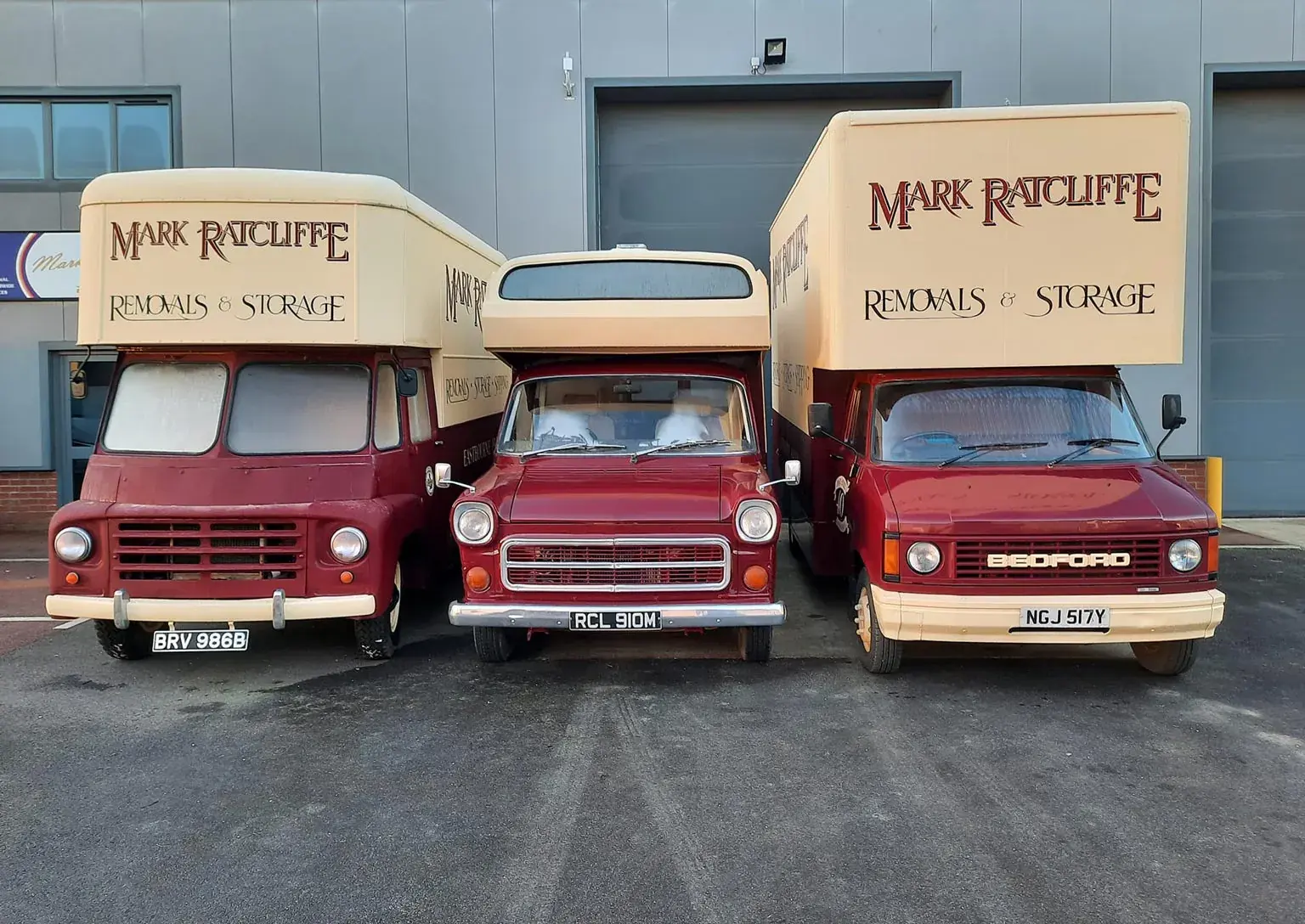
We've been a family-run Sussex remover — the same name on the lorry as the name on the paperwork. Mark personally surveys the high-value and overseas moves; our crews are directly employed (not casual day labour) and trained at our own staff training centre, one of only a handful of UK removers with that facility on site.
Standard inclusions on every full removal: pad-wrap protection for every freestanding piece of furniture, removal-grade cartons, a written and itemised fixed-price quote with no surprises on the day, and the British Association of Removers' Advance Payment Guarantee protecting every deposit. The result, over the years and hundreds of moves, is a 4.9/5 review average across 120+ independent Google reviews.
Booking the survey takes ten minutes. Whether it's a one-bedroom flat across Eastbourne or a country house to overseas, the process is the same: in-home or video survey, written quote within 48 hours, deposit-protected booking, and a calm move day.
Free in-home or video survey, written fixed-price quote, BAR-protected deposit. Sussex’s family-run independent remover.
Lewes is one of our most-run weekly routes and one of the towns we’ve moved customers into and out of consistently for years. The town’s character is genuinely distinctive in a way that suits some households perfectly and not others at all. For families weighing Lewes against the wider Sussex coast, the best-areas guide covers the comparison. For move-day logistics, the survey is where the specifics get planned.
If you’re weighing this move and want a second view, the free survey takes ten minutes and we’ll come back within 48 hours with a fixed-price quote and a clear plan for your specific situation. Years of Sussex moves behind every survey.
The customers we’ve moved into Lewes over the past decade have come from a mix of London (the largest single source), Brighton (downsizers and lifestyle-changers), and other Sussex towns (people upgrading to the county-town character). Across the three sources the pattern is similar — arrivals report a quiet settling-in period of 2–3 months, followed by genuine attachment to the town. The London-to-Sussex guide covers the broader emigration pattern.
Most streets, yes with a parking suspension. The narrowest Twitten lanes and steepest sections may need a shuttle with a smaller van. We'll plan this at survey.
Around 70 minutes direct to London Victoria, half-hourly. One of the fastest East Sussex commutes — meaningfully quicker than Eastbourne (90 mins) or Hastings (90 mins).
Yes — typically 25–35% premium for equivalent properties, driven by the faster commute and limited supply.
Yes if possible. Early November Lewes has road closures, visitor traffic, and operational complications that make moves harder. Talk to us at survey if your date falls in that window.
Yes — most of the medieval centre is listed and conservation-area. Corner-board on doorframes, soft floor coverings, low-tack tape on protection materials only. The listed-building moves guide covers our method.