
Container shipping, the customs and duty picture for the US and Canada, real costs and timelines — how a Sussex household crosses the Atlantic.

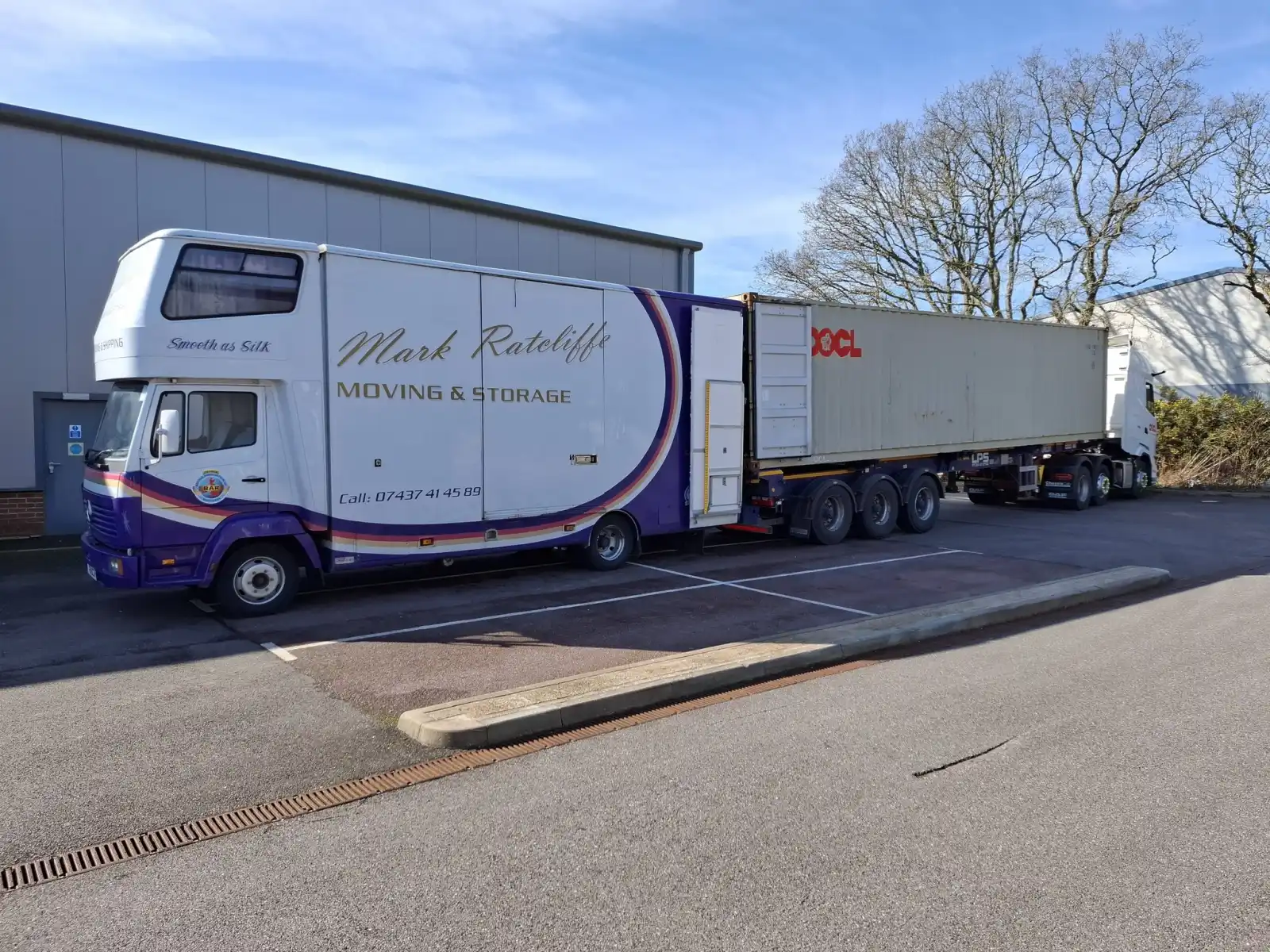
Moving to the USA or Canada from the UK is a transatlantic sea-freight move, and while the distance is less than Australia, North American customs and the sheer size of the continent shape the job. Since 2017 we’ve shipped Sussex homes to both coasts — New York and the Northeast, Florida, California, Texas, Toronto and Vancouver — for work transfers, marriages and returning nationals. It needs export-grade packing, accurate customs documentation and a FIDI-network partner at the destination port. We are a BAR Overseas Group member, fully insured for the voyage. Our USA & Canada service handles the chain. From a corporate transfer to New York to a fresh start in Vancouver, the fundamentals are the same: accurate customs documentation, export-grade packing and a trusted partner at the destination port. This guide covers the shipping options, the US and Canadian customs and duty picture, what a transatlantic move costs and how long it takes, so you can plan your move to North America with confidence.
Most North American moves are work-driven — a corporate transfer, a tech or finance role, an academic post — or family: marriage to an American or Canadian, or joining relatives who emigrated earlier. Canada’s skilled-migration routes are popular with families; the US tends to be employer-sponsored.
Both are well served by shipping lines on both coasts, and the FIDI-network partners are experienced. The main planning variables are which port and the inland leg, because a move to Denver or the Midwest is a long road haul beyond the coastal port.
A full container (FCL) suits a whole home, sealed at your UK address and shipped to a coastal port — New York, Savannah, Houston or Los Angeles/Long Beach in the US; Montreal, Halifax or Vancouver in Canada. A shared container (LCL groupage) suits part-loads. Air freight covers urgent essentials.
The Atlantic crossing is shorter than the Pacific — sea shipping is typically 10–21 days depending on coast and route — but the inland leg to an interior city can add meaningfully to both time and cost.
For settled moves, used household goods are generally admitted free of duty provided you’ve owned and used them and the paperwork is in order. US customs (CBP) requires specific forms and, for non-citizens, evidence of visa status; Canada (CBSA) requires a detailed goods-to-follow list and works from your landing as a new resident.
The documentation is precise and customs increasingly digital, so accuracy matters — an inventory that doesn’t match the manifest is the usual cause of a hold. Our FIDI-network partner lodges and clears the entry. Returning nationals and temporary-visa holders face different duty calculations, which the partner works through.
Most household contents move freely. North America restricts food, plant material, certain woods and anything organic, and both countries inspect for pests. Firearms are tightly regulated and need specific paperwork; alcohol is restricted in household shipments; medicines need documentation.
Used cars face emissions and safety rules that usually make a specialist vehicle shipper the sensible route. We supply the destination’s prohibited-items list at the survey based on your exact port and state or province.
As a 2026 guide, a sole-use 20-foot container from Sussex to New York or Baltimore runs £5,800–£8,800 all-in, and to Los Angeles, Long Beach or Vancouver £6,500–£9,500. A 40-foot container is £8,000–£13,000. A shared-container part-load is quoted per cubic metre at £170–£240. An inland destination beyond the port adds a road-haul charge. There is no UK VAT to add: international removals are zero-rated. Full detail on our removals to the USA and Canada page.
The fixed costs — customs, port handling, marine insurance — are substantial. We quote fixed-price after a free survey, itemised by line, so an interior delivery is costed transparently rather than as a surprise.
Allow four to eight weeks door to door. UK packing and customs (around a week), the Atlantic crossing (10–21 days), destination port handling and customs (one to two weeks), then delivery — plus the inland leg for interior cities.
Because you’ll likely arrive before the container, plan for temporary accommodation and an essentials consignment by air or accompanied baggage to bridge the gap.
Our FIDI-network partner clears the shipment and delivers to your home, places furniture and removes packing once customs releases the goods. For apartment buildings, lift and loading-dock bookings are arranged ahead.
The first weeks typically go on a Social Security Number or Canadian SIN, a local bank account, a driving licence and utilities. For settled moves the household import is usually duty-free subject to the documentation.
We’re a small, owner-managed Sussex firm doing this since 2017. We get the customs documentation right the first time — the single most common cause of a delayed North American shipment is paperwork that doesn’t match the manifest, and that is exactly what we exist to prevent.
Every shipment is fully insured for the voyage and held to the BS 8564 standard. Read our reviews or call Mark on 01323 848 008.
On the US side we ship most often to the Northeast (New York, Boston, the tri-state area), Florida, California, Texas and the Carolinas, via ports including New York, Savannah, Houston and Los Angeles/Long Beach. In Canada, Toronto, Vancouver and Montreal are the regular destinations.
An interior city — Denver, Chicago, Calgary, the Midwest — is reached by a road leg from the arrival port, which can be substantial given the size of the continent. We cost that inland haul transparently and plan it into the timeline. Our FIDI-network partner at the destination handles local customs and delivery.
The Atlantic crossing is shorter than the Pacific, but a container move still demands export-grade packing. Furniture is pad-wrapped, fragiles go into double-wall cartons, and the load is sealed at your UK home and opened only after it clears US or Canadian customs.
North America inspects for pests, so outdoor and wooden items are clean and properly documented. Where the destination is an interior city with a long onward road leg, we pack to survive both the sea voyage and the haul inland — a shipment is only as well-travelled as its weakest carton.
Marine cargo cover protects the ocean leg; a warehouse-to-warehouse all-risks policy extends protection door to door, including the inland road leg to an interior city. Over a transatlantic move with a long domestic haul at the far end, that end-to-end cover is worth having.
We value the shipment with you at the survey and set the level to match. High-value single items can be scheduled individually, and for genuinely valuable art or antiques the FIDI network includes specialist member firms at the major North American ports.
A transatlantic move runs to a steady rhythm. Eight to ten weeks out: survey, fixed quote, deposit, and confirmation of your visa or residency status for customs. Pack and load: packed, sealed and cleared through UK export customs. At sea: 10–21 days across the Atlantic depending on coast.
On arrival: customs clearance through our FIDI-network partner (accuracy here is everything), then delivery — plus the inland road leg for an interior city. Total door-to-door is four to eight weeks. As with any long move, plan to arrive before your container and bridge the gap with essentials.
The documentation is the make-or-break detail, so prepare it carefully: passport, visa or residency evidence, and a detailed inventory that exactly matches the manifest — a mismatch is the usual cause of a hold at the port.
Declutter to control volume and cost, and remember North America inspects for pests, so outdoor and wooden items must be clean. Keep food, plant material and restricted items out, sort any firearms or medication paperwork well ahead, and pack an essentials set to cover the weeks before your container clears and arrives.
Four to eight weeks door to door — UK packing and customs, a 10–21 day Atlantic crossing, destination port handling and customs, then delivery, plus any inland road leg.
For settled moves, used household goods are generally duty-free provided you've owned and used them and the paperwork is in order. Returning nationals and temporary-visa holders face different calculations, which our partner handles.
As a 2026 guide, a full 40-foot container from Sussex to a coastal port is typically £8,000–£12,000 door to door; a 20-foot less; part-loads priced by the cubic metre. Interior cities add a road-haul charge.
Used cars face emissions and safety rules that usually make a specialist vehicle shipper the sensible route. We coordinate the timing with your household shipment.
Customs paperwork that doesn't match the manifest. We prepare accurate documentation through our FIDI-network partner to prevent holds at the port.